
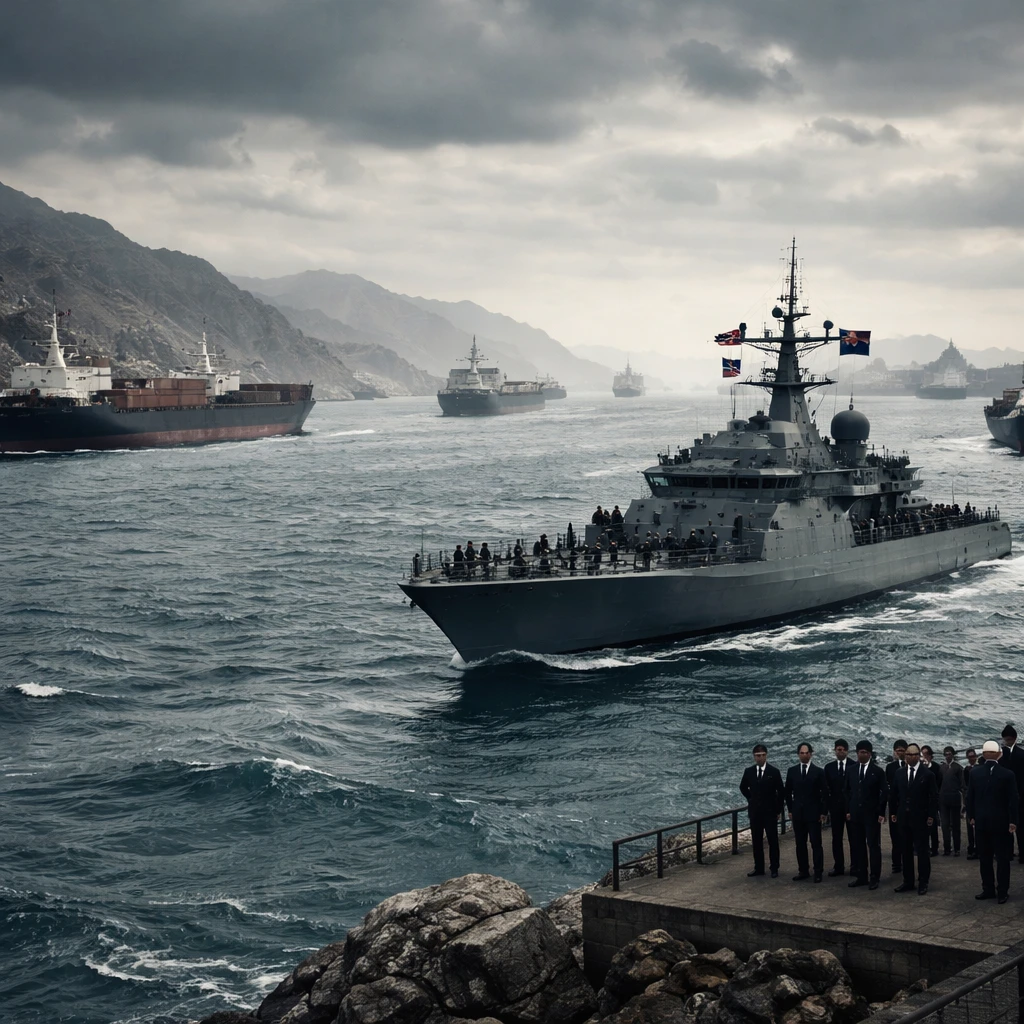
April 9 - NATO Secretary General Mark Rutte has told some allied capitals that U.S. President Donald Trump wants concrete commitments within the next few days to assist in securing the Strait of Hormuz, two European diplomats told Reuters on Thursday.
Rutte conveyed the message following a meeting with Trump in Washington on Wednesday. The discussions took place amid growing tensions within the transatlantic alliance tied to the war with Iran and differing expectations about how NATO should, or should not, be involved.
One European diplomat said allies have noted the frustration coming from Washington, while also pointing out that the United States did not consult partners either before or after initiating the conflict. "NATO as such would not play a role in the war against Iran, but allies want to be helpful in seeking longer-term solutions for Hormuz. With negotiations ongoing with Iran, this could be helpful," the diplomat said.
In recent weeks President Trump has criticized NATO as a "paper tiger" and threatened withdrawal from the 32-member alliance, contending that European partners relied on U.S. security guarantees while providing insufficient support for the U.S.-Israeli bombing campaign in Iran. After meeting Rutte, Trump posted on Truth Social in capital letters that "NATO wasn’t there when we needed them, and they won’t be there if we need them again."
Rutte, a Dutch leader frequently described in Europe as a "Trump whisperer" who has drawn attention for his conciliatory tone toward the U.S. president, told CNN after Wednesday’s meeting that Trump "is clearly disappointed with many NATO allies, and I can see his point."
Early planning underway but with limits
Britain is coordinating a coalition of roughly 40 countries to develop a combined military and diplomatic approach intended to reopen and protect traffic through the Strait of Hormuz. There is limited indication that this effort will produce an immediate breakthrough.
French President Emmanuel Macron said on Wednesday that about 15 countries were planning actions to facilitate the resumption of traffic through the strait. France’s foreign minister Jean-Noel Barrot stated on Thursday that full reopening of Hormuz would depend on a lasting agreement between the United States and Iran. Italy and Britain have objected to Iran’s declared right to levy a toll on vessels passing through the strait, calling that position unacceptable.
A third European diplomat told Reuters that the work on Hormuz continues largely independently of the conversations that took place at the White House. "We know the urgency on the U.S. side, and we know that Rutte is trying to position himself in a way that he is helpful in that conversation. We are willing to make the right noises and even the right actions down the line, but ultimately the problem is not to please the U.S. but to have the right conditions in place," the diplomat said.
The situation leaves allies navigating a narrow path: acknowledging Washington’s urgency while clarifying the limits of NATO’s role in an ongoing conflict. The discussions between Rutte and Trump, and among European capitals, highlight the immediate diplomatic work to balance strategic support, alliance cohesion, and the conditions considered necessary for the long-term reopening of the strait.