
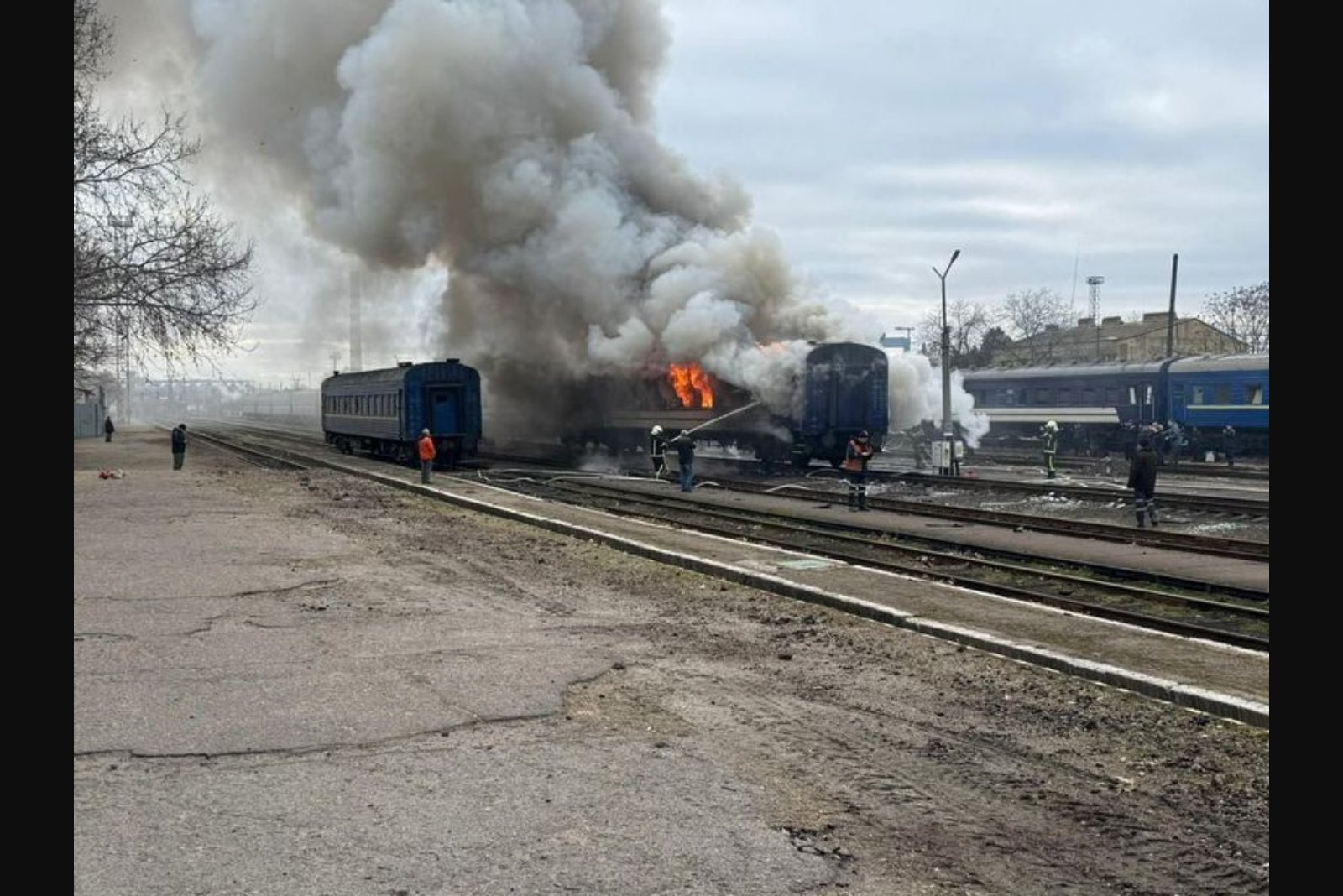
March 4 - A drone launched by Russian forces struck an empty passenger train in the Mykolaiv region of southern Ukraine early on Wednesday, injuring a railway employee, Deputy Prime Minister Oleksiy Kuleba said.
Kuleba also reported a separate incident late on Tuesday in which a drone targeted a train running between the eastern-central city of Dnipro and Kovel in the northwest. Railway workers intervened to stop that attack, and the drone struck a point a few metres from the locomotive rather than the train itself.
The Ukrainian national rail operator, Ukrzaliznytsia, said Russia has stepped up drone strikes against railway infrastructure and that rolling stock has been a principal target. According to the operator, 18 strikes have been recorded since the start of March, with 41 facilities sustaining damage.
Ukrzaliznytsia added that locomotives, freight wagons and specialised equipment used to repair infrastructure have been attacked. The operator also reported that railway depots and bridges have come under fire this month.
Separately, a Russian drone attack on a commuter train in the Dnipropetrovsk region on Monday killed one person and injured seven others, officials said.
Operational context
The incidents reported this week underscore a pattern of strikes aimed at rail mobility and the assets that support it. Railway employees played a direct role in halting at least one attempted strike, while other attacks have struck trains, depots and equipment critical to repairs and logistics.
What officials reported
- Deputy Prime Minister Oleksiy Kuleba confirmed the Mykolaiv strike and the attempted attack on the Dnipro-Kovel service.
- Ukrzaliznytsia documented 18 strikes since the start of March and reported damage to 41 facilities.
- Targets have included rolling stock, locomotives, freight cars, repair equipment, depots and bridges.
- A separate commuter train attack in Dnipropetrovsk resulted in one fatality and seven injuries on Monday.
Implications
The account from officials highlights mounting pressure on Ukraine's rail network in multiple regions, with human casualties and damage to transport assets reported. The interventions by railway staff in one instance prevented a direct strike on a locomotive, but the broader pattern of attacks has affected both passenger and freight elements of the rail system.
Reporting is based on statements from Ukrainian officials and Ukrzaliznytsia. Where details are limited, descriptions reflect the information provided by those sources.