
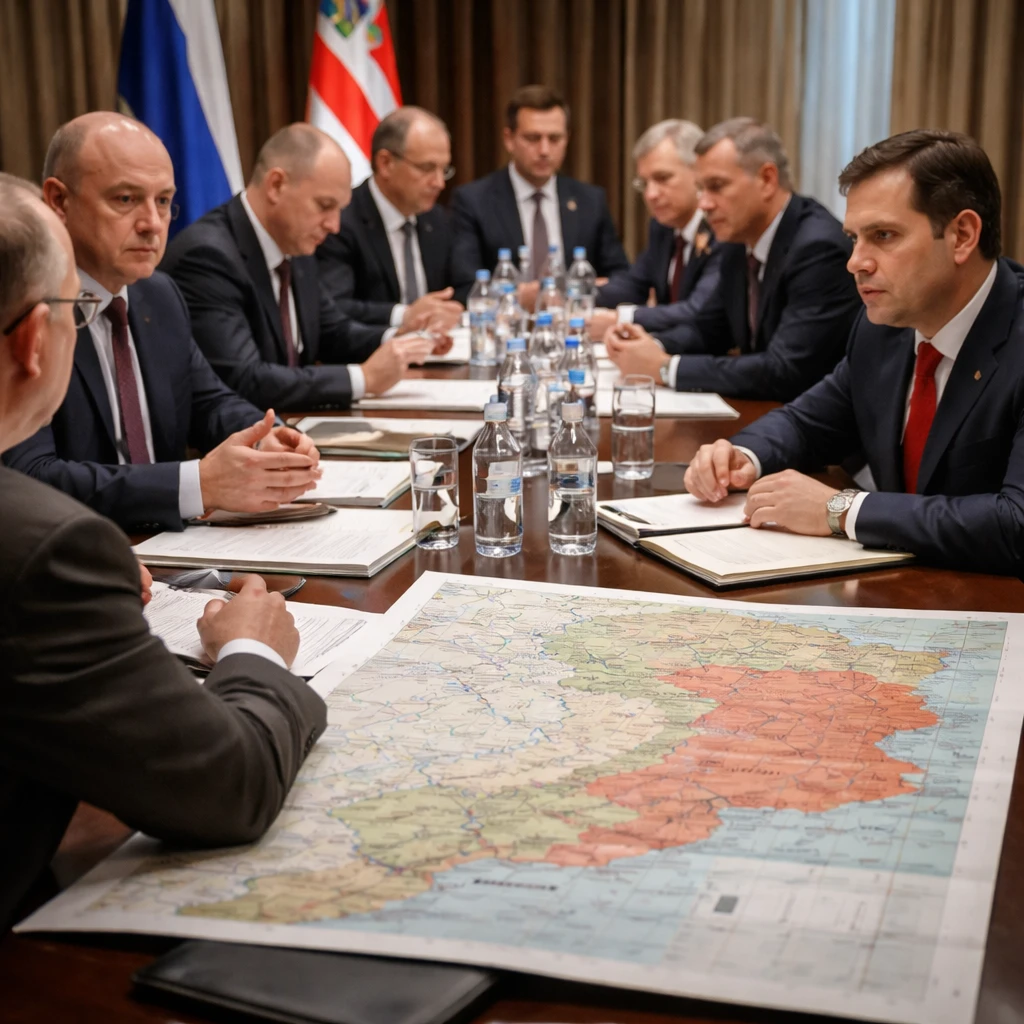
Russian officials indicated on Thursday that the dispute over territory is not the sole impediment to concluding peace negotiations aimed at ending the conflict in Ukraine, though they provided limited detail on other outstanding matters.
When asked whether territorial questions represented the only unresolved issues, Kremlin foreign policy aide Yuri Ushakov replied, "I don’t think so," but he did not identify what additional topics remain on the table.
The territorial disagreement centers on Moscow’s demand that Ukrainian forces withdraw from roughly 20% of the Donetsk region that the Russian military does not presently control. According to the positions described in talks, Ukraine has resisted the prospect of ceding land that Russian forces have not captured through military operations.
U.S. Secretary of State Marco Rubio said on Wednesday that active efforts were under way to tackle this territorial difference through negotiations mediated by the United States. Rubio characterized the dispute as a major remaining issue and described it as "very difficult" to resolve.
These statements arrive amid ongoing peace talks that continue to seek an end to hostilities between the two countries. While the territorial question has been prominent in discussions, the Kremlin aide’s comment underscores that other, unspecified matters could also be inhibiting progress toward a comprehensive agreement.
No further details were provided by Russian officials about the nature of those additional issues, and the U.S.-mediated efforts are described as focused in part on addressing the widely reported territorial contention in Donetsk.
As negotiations proceed, the lack of specificity from Russian officials about other potential sticking points leaves the full scope of outstanding obstacles unclear. The statement from the Kremlin aide makes plain that the path to a peace deal may involve resolving more than the well-publicized question of territory alone.
Summary
A Kremlin foreign policy aide said territorial disputes are not the only barrier to a peace agreement in Ukraine but did not specify what other issues remain unresolved. The territorial dispute involves Russia’s demand that Ukrainian forces withdraw from about 20% of Donetsk region that is not currently under Russian military control. U.S. Secretary of State Marco Rubio said U.S.-mediated talks are actively addressing the territorial disagreement and called it "very difficult" to resolve. Peace talks continue as officials contend with both the known territorial disagreement and other unspecified hurdles.