
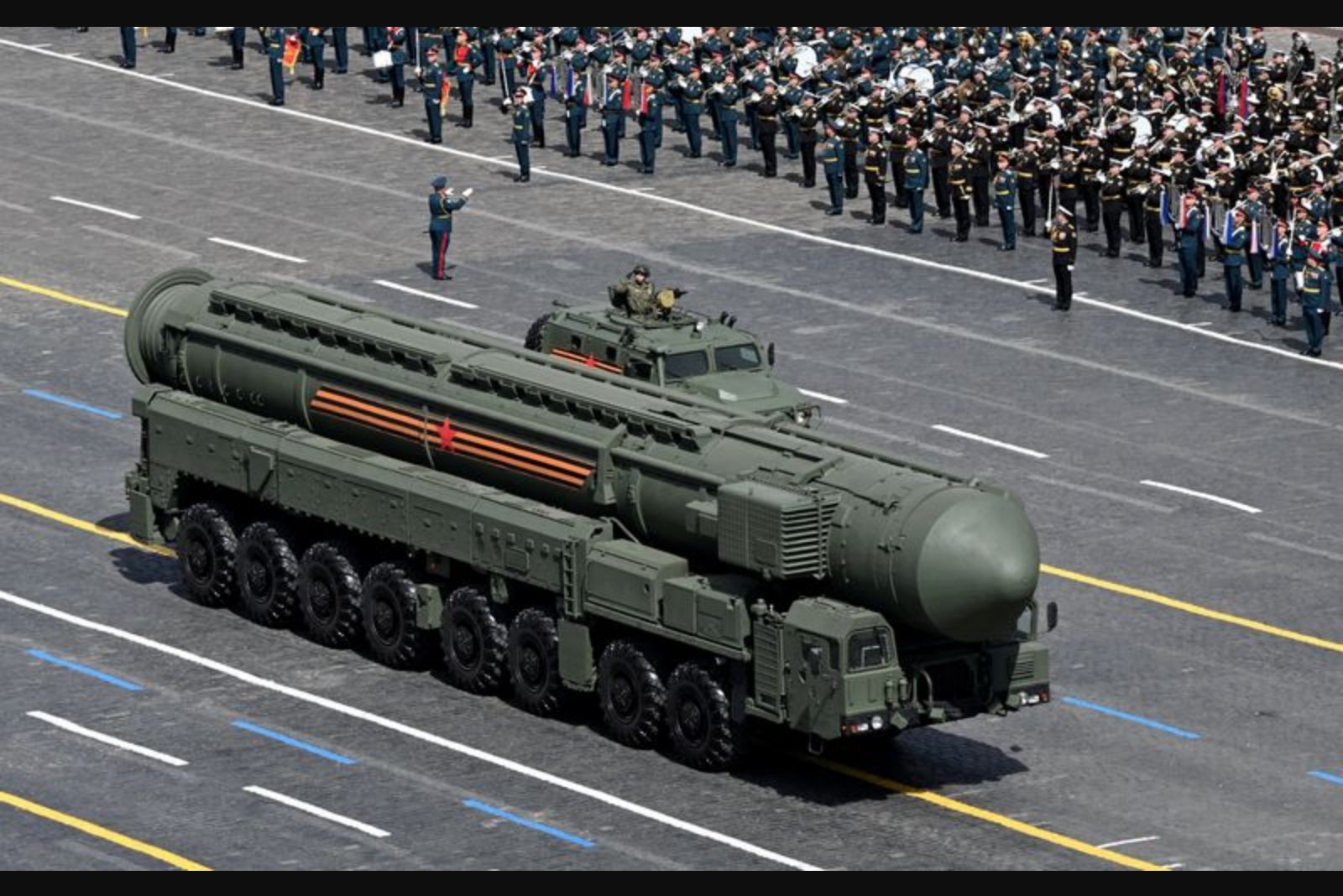
Russia said on Thursday it regretted the formal lapse of New START, the last remaining nuclear arms treaty between Moscow and Washington, while signalling it would behave responsibly even after constraints on deployment of strategic nuclear forces were removed.
The treaty, which capped each side’s number of deployed intercontinental ballistic missiles, launchers and strategic warheads, was the culmination of a series of bilateral nuclear agreements stretching back to the Cold War era. Its expiry leaves no remaining treaty framework directly constraining the United States and Russia on those strategic systems.
Security analysts warn that without New START, the two largest nuclear powers will have fewer tools to assess one another’s capabilities and intentions accurately, a change that could increase the prospect of misunderstanding and heighten the chance of escalation. Some analysts also fear the treaty’s end may contribute to renewed arms competition as China continues to expand its arsenal.
President Vladimir Putin had proposed that Russia and the United States voluntarily continue to comply with the treaty’s principal terms for an additional year. U.S. President Donald Trump did respond to that initiative but has said he seeks a broader agreement that would include China. Beijing has declined to enter negotiations with Moscow and Washington, and the Chinese arsenal remains a fraction of the other two powers, with an estimated 600 warheads compared with roughly 4,000 for each of Russia and the United States.
Kremlin spokesman Dmitry Peskov said, "What happens next depends on how events unfold." He added that, "In any case, the Russian Federation will maintain its responsible and attentive approach to the issue of strategic stability in the field of nuclear weapons and, of course, as always, will be guided first and foremost by its national interests."
The White House said this week that President Trump would determine the next steps on nuclear arms control and would "clarify on his own timeline."
There was uncertainty about the precise moment the treaty ceased to bind the parties, with neither the U.S. State Department nor Russia’s Foreign Ministry issuing a detailed timestamp. Peskov indicated the treaty would expire at the end of Thursday.
Former Russian President Dmitry Medvedev, who signed New START on behalf of Russia with then U.S. President Barack Obama in 2010, said the agreement and earlier accords were now "all in the past." Russia’s Foreign Ministry stated Moscow assumed the treaty no longer applied and that both sides were free to choose their subsequent actions.
Criticising what it called a "mistaken and regrettable" U.S. approach, the Foreign Ministry said Russia was prepared to take "decisive military-technical countermeasures to mitigate potential additional threats to national security" while remaining open to diplomacy.
China described the treaty’s expiration as regrettable and urged a resumption of dialogue on "strategic stability." Ukraine, which has been at war with Russia since Moscow’s 2022 invasion, framed the treaty lapse as a consequence of Russian actions that undermine global security architecture, accusing President Putin of using the development as "another tool for nuclear blackmail to undermine international support for Ukraine."
Strategic nuclear weapons are long-range systems intended to strike an adversary’s capitals, military and industrial hubs in a large-scale nuclear exchange. These differ from so-called tactical nuclear weapons, which have lower yields and are designed for more limited or battlefield use.
Analysts say that without the New START limits providing verifiable ceilings and transparency, each side could, within a few years, deploy hundreds more warheads beyond the treaty cap of 1,550 deployed strategic warheads. The loss of mutual transparency and predictability removes a key stabilising element from deterrence relationships and could make relations between nuclear-armed states more prone to crises.
Karim Haggag, director at the Stockholm International Peace Research Institute, said: "Transparency and predictability are among the more intangible benefits of arms control and underpin deterrence and strategic stability." He warned that without those elements, nuclear-armed states are likely to become "more crisis prone - especially with artificial intelligence and other new technologies adding complexity and unpredictability to escalation dynamics and a worrying lack of diplomatic and military communication channels between the USA and both China and Russia."
United Nations Secretary-General Antonio Guterres warned that the dismantling of decades of arms control achievements "could not come at a worse time - the risk of a nuclear weapon being used is the highest in decades." He urged the involved parties to resume negotiations promptly to secure a successor framework with verifiable limits.
The lapse of New START, its political and technical consequences, and the official reactions from Moscow, Beijing, Kiev and the United Nations together underscore the elevated uncertainty now surrounding strategic stability. While Russia has expressed regret and a commitment to act responsibly, officials and analysts alike emphasise that the removal of formal limits complicates efforts to sustain predictable deterrence and increases the potential for miscalculation between nuclear-armed powers.