
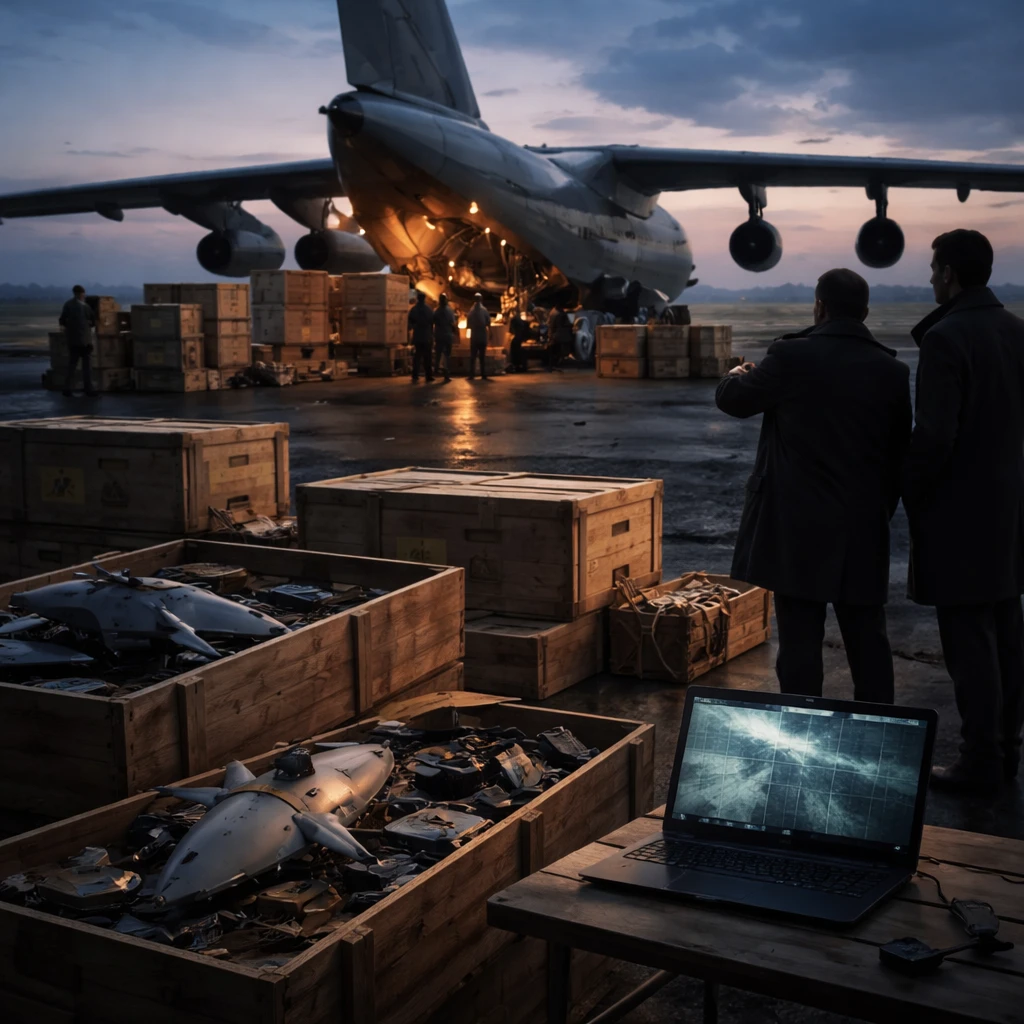
Moscow is reported to be close to completing a series of staggered deliveries to Iran comprised of lethal drones as well as medical and food aid, according to reporting attributed to The Financial Times that cites western intelligence. The consignments are described as intended to strengthen both the Iranian regime's combat capabilities and its internal stability.
Sources cited in the reporting say that confidential strategic discussions about the transfers began almost immediately after recent military strikes on Tehran by Israel and the United States. Responding to those accounts, Kremlin spokesperson Dmitry Peskov said: "There are a lot of fakes going around right now. One thing is true - we are continuing our dialogue with the Iranian leadership."
Observers view the shipments as notable because they would mark the first recorded instance of Moscow providing lethal military support to Iran since the onset of the conflict. In addition to the hardware, the reporting states that Russia has supplied Iran with sensitive satellite imagery, targeting data and other intelligence inputs, according to people familiar with the matter.
Although Iran fields a substantial domestic drone programme, experts quoted in the reporting say Tehran appears focused less on quantity and more on acquiring enhanced capabilities developed by Russia during the war in Ukraine. Antonio Giustozzi, senior research fellow at the Royal United Services Institute, was cited as saying: "They don’t need more drones. They need better drones. They are after the more advanced capabilities."
Those advanced capabilities reportedly include improvements in navigation and resistance to jamming that Russian forces made to the Shahed-type systems. Nicole Grajewski, a professor at Sciences Po, was quoted as noting: "The Russians dramatically improved the Shaheds, including modifications to the engines, navigation and anti-jamming capabilities." The reporting indicates Tehran is interested in reverse-engineering these enhancements to upgrade its indigenous platforms.
At the same time, the reporting says Moscow has refused Iranian requests for the high-end S-400 air-defence system, a decision framed as an effort to avoid a direct escalation with Washington. The phased shipments of drones together with humanitarian cargo are expected to be fully processed by the end of March, according to the accounts.
The disclosed sequence of political consultations, materiel transfers and technical assistance underscores a widening cooperative relationship in areas that intersect defence-industrial capability, intelligence sharing and logistics. The reporting leaves several operational details and the full scope of technical transfers unspecified, reflecting the limited publicly available information cited by the sources.