
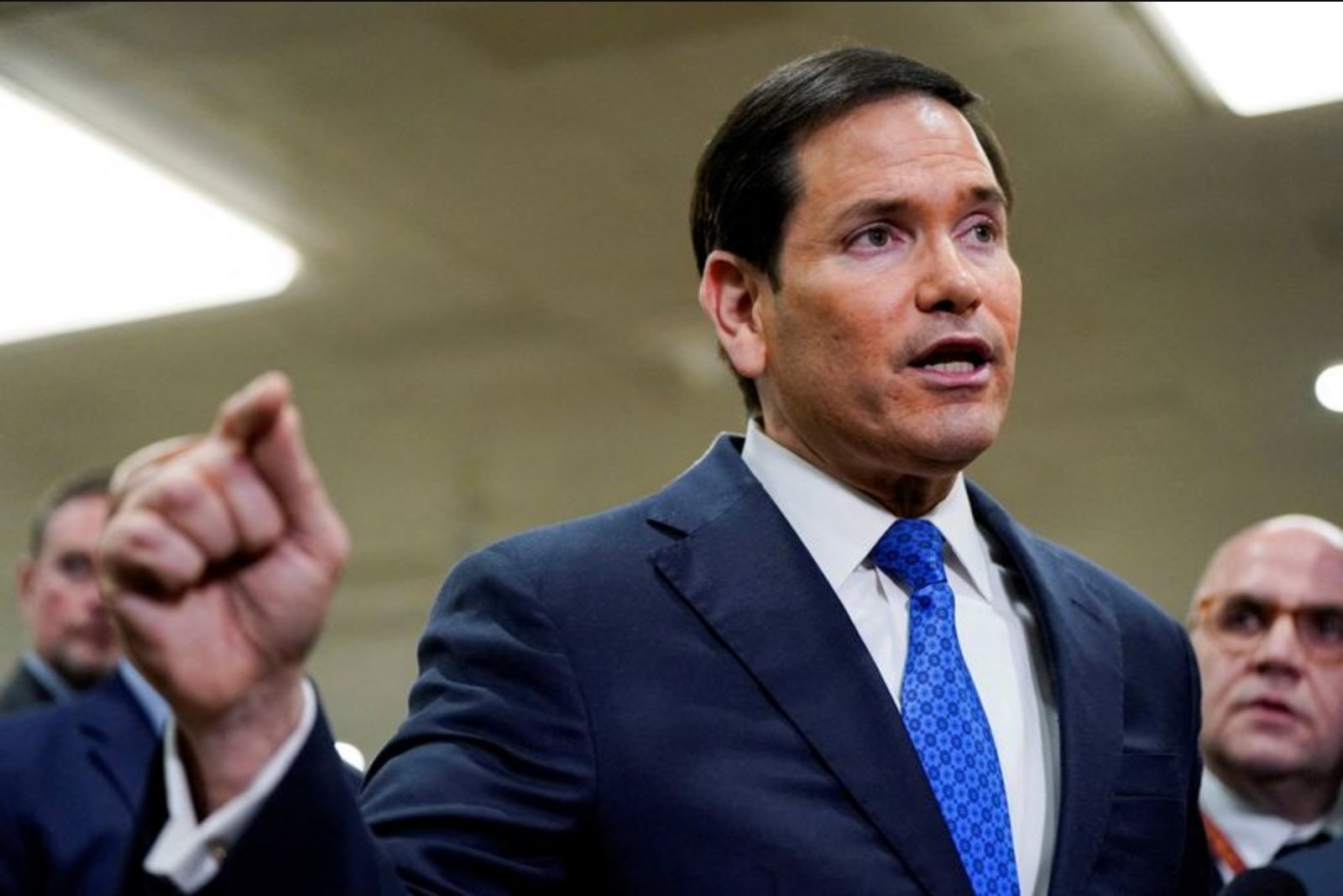
U.S. Secretary of State Marco Rubio said on Tuesday that Washington can already sight the "finish line" in the Iran war, now in its fifth week, although he stressed that an end is not immediate. Speaking on Fox News Channel's "Hannity" program, Rubio framed the conclusion of hostilities as forthcoming but not imminent.
"We can see the finish line. It’s not today, it’s not tomorrow, but it is coming," Rubio said on the show.
The conflict began on February 28 when the United States and Israel carried out attacks on Iran. Tehran responded with its own strikes, targeting Israel and Gulf states that host U.S. military facilities. In the weeks since, joint U.S.-Israeli strikes inside Iran and Israeli operations in Lebanon have resulted in thousands of deaths and have displaced millions of people.
Rubio told the television audience that messages were being exchanged between Iran and the United States and that there was potential for a "direct meeting at some point."
"There are messages being exchanged, there are talks going on. There is the potential for direct meeting at some point," Rubio said.
President Donald Trump, who has provided shifting public timelines and various stated objectives for the conflict - from toppling Iran's government to degrading its military and regional influence - said on Tuesday that the U.S. could conclude its military operations within two to three weeks.
Rubio also argued that the United States will need to reassess its relationship with the NATO alliance after the war. He suggested that the president would ultimately make that decision, but warned that the alliance may no longer be serving U.S. interests as it once did.
"Ultimately, that’s a decision for the president to make, and he’ll have to make it," Rubio said. "But I do think, unfortunately, we are going to have to reexamine whether or not this alliance that has served this country well for a while is still serving that purpose, or has it now become a one-way street where America is simply in a position to defend Europe, but when we need the help of our allies, they’re going to deny us basing rights, and they’re going to deny us overflight."
Rubio's comments referenced European leaders' refusals to take part in offensive operations against Iran. The secretary of state's remarks linked the conduct of allies during the conflict to a broader question about the future utility of the alliance for U.S. strategic needs.
The war has also had measurable economic effects: oil prices have risen and global markets have experienced turmoil, according to the reporting. Those developments have accompanied the humanitarian toll and the strategic shifts debated among U.S. officials and allies.
As the conflict continues into its fifth week, U.S. officials publicly indicate both ongoing military activity and the possibility of diplomatic exchanges. The timeline for resolution remains uncertain even as senior U.S. officials express guarded optimism about a path toward an end.