
World March 27, 2026

Rubio Says U.S. Can Meet Iran Objectives Without Deploying Ground Forces

Secretary of State says operations targeting Iran's missile, drone and air and naval capacities should finish in weeks; troop movements intended to preserve presidential options

By Caleb Monroe
Rubio Says U.S. Can Meet Iran Objectives Without Deploying Ground Forces

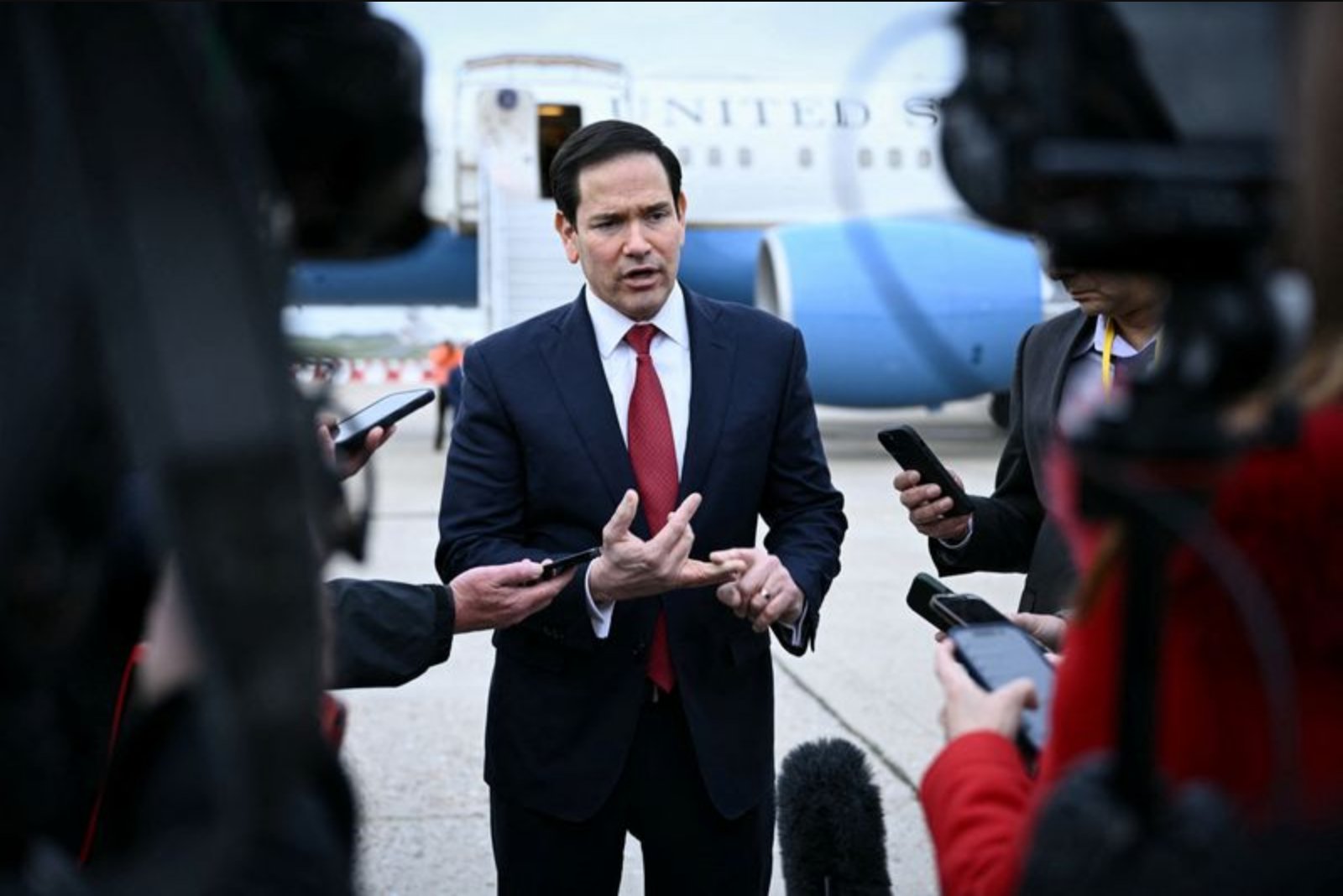
Speaking to reporters in Paris, Secretary of State Marco Rubio said the United States is meeting its stated goals in the campaign against Iran without resorting to ground forces and expects the operation to finish in weeks rather than months. He described recent troop deployments as a measure to provide President Donald Trump with flexibility to respond to contingencies, and raised the prospect that Iran could impose tolls on passage through the Strait of Hormuz.

Key Points

  • U.S. objectives in the campaign against Iran are focused on destroying Iran's missile and drone capabilities and the factories that produce them, in addition to targeting Iran's navy and air force - sectors that influence defense contracting and regional military balance.
  • Rubio stated the operation is expected to wrap up in "weeks, not months" and that current efforts are generally ahead of schedule - a timeline that can affect markets sensitive to geopolitical risk, such as energy and defense sectors.
  • Recent deployments of thousands of troops to the region are intended to provide President Donald Trump with options to respond to contingencies; details of those deployments were not disclosed, which has implications for uncertainty in defense planning and government expenditure.

PARIS - Secretary of State Marco Rubio told reporters on Friday that the United States can accomplish its objectives in Iran without committing any ground troops and that he expects the current operation to be completed in a matter of weeks.

Rubio made the comments before departing for the United States after discussions with G7 foreign ministers in France about the conflict the United States and Israel began late last month. He said U.S. aims in the campaign were focused on degrading and destroying Iran's missile and drone capabilities and the facilities that produce those weapons, along with striking at its naval and air forces.

Describing the progress so far, Rubio said the U.S. was "ahead of schedule on most of them, and we can achieve them without any ground troops, without any." He added that he expected the operation to conclude in "weeks, not months."

At the same time, Rubio said recent deployments of thousands of additional troops to the region were meant to give President Donald Trump options if unforeseen contingencies arise. He declined to discuss operational specifics.

"In terms of why there's deployments, number one, the President has to be prepared for multiple contingencies... We are always going to be prepared to give the president maximum optionality and maximum opportunity to adjust the contingencies, should they emerge," Rubio said.

Rubio also suggested that Iran might try to establish a tolling system for the Strait of Hormuz. He said countries in Europe and Asia that benefit from trade through the waterway should contribute to efforts to ensure free passage through the strait once the conflict ends.


The comments underscore two lines of U.S. strategy as described by Rubio: a targeted military campaign aimed at specific Iranian capabilities and a parallel posture of force deployment intended to preserve decision-making flexibility at the presidential level. Rubio emphasized a short timeline for U.S. objectives while noting that some measures, including the reasoning behind troop movements, would remain operationally sensitive.

Rubio's remarks came after consultations with international counterparts and ahead of his return to the United States, as officials weigh both the execution of current strikes and the diplomatic and security tasks that may follow.

Risks

  • Iran may decide to impose a tolling system for the Strait of Hormuz, which could disrupt maritime trade and affect countries and markets that rely on that route - notably energy markets and global shipping.
  • Operational details of recent troop deployments were not disclosed, creating uncertainty about the scale and duration of U.S. military presence and potential costs to defense budgets and contractors.
  • The stated timeline of "weeks, not months" for concluding objectives is subject to change; if operations extend, this could increase geopolitical risk premiums for energy and defense-related markets.

More from World

Newborns and Unfinished Joy: Displaced Mothers Face Uncertain Starts in Lebanon Mar 27, 2026 Hezbollah Reports Over 400 Fighters Killed as Lebanon Conflict Deepens; Official Tallies Differ Mar 27, 2026 U.N. to Form Task Force to Preserve Shipping Through Strait of Hormuz Amid Iran War Mar 27, 2026 Merkel's Successor Voices Doubt Over U.S. and Israeli Strategy in Iran Conflict Mar 27, 2026 Iran Signals Written Reply to U.S. Peace Offer Is Expected Friday Mar 27, 2026