
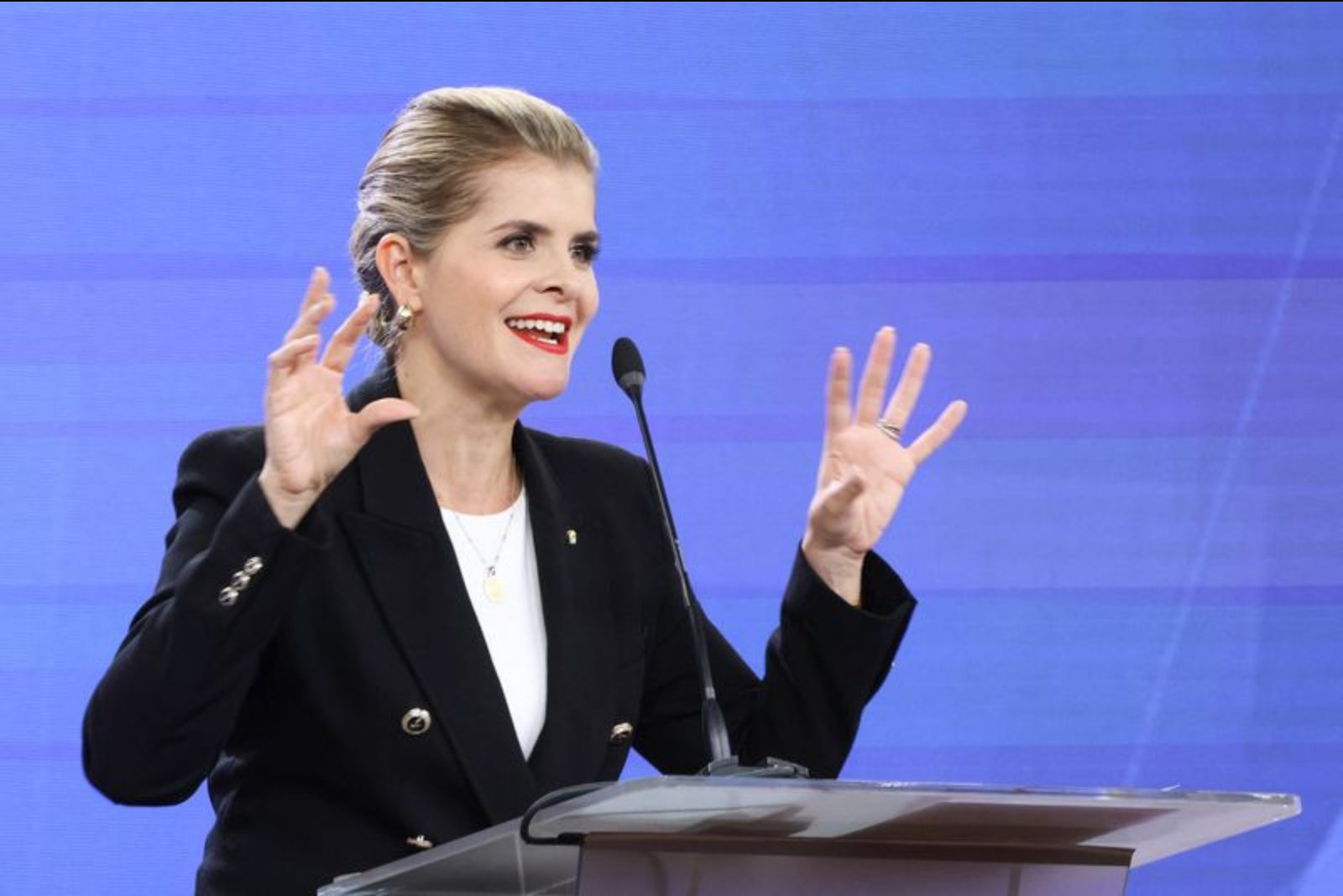
SAN JOSE, Jan 29 - Costa Ricans are voting in a presidential election in which a right-wing populist candidate has surged to the front of a crowded field, according to recent polls, as the nation contends with a marked increase in drug trafficking and violent crime that has tarnished its long-standing image as a tranquil tourist destination.
Front-runner and platform
Laura Fernandez, 39, a political scientist who formerly served as presidential chief of staff, is running well ahead of rivals and has built her campaign around continuing the policies of the incumbent president, Rodrigo Chaves. Fernandez has framed her bid as an extension of Chaves’ agenda, and in a campaign video she said, "Rodrigo Chaves' project is not a four-year event, it’s a one-way street." The framing signals both continuity and a desire among a substantial segment of voters for a continuation of the current government’s hardline approach to security.
Fernandez has articulated an ambitious legislative agenda alongside her presidential bid. She has asked supporters to give her party 40 seats in the 57-seat legislative assembly - a supermajority that she says would permit wide-ranging reforms to the judiciary and the constitution, including the possibility of changing rules on consecutive or indefinite reelection. The current constitutional provision sets the presidential term at four years and bars immediate consecutive terms.
On policy, Fernandez has promised tougher criminal sentences, reforms to state pensions and an intensified campaign against crime. Her appeal is closely tied to the popularity of Chaves, a former World Bank economist described as brash, who retains strong public backing even as he faces multiple corruption investigations.
Electoral dynamics and possible run-off
Latest polling puts Fernandez at or around 40% - the level required to win the presidency outright and avoid an April runoff. The presidential contest originally featured some 20 candidates, but Fernandez’s lead has left the remainder trailing in single digits in most surveys. Should she fall short of the 40% threshold, pollsters identify economists Alvaro Ramos of the mainstream National Liberation Party and Claudia Dobles, an architect and former first lady who returned from work as a researcher at MIT to revive the Citizen Action Party, as the most likely contenders to face Fernandez in a second round.
Most of the other 19 opposition candidates have warned voters about the potential for an emerging authoritarian model tied to Chaves’ style of governance, yet they have not succeeded in forming a unified front behind a single alternative to Fernandez.
Security crisis and international attention
For decades Costa Rica has been regarded as a regional outlier - a popular tourist destination without a standing military. That image has come under stress in recent years as the country of roughly 5.2 million residents has experienced record levels of homicides and has become an increasingly prominent transit point for global cocaine trafficking, according to statements attributed to the U.S. government.
The U.S. Treasury Department in late January sanctioned a Costa Rican drug network and stated that the country "has become an increasingly significant waypoint for criminal organizations trafficking cocaine to the United States." The finding underscores a significant shift in the country’s security environment and has become a central element of the domestic political debate ahead of the vote.
Analysts quoted in the campaign debate have emphasized the speed and penetration of criminal networks into national institutions. Maria Fernanda Bozmoski, director for Central America at the Atlantic Council, said, "The speed with which drug traffickers have infiltrated the country and captured some of the country’s institutions hasn’t been seen before." She noted that while rising violence and murders have produced anti-incumbent swings in recent elections in Chile, Honduras and Ecuador, Chaves has remained largely immune to that trend in Costa Rica.
Voter sentiment and public reaction
Voices from the electorate indicate broad impatience with the status quo and support for decisive measures. Ronald Rodriguez, a 61-year-old retiree from the canton of San Carlos in northern Costa Rica, said the Chaves movement needs more time and more authority to carry out its plans. "The problem isn’t Chaves, it’s all of those who came before him and let things get worse," Rodriguez said. "Things are worse than ever and that’s why we need the things Chaves is promising, changing the judiciary and building that Bukele jail fast."
El Salvador’s President Nayib Bukele recently visited Costa Rica to inaugurate a maximum-security prison modeled after El Salvador’s Terrorism Confinement Center (CECOT), and Fernandez has pledged to see the project through if elected.
Researchers see Chaves’ appeal as rooted in his public persona and anti-establishment image. Ronald Alfaro, a researcher at Costa Rica’s Center for Investigations and Political Studies (CIEP), said Chaves’ popularity is tied to what he represents rather than to an institutional legacy. "His support, like other similar political figures, is more based on his persona and what he represents," Alfaro said. That rationale is reflected in the government’s campaign slogan: "if you want change, vote for continuity."
Despite Fernandez’s lead, uncertainty persists. A CIEP poll in January found that nearly a third of voters remained undecided, and that 79% of respondents said they were either only a little enthusiastic or not enthusiastic at all about the election.
Conclusion
The vote in Costa Rica is unfolding amid a fast-evolving security crisis and intense debate about the country’s institutional direction. Fernandez’s lead suggests strong public appetite for continuing Chaves’ hardline security strategy and for pursuing significant judicial and constitutional changes, but a sizeable bloc of undecided voters and concerns about enthusiasm for the election mean the final outcome - and its implications for Costa Rica’s political institutions and international standing - will hinge on turnout and the distribution of votes in the coming rounds of the national contest.