
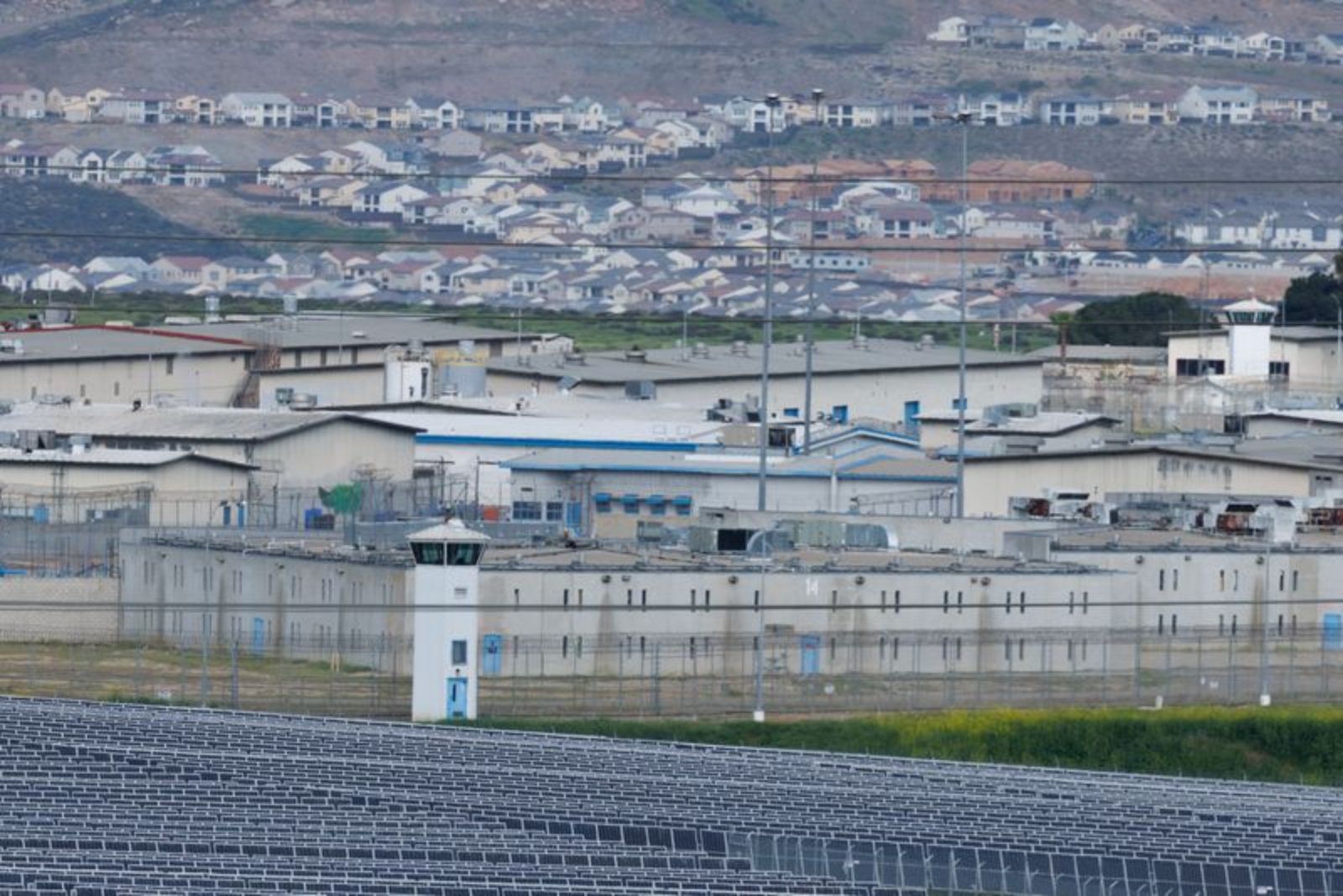
State-operated prisons in the United States have experienced a marked deterioration in safety and mortality metrics over the past five years as facilities struggled to retain and deploy correctional staff, according to a previously unreleased review funded by the U.S. Department of Justice.
The assessment, carried out by the Safe Inside initiative, examined conditions in 12 state prison systems where adequate data were available. It found the death rate among state prisoners rose 47% between 2019 and 2024, climbing from 2.8 deaths per 100,000 prisoners in 2019 to 4.1 in 2024. That period was deliberately chosen to avoid the distortions of the coronavirus pandemic.
Researchers who compiled the review reported parallel increases in violence: assaults on incarcerated people rose 54% while assaults on prison staff jumped 77% over the same five-year span. The report did not include the underlying raw counts of assaults.
While the researchers stop short of claiming direct causation, they concluded that understaffing and high turnover "likely contribute" to the worsening outcomes. They also noted, however, that the available data were not sufficient to establish a causal link definitively.
"We have less staff and they’re asked to do more," said John Wetzel, a former head of Pennsylvania’s prison system and chair of Safe Inside. "We’re seeing the increased deaths, increase of assaults and there’s no argument that these are going up."
The review highlights how depleted staffing levels translate into operational gaps: fewer personnel on duty to protect incarcerated people, reduced capacity to accompany them to medical appointments, and an inability to maintain routine supervisory coverage. Researchers collected testimony from workers describing repeated extended shifts, including multiple 18-hour stretches, and situations so understaffed that officers could not take basic breaks because there was no available relief.
Those working conditions appear to be intensifying turnover and complicating recruitment. The Safe Inside analysis reported that understaffing cost states in excess of $2 billion in overtime payments in 2024, a figure about 80% higher than five years earlier.
Some states have taken extraordinary steps to fill gaps. The report notes that New York and Florida deployed National Guard soldiers to supplement prison rosters, signaling the scale of staffing shortfalls in certain jurisdictions.
Geographic variation in outcomes was pronounced. Alabama showed a particularly sharp increase in fatalities documented by the researchers: 337 inmates died in 2024 compared with 99 in 2019. In contrast, California, which operates one of the nation’s largest prison systems, recorded largely unchanged inmate deaths even as the state reduced its prison population by nearly a quarter over the same period. Spokespeople for the Alabama and California corrections systems did not respond to requests for comment about the mortality figures.
The review also identified manpower shortages in individual state labor markets for corrections. In Michigan, for example, the report found that about one in six corrections positions was unfilled during the reporting period, with some facilities approaching nearly a third of positions vacant. A spokeswoman for Michigan’s Department of Corrections, Jenni Riehle, told researchers that the rate of unfilled jobs had fallen slightly since that snapshot.
"There is not enough personnel to provide the attention that is needed to people in state custody," said Maria Goellner, vice president of Families Against Mandatory Minimums. "So you do see increased neglect, abuse and violence, and horrendous prison conditions." She added that part of the underlying challenge is that states are incarcerating people who do not need to be there.
Michael Thompson, director of Safe Inside, emphasized that the rise in the death rate is not fully explained by shifts in the health profile or age of the incarcerated population, noting the increase has outpaced what would be expected from those factors alone.
The Safe Inside review acknowledged significant data limitations nationwide. Most states do not report sufficient information on deaths in custody, so the analysis was restricted to the dozen systems with reliable reporting. Because of gaps in reporting and the observational nature of the data, researchers said they could not prove that understaffing was the direct cause of rising deaths and assaults.
On the operational side, the human cost of short staffing is reflected in worker testimony and in the practical consequences for care and monitoring inside facilities. The report recounts officers working consecutive extended shifts and routine use of overtime that imposes both fiscal strain on state budgets and physical strain on employees, which can feed higher turnover and further erode staffing levels.
The United States continues to incarcerate more people than any other nation, including roughly 1 million individuals held in state-run prisons. The Safe Inside review, commissioned by the U.S. Department of Justice, frames the recent trend of falling prison populations in many states alongside growing operational strain within correctional systems, underscoring tensions between reduced headcount and diminished staffing capacity on the ground.
Takeaway - The Safe Inside review ties measurable increases in inmate deaths and violence within a sample of 12 state prison systems to persistent staffing shortfalls, rising overtime costs, and high turnover. Data constraints limit confirmation of causality, but the operational and fiscal pressures are evident in higher overtime expenditures and reports of extended, consecutive shifts for correctional staff.