
World April 2, 2026

Rescuers Race to Guide Young Humpback 'Timmy' Out of Shallow Baltic Bays

After a week of failed attempts, teams hope the whale will escape on its own as its condition weakens

By Leila Farooq
Rescuers Race to Guide Young Humpback 'Timmy' Out of Shallow Baltic Bays

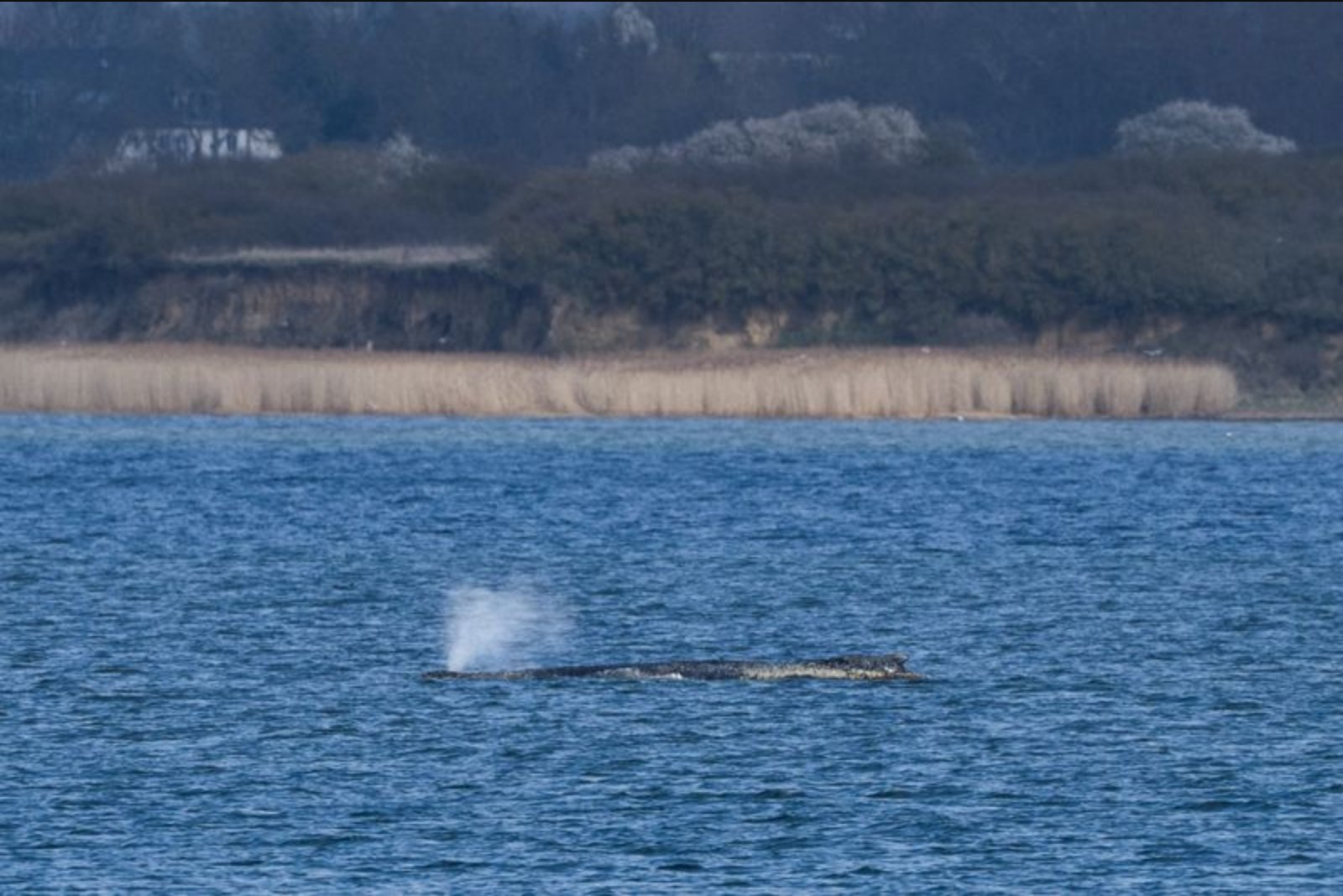
A juvenile humpback whale, nicknamed Timmy by rescuers, has been stuck in shallow bays off Germany's Baltic coast for a week. At an estimated 12 to 15 metres long, the animal has resisted repeated rescue efforts using dredgers and boats, and is now described as weak and stressed. Conservationists cite disrupted migration and human influence as possible drivers of such strandings, but the immediate outcome for Timmy remains uncertain.

Key Points

  • A juvenile humpback named Timmy is trapped in shallow bays off Germany’s Baltic coast and is estimated at 12 to 15 metres long.
  • Rescuers have repeatedly used dredging equipment and boats to guide the whale toward the Atlantic but have not succeeded; teams are now hoping it will exit on its own.
  • Physical observations show the whale is weak, stressed, has skin irritation, and carries fishing gear entangled in its mouth, complicating rescue work - implications for maritime services and local tourism at the resort coastline.

A juvenile humpback whale, given the name Timmy by rescuers, remained trapped in shallow bays along Germany's Baltic coast on Sunday morning after a week-long struggle that has left its survival in doubt.

Rescuers estimate the animal to be between 12 and 15 metres in length. Teams have employed dredging equipment and boats in attempts to steer the whale back along a longer route toward the Atlantic, but those efforts have been unsuccessful so far.

After repeated operations over several days, responders are now placing hope in the possibility that the whale will be able to free itself. "The whale is quite weak. We’re still hopeful that it will pull through," Daniela von Schaper, a marine expert at Greenpeace, said.

The whale's sex has not been determined. Rescuers named it after Timmendorfer Strand, the white sandy beach on Germany's resort-filled Baltic coastline where the animal was first sighted on a nearby sandbank on Monday.

Greenpeace and partner organisations documenting the scene report the animal is showing clear signs of severe stress. Observers noted skin irritation and that fishing gear is entangled in the whale's mouth, complicating efforts to free it.

There were brief moments over the weekend when the whale was able to free itself on two occasions, only to become stranded again soon after. Those short-lived gains have not yet produced a sustained recovery.

Humpback whales are not native to the Baltic Sea. While von Schaper said large whales are uncommon in the region, they are spotted there every couple of years.

Conservationists point to disrupted migration routes and human influence as factors that contribute to strandings worldwide, while also noting that animals can lose their way while searching for food. "Some of them find their way out again, others unfortunately do not," von Schaper said.


Context and immediate situation

  • Timmy has been stuck in shallow, sandbank-prone areas of the Baltic coast for about a week and is currently described as weak.
  • Rescue teams have used mechanical dredging and small-boat guidance to attempt to escort the whale toward deeper waters, but these operations have not succeeded so far.
  • Field teams have recorded physical signs of stress on the animal, including skin irritation and entanglement with fishing gear in the mouth.

Risks

  • Survival risk for the whale is elevated given reports that it is quite weak and has been stuck for a week - this impacts wildlife conservation efforts and could strain rescue resources.
  • Rescue attempts have repeatedly failed and entanglement with fishing gear increases the complexity and danger of interventions - this affects fisheries and maritime salvage operations.
  • Uncertainty about the whale's ability to reorient and exit the shallow bays reflects broader risks from disrupted migration routes and human influence on marine mammals - relevant to environmental management and coastal tourism.

More from World

U.S.-born Pope Breaks Silence on Home Politics, Directly Urges Trump to Seek 'Off-Ramp' in Iran War Apr 2, 2026 In a Northeast Hungarian Pub, Voters Weigh Tradition and Change Ahead of April Ballot Apr 2, 2026 From Pariah to Pivotal Broker: How Pakistan Recast Its Role in the Iran War Apr 2, 2026 Russia Targets Students and Local Employers to Boost Drone Forces with Lucrative Pay Offers Apr 2, 2026 Displaced West Bank Family Faces New Threat as Iranian Missiles Fall Nearby Apr 2, 2026