
When delegations from the United States, Denmark and Greenland met last month in the Greenland capital, the talks were described by multiple participants as routine. There was no discussion of a U.S. takeover of the Danish-governed territory, the participants said. Less than two weeks later, the tenor shifted sharply when the president named Jeff Landry as a special envoy to Greenland and Landry posted on social media that he would seek to "make Greenland part of the U.S."
The appointment and Landry’s public message stunned officials in Copenhagen and surprised senior U.S. government personnel who work on European and NATO matters, according to people familiar with the conversations. Sources said the exclusion of career diplomats and national security officials from key discussions fit a broader pattern in which foreign policy decisions are made by the president and a close group of advisers rather than through the established interagency process.
That inward, highly centralized decision-making has produced abrupt policy pronouncements in a number of theaters. The actions tied to Greenland included what officials perceived as an implied threat to seize the island, public talk of new tariffs on U.S. allies and an effort to extract concessions from Denmark, which administers Greenland. Those moves appeared to be driven primarily by the president and a small circle of aides rather than by the wider national security apparatus.
People close to the White House who sought to shape the president’s thinking on these and related measures included Commerce Secretary Howard Lutnick, who proposed tariff ideas, Vice President JD Vance, Secretary of State Marco Rubio and others who reportedly tried to persuade the president against entertaining military options, sources told Reuters.
White House spokeswoman Anna Kelly pushed back on descriptions of an opaque process. She said critics who "leak to Reuters" were not privy to sensitive conversations and argued that the record of Trump’s national security team spoke for itself. "The president was elected to implement America First foreign policy, and he has done so more effectively through his top-down approach," Kelly said.
Escalation and alarm over military talk
The risk inherent in a top-down, personalized approach to foreign policy became visible in the weeks after a January 5 CNN interview with White House Deputy Chief of Staff Stephen Miller. Asked whether the administration would rule out military action to acquire Greenland in the wake of a U.S. military operation in Venezuela two days earlier, Miller declined to answer directly. In subsequent interviews and on social media, the president and other administration officials at times appeared to amplify the notion that force could be used with respect to Greenland.
Those public statements produced confusion and concern in Washington and among allies. Lawmakers from both parties on Capitol Hill expressed unease at the prospect of a major military operation being pursued without prior consultation with Congress, according to two people familiar with the matter. Several members called Secretary Rubio and senior White House staff to convey their concerns and to advise the administration against moving forward.
Some Republican lawmakers even warned administration officials that a military invasion of Greenland could prompt a potential impeachment inquiry, the sources said.
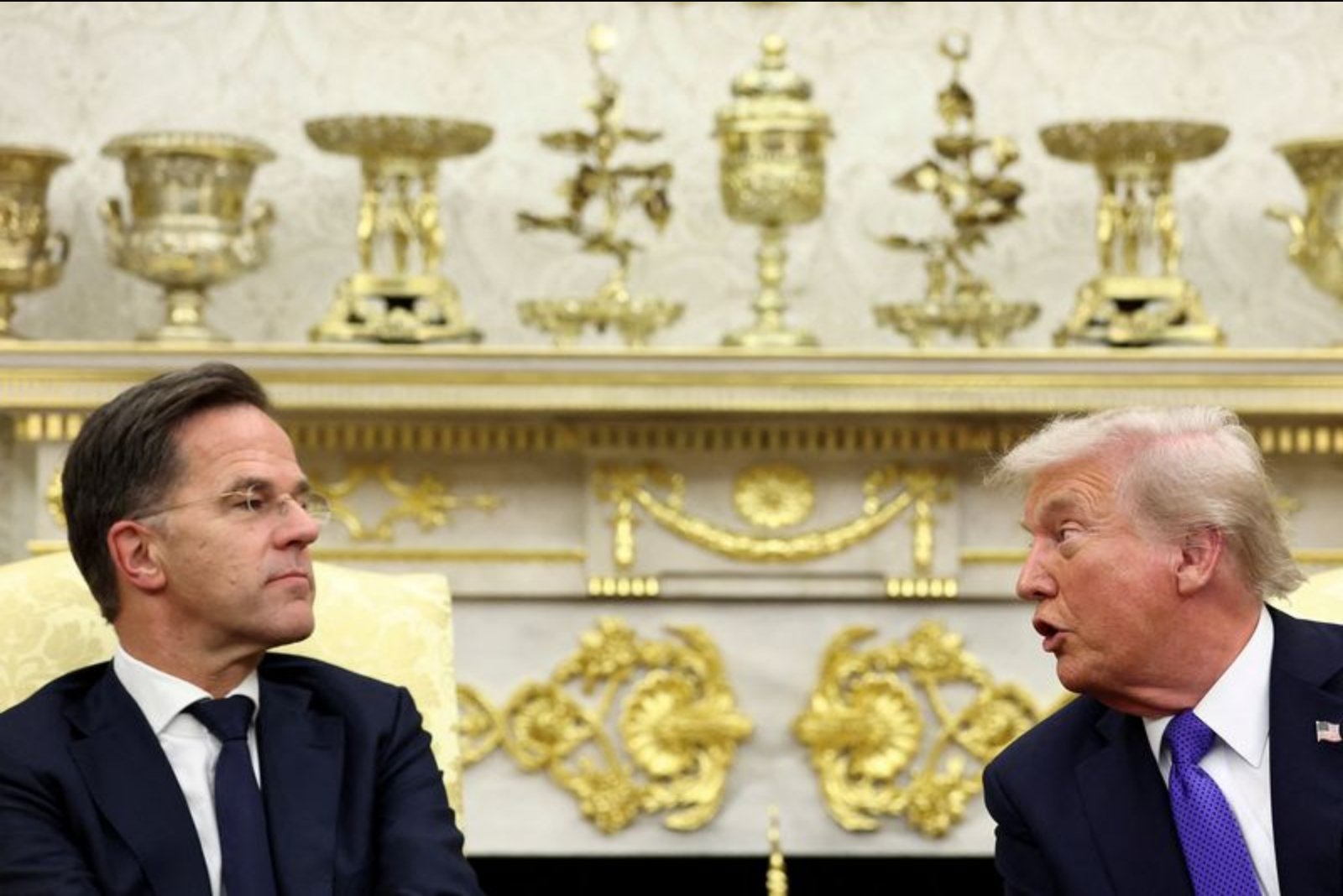
In the days that followed, the administration sought to de-escalate. The president withdrew the threat to impose tariffs on allies who supported Greenland and said he and NATO Secretary General Mark Rutte had "formed the framework of a future deal with respect to Greenland and, in fact, the entire Arctic Region" following talks in Davos, Switzerland.
Two sources close to the administration told Reuters that, despite the public back-and-forth, a military invasion was never seriously under consideration. Still, critics argue that the rhetorical escalation has caused damage that may not be easily reversed. Kori Schake, a former Pentagon and White House official with the American Enterprise Institute, said the pattern of erratic threats makes it hard for partners to believe the United States will not repeat such behavior. "Trump is so erratic with his threats, there’s no way to establish that he won’t turn right around and do it again. He has made the United States untrustworthy to our closest friends," Schake said.
When asked for comment on Miller’s remarks and related matters, White House spokeswoman Kelly said that if the deal comes to fruition, "the United States will be achieving all of its strategic goals with respect to Greenland, at very little cost, forever." Landry’s office did not respond to requests for comment. A Danish embassy spokesperson had no comment for this story.
The president and his supporters have argued that Greenland is strategically important to deter Russian and Chinese influence in the Arctic and have suggested Denmark cannot ensure the island’s security. Yet the United States already maintains a military base on Greenland and, under a 1951 treaty with Denmark, has the ability to expand its presence there.
Pattern extends beyond Greenland
Officials and former officials say the inward-directed model of decision-making has been a consistent feature of the president’s second term. In negotiations intended to end Russia’s war in Ukraine, for instance, senior U.S. officials said a 28-point plan emerged from discussions that included the president’s special envoy Steve Witkoff, the president’s son-in-law Jared Kushner and Russian envoy Kirill Dmitriev, who leads the Russian Direct Investment Fund. Many senior officials at the State Department and on the National Security Council said they were not briefed on the development of that plan.
The same process appeared in Syria policy. In May, the president met in Saudi Arabia with Syrian President Ahmed al-Sharaa in a public setting that effectively signaled U.S. support for the former Islamist militant, despite internal objections from some in the administration. The president’s decision to lift all U.S. sanctions on Syria took many officials by surprise.
Officials said that since the president’s moves on Syria, U.S. envoy Tom Barrack has been the primary implementer of Syria policy. According to three people familiar with the process, representatives in Washington at the State Department and other agencies have had limited input and communications between Barrack and subject-matter experts in Washington have been infrequent.
A State Department spokesperson disputed characterizations of being shut out, saying: "There is tremendous collaboration throughout President Trump’s administration, and there are dedicated public servants dutifully advancing key priorities. Then there are the anonymous sources whining to the press who clearly don’t have the judgment or temperament to implement President Trump’s agenda."
Implications for allies and markets
Allies and lawmakers alike say the pattern of sudden, centralized declarations and swift reversals can damage trust. The episodes documented here span security issues in the Arctic, potential tariff actions that touch on trade and commerce, and high-level diplomatic engagements related to conflicts in Ukraine and Syria. Officials warn that the unpredictable nature of these moves could complicate coordination with allies on defense, trade and sanctions enforcement.
For markets, talk of tariffs aimed at allies and abrupt policy shifts can introduce near-term uncertainty for sectors exposed to international trade policy, including export-oriented manufacturing and industries reliant on stable global supply chains. Defense contractors and firms involved in Arctic operations could be affected by changes in basing or force posture, while sanctions decisions can shape risk assessments for investors with exposure to regions like Syria and Ukraine.
What remains uncertain
Several questions remain open and are rooted in the process as much as in policy. It is unclear how often senior career officials will be involved in the formulation of future initiatives that touch allied security commitments. The extent to which Congress will play a restraining role if the administration again suggests military options without prior consultation is also unresolved. Finally, whether the oscillation between hard-line rhetoric and subsequent de-escalation will erode long-term confidence among NATO partners is a continuing uncertainty.
Officials and observers interviewed for this article described a foreign policy practice that relies on a concentrated group of advisers and that can move quickly from an initial, sometimes startling public announcement to a rapid adjustment or retraction. The mix of public statements, social media messaging and selective briefings has left allies and many career U.S. officials feeling sidelined, while prompting questions about how sustainable such an approach will be for managing complex, allied relationships.