
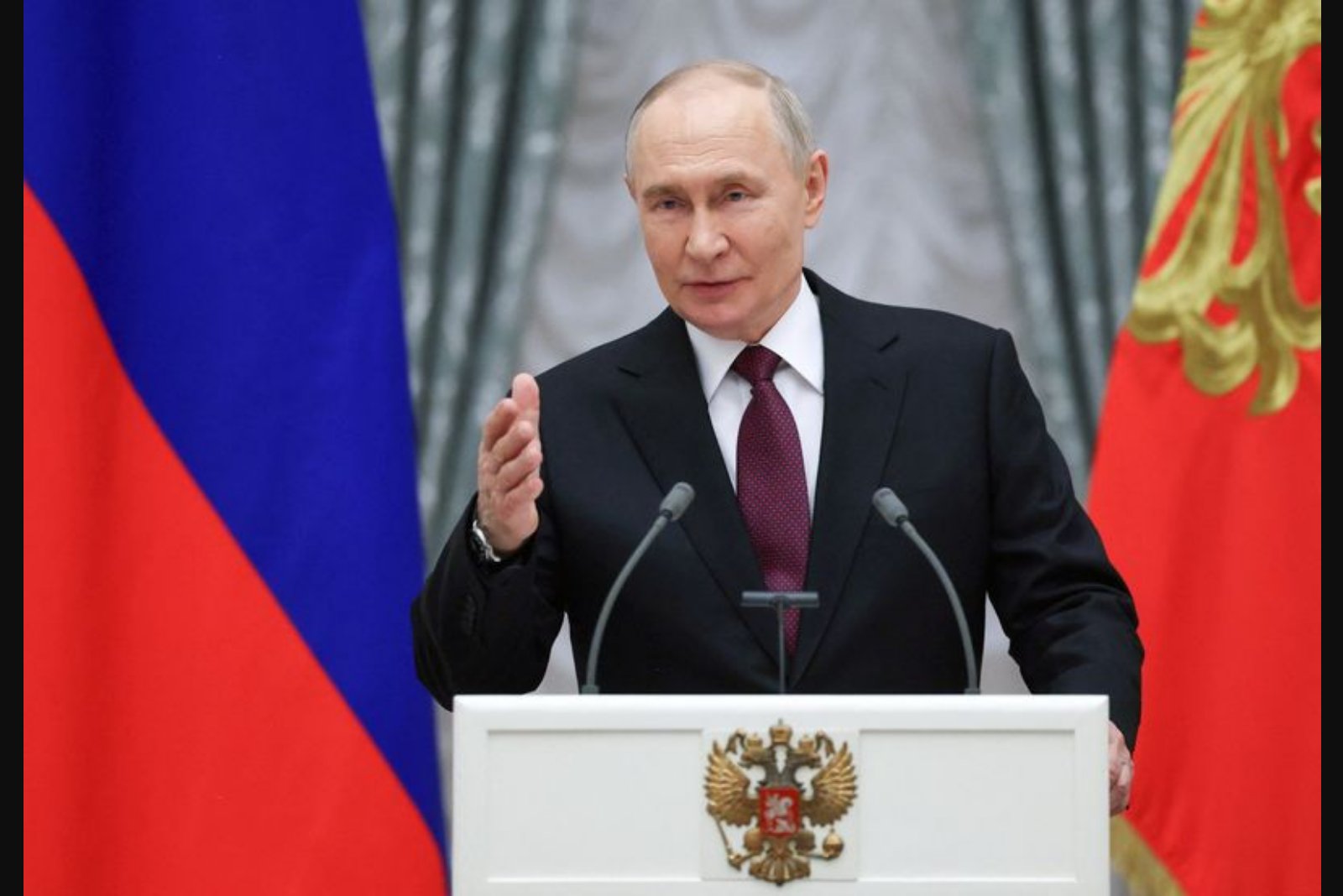
Russian President Vladimir Putin extended Nowruz greetings to Iran's senior leaders and emphasized that Moscow stands as a loyal friend and reliable partner to Tehran, according to a Kremlin statement released on Saturday.
The Kremlin said Putin sent congratulations to Iran's Supreme Leader Ayatollah Mojtaba Khamenei and Iranian President Masoud Pezeshkian on the Iranian new year. In its account of the message, the Kremlin quoted Putin directly: "Vladimir Putin wished the Iranian people to overcome the harsh trials with dignity and stressed that in this difficult time Moscow remains a loyal friend and reliable partner of Tehran," the statement said.
Despite the public assurance, the extent of Russia's backing for Iran is contested. Some Iranian sources cited in reporting have asserted that Moscow has provided little concrete assistance during what they describe as the most serious crisis for Iran since the U.S.-backed Shah was toppled in the 1979 revolution. The Kremlin's declaration of solidarity sits alongside those contrary accounts.
Moscow has framed recent U.S. and Israeli actions as responsible for pushing the Middle East into a dangerous state and for triggering a significant global energy shock. In that context, Putin also denounced the killing of Iranian Supreme Leader Ayatollah Ali Khamenei as a "cynical" murder, according to the Kremlin's remarks.
Separately, media reporting said Moscow proposed a reciprocal arrangement to Washington: Russia would cease sharing intelligence with Iran if the United States stopped supplying Ukraine with intelligence about Russia. The report said the United States rejected that proposal. The Kremlin has dismissed the coverage as fake.
The Kremlin's public statements and reported private approaches come amid a backdrop in which Russia has seen shifts in its set of allies. The report noted that Russia was deprived of an ally when the United States toppled Venezuelan leader Nicolas Maduro, even as Moscow has benefited from higher oil prices that followed the U.S. and Israeli actions involving Iran, a strategic partner.
On the formal ties between Moscow and Tehran, published terms of the strategic partnership reportedly do not include a mutual defence clause. Russia has repeatedly stated that it does not want Iran to acquire an atomic bomb, a development Moscow says it fears would spark a nuclear arms race across the Middle East.
Summary
Putin offered Nowruz greetings and pledged continued Russian friendship with Iran. Observers and some Iranian sources dispute how much concrete support Moscow has provided. Russia attributes regional destabilization and energy market effects to U.S. and Israeli actions; it denies reports of an intelligence-for-intelligence swap with Washington.
Key points
- Putin sent Nowruz congratulations to Iran's Supreme Leader Ayatollah Mojtaba Khamenei and President Masoud Pezeshkian, with the Kremlin quoting Putin on Moscow's loyalty.
- The scale of Russia's material assistance to Iran is disputed, with some Iranian sources saying little tangible help has arrived.
- Moscow blames U.S. and Israeli actions for regional turmoil and higher energy prices, while denying a reported intelligence quid pro quo with Washington.
Risks and uncertainties
- Uncertainty over the actual extent of Russian support to Iran could affect geopolitical calculations and energy market sentiment - impacting oil and gas sectors.
- Conflicting reports about intelligence cooperation and diplomatic offers create ambiguity in relations between Russia, Iran, and the United States - affecting defence and geopolitical risk assessments.
- The lack of a mutual defence clause in the published strategic partnership and Russia's stated opposition to an Iranian atomic bomb leave open the possibility of further regional proliferation risks with implications for energy and defence markets.
Investment note
Questions about the macro outlook and market-sensitive geopolitics often begin with better data. Institutional-grade information combined with tailored analytical tools can help investors evaluate opportunities amid elevated uncertainty. Such resources aim to reduce guesswork but do not guarantee investment outcomes.