
In a recent development, U.S. President Donald Trump reversed his earlier threat to implement tariffs on multiple nations concerning their approaches to Greenland. On January 21, following a meeting with NATO Secretary General Mark Rutte in Davos, Switzerland, Trump stated via his social media platform Truth Social that a mutual understanding had been reached regarding issues connected to Greenland. Consequently, he confirmed that the tariffs initially scheduled to take effect on February 1 would no longer be imposed.
The announcement marks a noteworthy change in U.S. trade policy related to Greenland, an area of strategic interest. While President Trump disclosed that there is now an agreed-upon outline with NATO concerning Greenland's future, he chose not to elaborate on the substantive elements or specifics of the agreement.
This decision to halt tariffs follows heightened tensions stemming from previous U.S. trade threats directed at countries perceived as resistant or antagonistic towards U.S. interests in Greenland. The resolution indicates progress in diplomatic and economic relations, particularly involving NATO allies.
The move carries potential implications across various sectors, notably international trade and defense, given Greenland’s geopolitical significance. Financial markets may respond to the easing of trade tensions, particularly in sectors sensitive to tariff changes and geopolitical risk.
Investors and market participants are advised to monitor further announcements for detailed terms of the Greenland agreement and assess how the changing trade landscape might influence investment and risk profiles, particularly within industries linked to natural resources, defense infrastructure, and international commerce.
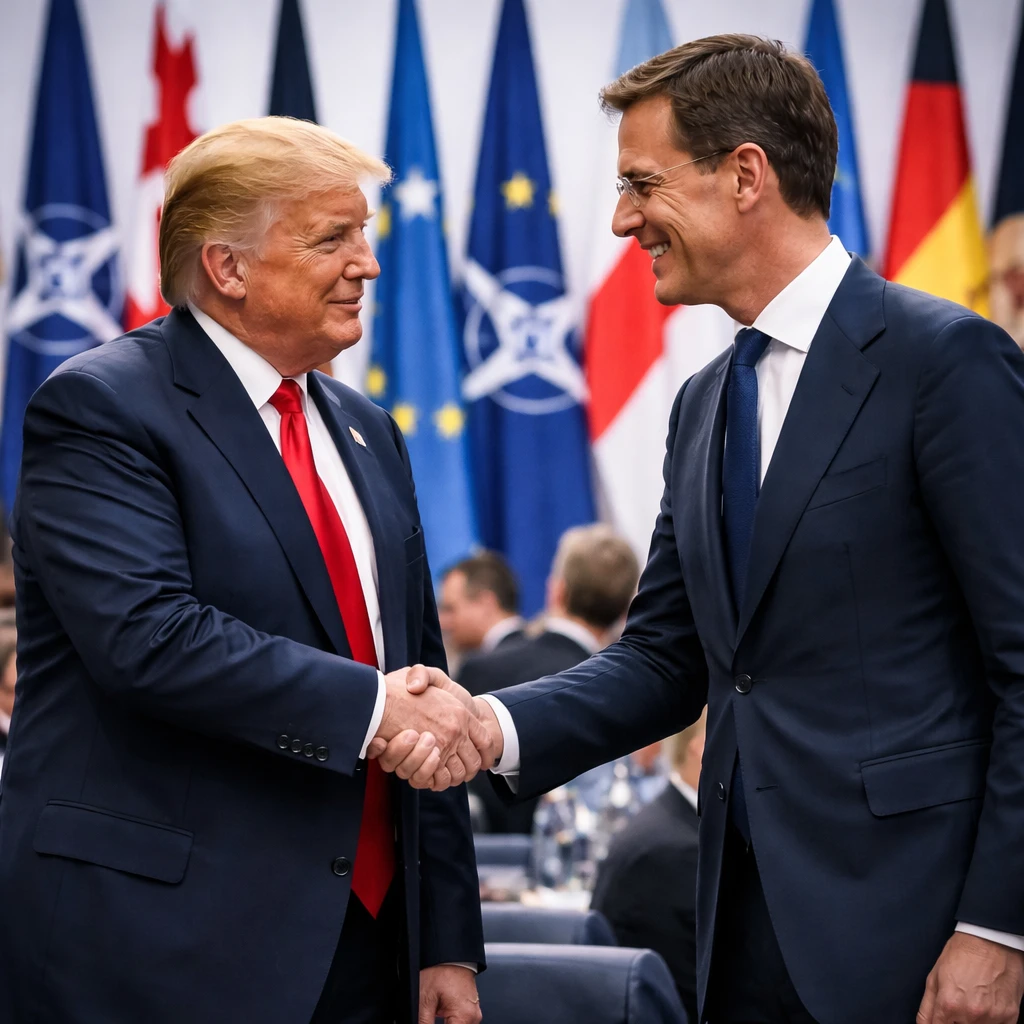
U.S. President Donald Trump has retracted his previously announced tariff plans targeting several countries due to their positions on Greenland, citing a newly formed agreement with NATO regarding the island's future. This decision follows recent discussions with NATO Secretary General Mark Rutte in Davos, where the framework for cooperation was outlined, although specific details remain undisclosed.
Key Points
- President Trump cancels tariff imposition planned for February 1, following agreement with NATO on Greenland's future.
- The decision follows a meeting between Trump and NATO Secretary General Mark Rutte in Davos, signaling diplomatic progress.
- Details of the Greenland deal remain undisclosed, leaving specific terms and implications to be clarified later.
Risks
- Uncertainty about the precise terms of the Greenland agreement may lead to market volatility, particularly in sectors related to international trade and defense.
- Potential ongoing geopolitical tensions could arise if the agreement framework does not satisfy all involved parties.
- Lack of transparency around the deal specifics complicates risk assessment for investors and policy stakeholders.