
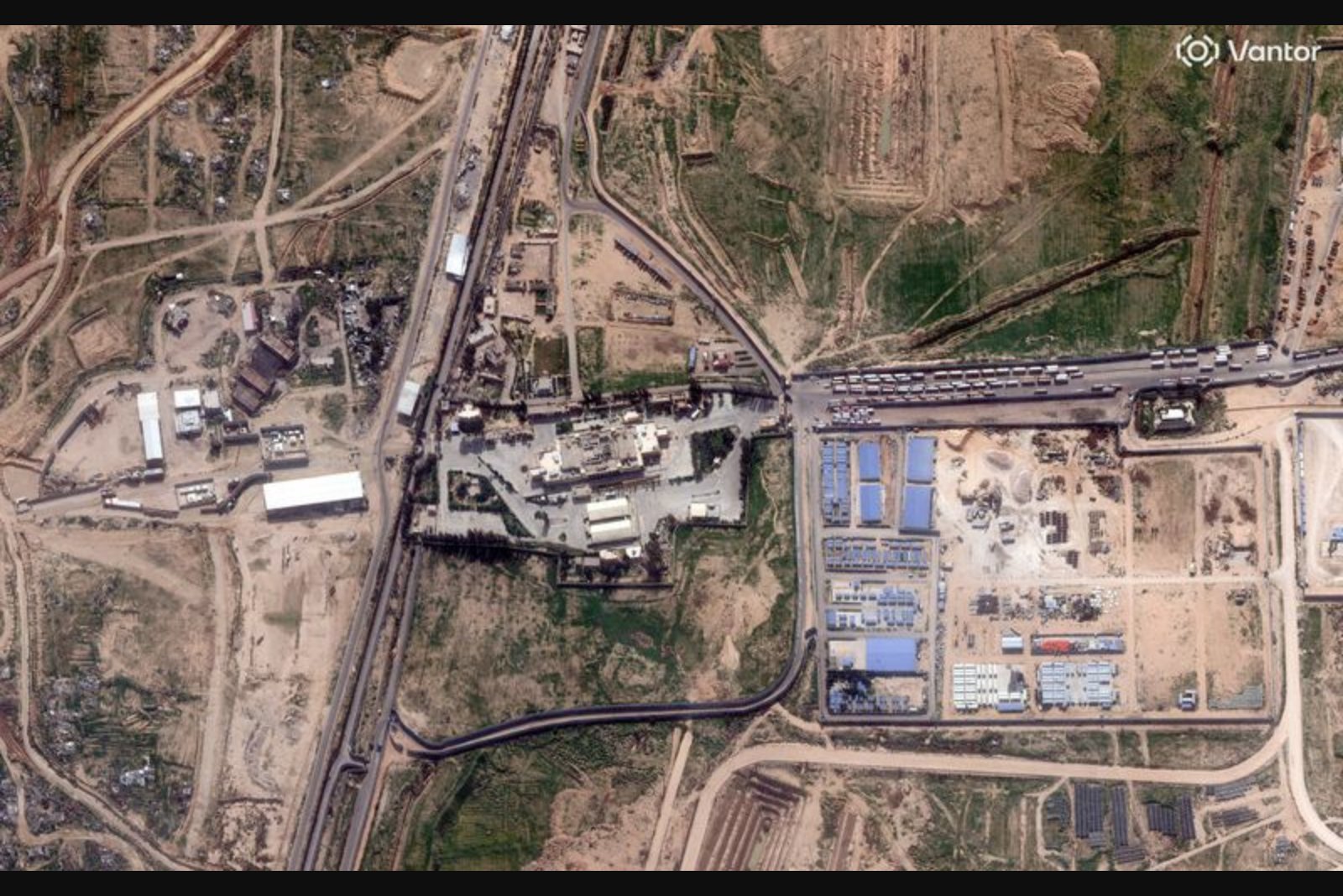
Preparations were under way on Sunday to resume operations at the Rafah border crossing between Gaza and Egypt, Israeli and Palestinian officials said, though it remained uncertain whether any Palestinians would be able to pass through before the end of the day.
Before the conflict, Rafah was the primary direct exit to the outside world for most Gazans and a vital route for aid deliveries. The crossing has been largely closed since May 2024. The Israeli military unit responsible for humanitarian coordination, COGAT, said the reopening will permit movement in both directions for Gaza residents on foot only, and that the crossing's operation will be coordinated with Egyptian authorities and the European Union.
"As part of the pilot for the initial operation of the crossing, all involved parties are carrying out a series of preliminary preparations aimed at increasing readiness for full operation of the crossing," COGAT said in a statement on Sunday. It added that the actual passage in both directions will begin once those preparations are finished.
A European source familiar with the EU mission's arrangements confirmed the broad details of the plan, and a Palestinian official said the crossing was expected to open for passengers on Monday. The Egyptian foreign ministry did not immediately respond to a request for comment.
Operational limits and security procedures
Israeli authorities have said the crossing will operate under stringent security checks and will be limited to Palestinians who wish to leave the enclave as well as to those who fled earlier fighting and wish to return. Many of those anticipated to exit Gaza are sick or wounded individuals needing medical treatment abroad; Palestinian health authorities say some 20,000 patients are waiting to leave.
An Israeli defence official provided specific capacity constraints, saying the crossing can hold between 150 and 200 people in total moving in both directions. The official noted that more people are expected to leave than to return because patients typically travel with escorts.
Lists of Gazans slated to pass through have been compiled by Egypt and approved by Israeli authorities, the defence official said.
Political context and ceasefire fragility
Reopening Rafah was a key element of the first phase of U.S. President Donald Trump's proposed plan for ending the Israel-Hamas war. The ceasefire that entered into force in October after two years of fighting has been repeatedly unsettled by subsequent rounds of violence. Local health officials report that Israeli operations in Gaza have killed more than 500 Palestinians since the ceasefire took effect, and Israeli authorities say Palestinian militants have killed four Israeli troops during the same interval.
In the days immediately before the planned reopening, violence flared. On Friday, militants emerged from a tunnel in Rafah in what Israeli authorities described as a violation of the truce. In response, on Saturday Israel carried out some of its most intense airstrikes since the ceasefire, which Israeli officials said killed at least 30 people.
The later phases of the U.S. plan anticipate a transfer of governance in Gaza to Palestinian technocrats, disarmament by Hamas, withdrawal of Israeli forces, and deployment of an international force to maintain security while Gaza is rebuilt. Hamas has rejected disarmament to date, and Israel has stated it will use force if the group does not relinquish weapons peacefully.
What to watch next
- Completion of the operational preparations COGAT described - which will determine when and how many people can pass in the initial phase.
- Coordination outcomes between Israel, Egypt and European mission personnel on screening and logistics for pedestrian movement.
- Security developments on the ground that could affect the continuity of the crossing's operation and the broader ceasefire.
For now, officials from multiple sides are preparing logistics and lists, but uncertainty persists over the immediate movement of people. The reopening, even if limited, would restore a long-closed route that previously served as a main conduit for both civilians seeking to leave Gaza and for humanitarian access.