
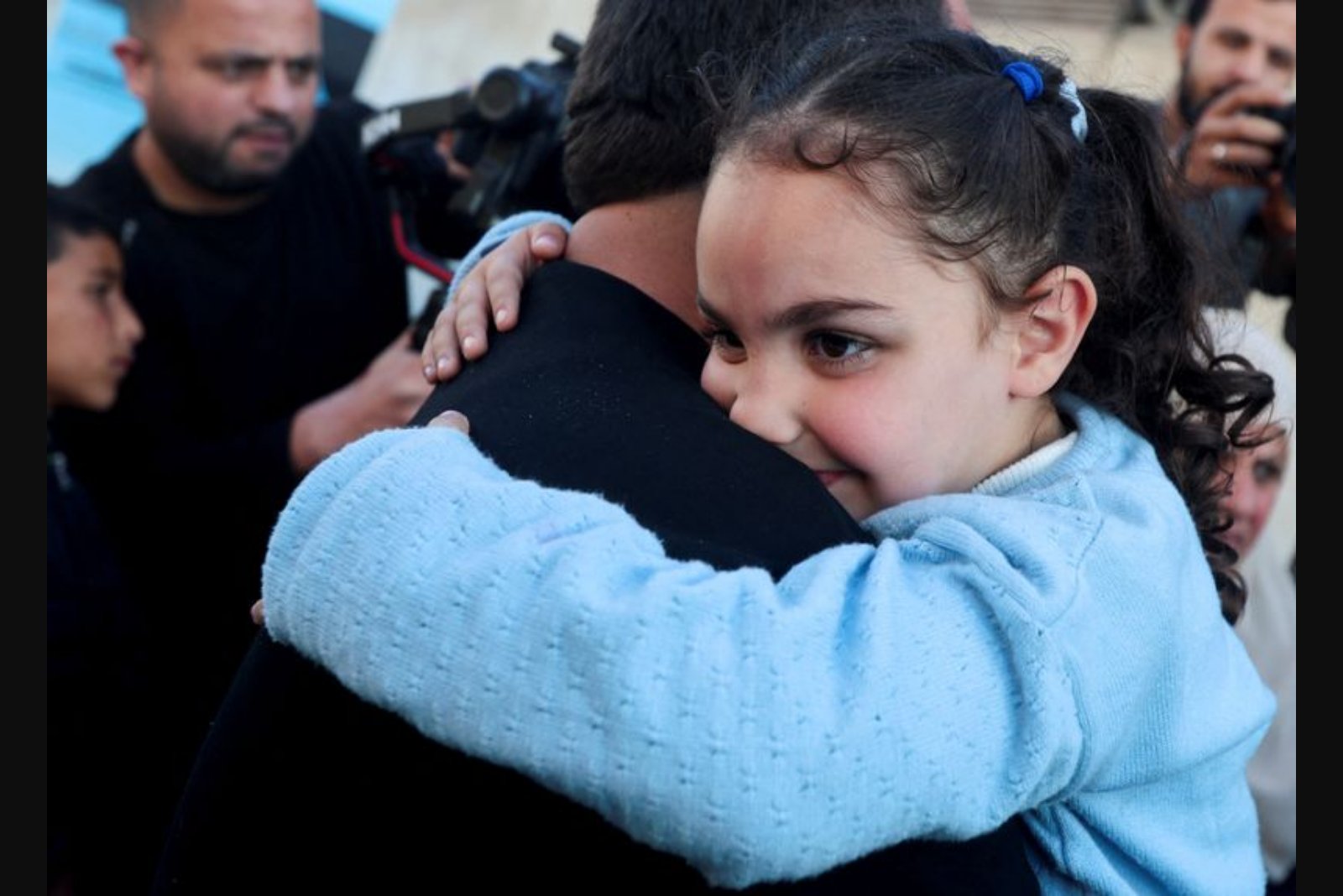
Eleven toddlers reunited with their parents in Gaza on Monday after being evacuated to Egypt as premature infants when Israeli forces approached the neonatal intensive care unit at Al Shifa hospital two years ago.
The children were part of a group of 29 preterm babies taken from the hospital's neonatal unit in November 2023, during an operation in which Israeli forces raided Al Shifa amid accusations that Hamas had used the facility for military purposes. The infants were moved as intense fighting raged and Gaza's border with Egypt remained closed, with medics permitted to escort the newborns but parents barred from accompanying them.
The reunions, arranged by the United Nations, brought emotional scenes as parents embraced children who had never known them in person and who had not lived in Gaza since infancy. One mother, Sundus Al-Kurd, spoke as she held her daughter Bissan, who arrived in Egypt in an incubator two years earlier. "I couldn’t touch her, I couldn’t hold my daughter during the two and a half years," she said. "Today is like a (new) birthday, like a new beginning, and I will make up for everything my daughter was deprived of, God willing," she added.
Medical staff said the transfer of infants in incubators placed the babies' lives at serious risk. Of the 29 preterm infants taken to Egypt, seven died while there, doctors reported. Beyond the 11 children brought back to Gaza on Monday, the remaining infants are with family members outside the Palestinian territory, according to the doctors.
Al-Kurd described concerns that her daughter would not immediately recognize her. She brought snacks and a green balloon to help make Bissan comfortable. "She still doesn’t know who her mother is, who her father is, who her family is. So, we’re trying with her little by little, and hopefully, things will improve with time, the girl will know us," Al-Kurd said.
Bissan's personal history is marked by loss. A sister, Habiba, was killed on the day Bissan was born when an Israeli airstrike struck the family's home in Beit Lahiya in October 2023, killing Habiba and nine other family members. Al-Kurd, who was eight months pregnant at the time, was wounded and doctors performed a cesarean delivery to save Bissan's life. The family now lives in a tent encampment in Gaza City. "She (Bissan) will compensate for the loss of her sister and everyone I lost," the mother said.
The mission restoring the children to Gaza was made possible by a U.S.-brokered arrangement last October that halted most fighting and later allowed Israel to reopen Gaza's sole border crossing with Egypt. That reopening enabled the U.N.-organized operation to bring the toddlers back to Gaza and to reunite them with their parents.
Throughout the two-year conflict, Israeli authorities have repeatedly accused Hamas and other militant groups of using hospitals as locations to store weapons and to conceal tunnels and fighters, publishing photos and video they say show such activity. The groups involved have denied those allegations. The fighting and related operations have resulted in destruction and damage to medical facilities and neonatal units across Gaza.
Gaza's ability to care for newborns, especially those with health complications, has been severely affected. Mohamed Abu Selmia, director of Al Shifa Hospital, said facilities for newborn babies are urgently needed. "There is also a shortage of essential medications for premature infants, specialized infant formula, and respiratory support medications," he added. Abu Selmia said that around 52% of basic medicines are unavailable in Gaza, while 75% of medical supplies are unavailable.
The reunions on Monday closed a particularly painful chapter for parents who have been separated from infants they have not been able to hold or care for since their evacuation two years ago. For families like Al-Kurd's, the return of a child provides both a moment of joy and the start of a slow process of rebuilding amid continuing shortages and damaged medical infrastructure.
Contextual note: The details in this report reflect the accounts provided by parents, doctors, and hospital officials involved in the evacuations and the U.N.-organized return mission.