
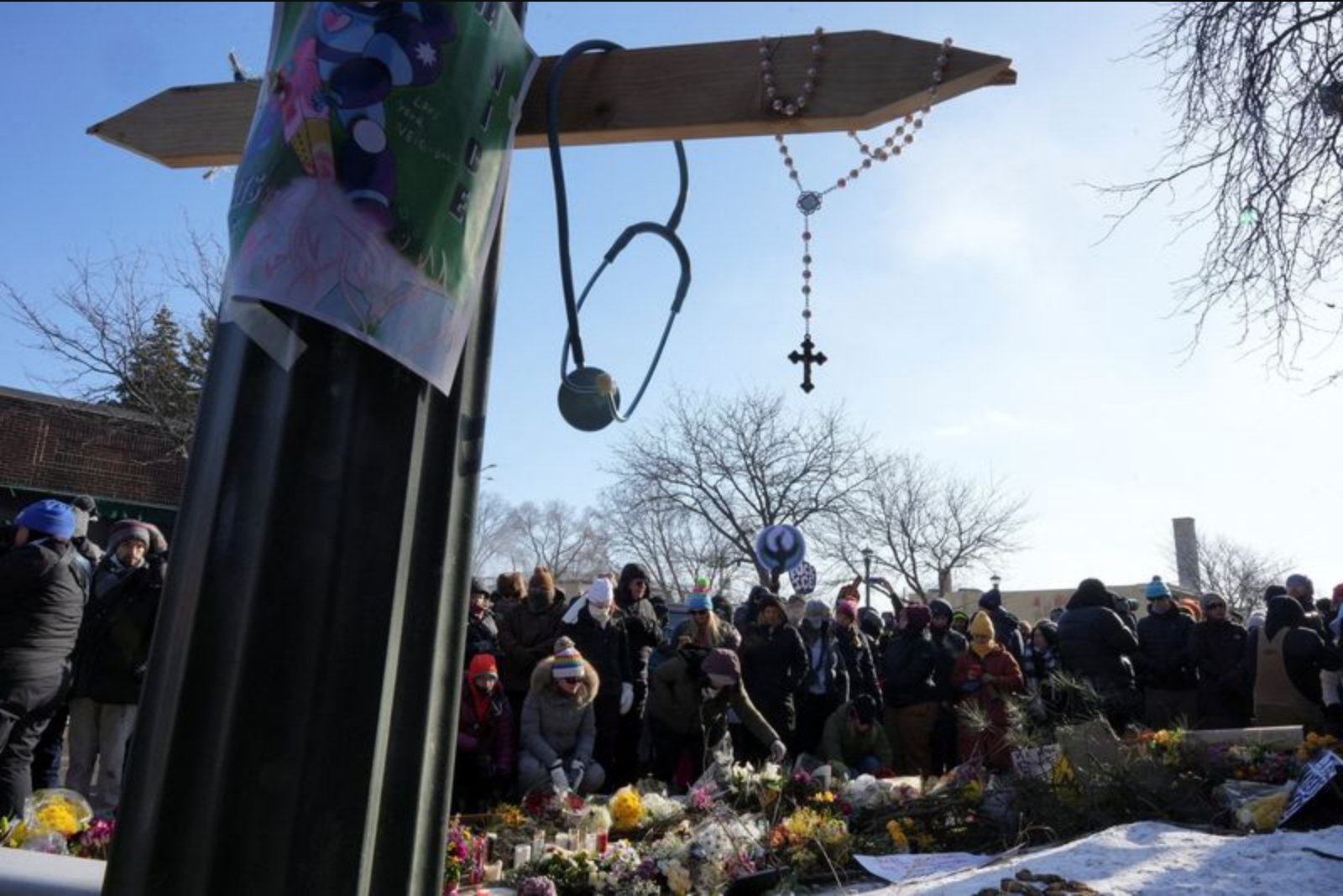
An initial internal review by U.S. Customs and Border Protection (CBP) into the fatal shooting of U.S. citizen Alex Pretti in Minneapolis does not describe him as having brandished a firearm, according to the document shared with lawmakers. The preliminary assessment, prepared by CBP’s Office of Professional Responsibility, reports that Pretti, 37, was shot by two federal officers - a Border Patrol agent and a customs officer - after he did not move out of the street when ordered to do so by a customs officer.
The review, which CBP said was based on body-worn camera footage and agency documentation, offers an initial outline of the encounter but does not present definitive investigative findings. CBP spokesperson Hilton Beckham said that such notifications are standard protocol and are shared with members of Congress to promote transparency, and that they "provide an initial outline of an event that took place and do not convey any definitive conclusion or investigative findings."
According to the internal account, a customs officer attempted to move Pretti and a woman out of the street. The document states that when they "did not move," the officer deployed pepper spray against Pretti and the woman. CBP noted that its customs officers typically operate at ports of entry where they screen passengers and goods entering the United States, but that some have been detailed to immigration enforcement duties by the Trump administration.
The agency assessment says CBP personnel tried to take Pretti into custody and that "a struggle ensued." During that struggle, a Border Patrol agent is reported to have shouted "He’s got a gun!" multiple times. The review states that five seconds after that call, a Border Patrol agent and a customs officer fired at Pretti.
Video from the scene, as described in the CBP review, shows an agent removing a handgun from Pretti’s waist prior to the shooting. The Department of Homeland Security had earlier said Pretti "approached U.S. Border Patrol officers with a 9 mm semi-automatic handgun," but the DHS assertion did not note whether the weapon was holstered. The preliminary CBP document, by contrast, made no explicit mention of Pretti having brandished the weapon.
In the hours after the killing on Saturday, top Trump administration officials publicly characterized Pretti, an ICU nurse at a veterans hospital, as an aggressor. White House aide Stephen Miller called Pretti a "domestic terrorist" and a "would-be assassin," statements made without evidence presented alongside those labels. Video from the scene rapidly contradicted some of the initial descriptions offered by senior officials.
The shooting sparked a national uproar and prompted a change in tone from President Trump this week, who adopted a more conciliatory stance, according to statements in the public record. The identities of the agents and officers involved, and whether they had prior experience with crowd control in urban environments, have not been made public.
CBP shared the preliminary review with lawmakers on Tuesday. Agency officials emphasized that the document is an early outline compiled from available footage and internal reports, and that the assessment does not represent final investigative conclusions. The account in the review highlights a sequence of actions - an order to move, the use of pepper spray, an attempted arrest and a physical struggle - that led to the use of lethal force by two federal officers.
Context and evidence cited in the review
The CBP assessment relies on body-worn camera video and CBP documentation as the basis for its chronology. It records that a customs officer ordered Pretti and a woman out of the roadway, that the pair did not comply, that pepper spray was used, and that a struggle followed. It further records a shouted warning that Pretti had a firearm and states that two federal officers fired on him five seconds after that warning.
Beyond the sequence recorded in the review, several key points remain unresolved in public accounts, including the identities of the officers, their training backgrounds and any further determinations that may arise from ongoing investigations.