
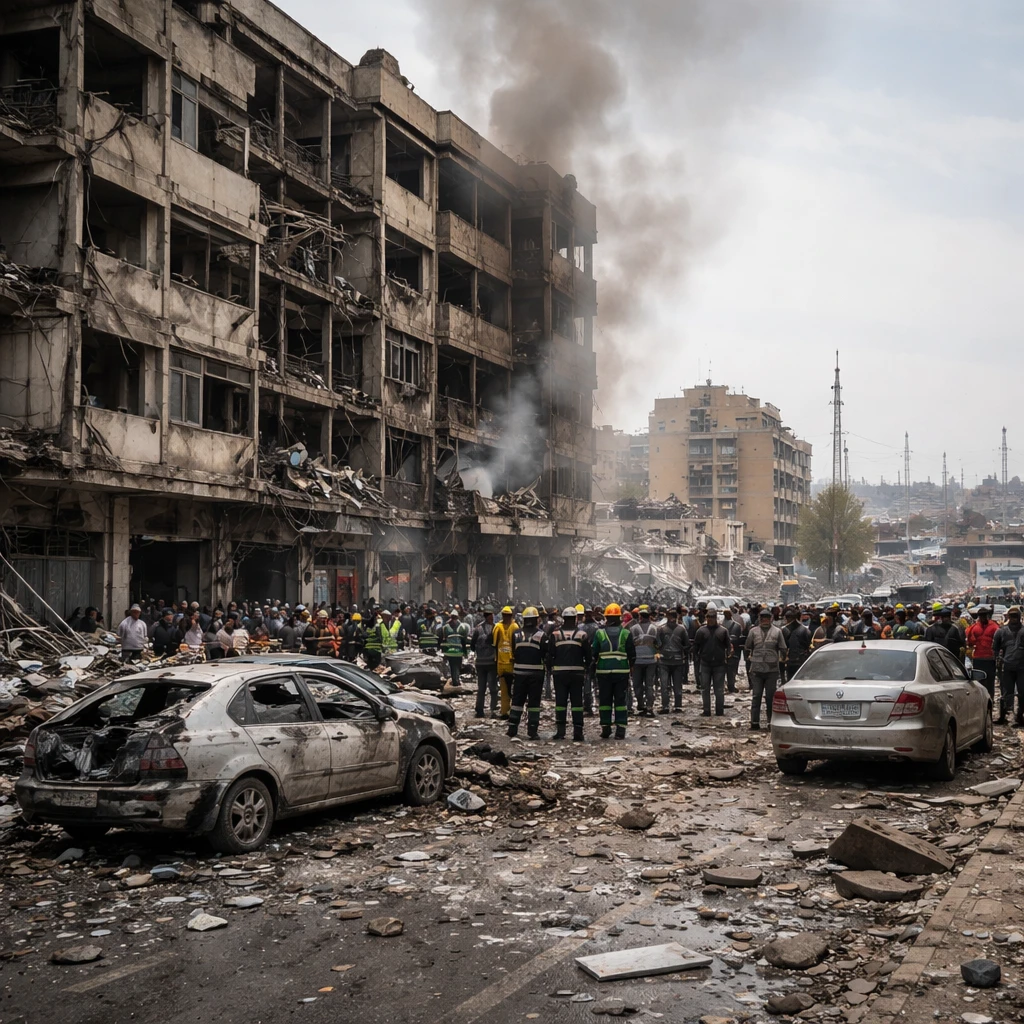
Jan 31 - A building in the southern Iranian port city of Bandar Abbas was hit by an explosion on Saturday that a preliminary assessment by local fire authorities attributes to a gas leak, the head of the city's fire department said.
Mohammad Amin Liaqat, the fire department chief, gave the initial finding in a video carried by the semi-official Mehr news agency. "This (gas leak) is the preliminary assessment. My colleagues will give more details in the next few hours," he said in the footage.
State-run outlets reported that at least two people were killed and 14 others were injured in the blast. A separate report in the state-run Tehran Times said four people were killed in another gas explosion in the city of Ahvaz, near the Iraqi border; no further details about that incident were immediately available.
A video circulating on social media showed people standing amid debris and wrecked cars in front of a damaged building after the blast. The location shown in the clip was verified by matching visible buildings, trees and the road layout to satellite and archival imagery. The date the video was recorded could not be independently verified.
Security and diplomatic backdrop
The explosions came as tensions remain elevated between Tehran and Washington. U.S. President Donald Trump said on January 22 that an "armada" was heading toward Iran. Multiple sources reported that the U.S. was weighing options that could include targeted strikes on Iranian security forces.
Ali Larijani, a senior Iranian security official, wrote on the social platform X on Saturday that work on a framework for negotiations with the United States was progressing, and he sought to play down what he described as an "atmosphere created by artificial media warfare."
In an exchange noted by a Fox News correspondent, President Trump commented that Iran was "negotiating, so we’ll see what happens." He was quoted as saying: "You know, the last time they negotiated, we had to take out their nuclear, didn’t work, you know. Then we took it out a different way, and we’ll see what happens."
Before reports of the blasts emerged, Iranian President Masoud Pezeshkian accused U.S., Israeli and European leaders of exploiting Iran's economic difficulties, fomenting unrest and providing means to "tear the nation apart."
The semi-official Tasnim news agency described social media claims that a Revolutionary Guard navy commander had been targeted in the Bandar Abbas explosion as "completely false." Two Israeli officials said Israel was not involved in the blasts. The Pentagon did not immediately respond to requests for comment.
Strategic location and past incidents
Bandar Abbas, which hosts Iran's principal container port, lies on the Strait of Hormuz - a narrow waterway between Iran and Oman that handles roughly one-fifth of the world's seaborne oil. The city experienced a major explosion last April that killed dozens and left more than 1,000 people injured. An investigative committee at that time attributed the devastation to shortcomings in adherence to civil defence and security principles.
Domestic unrest
The country has been rocked by nationwide protests that began in December over economic hardship and have posed one of the toughest challenges to the clerical leadership. U.S.-based rights organisation HRANA has reported that at least 6,500 people were killed in the protests, including hundreds of security personnel.
At present, authorities are treating the Bandar Abbas explosion as a gas-leak accident pending further investigation, while officials and state media continue to track the separate report of a fatal explosion in Ahvaz. Local fire department officials indicated further information would be provided in the hours ahead.