
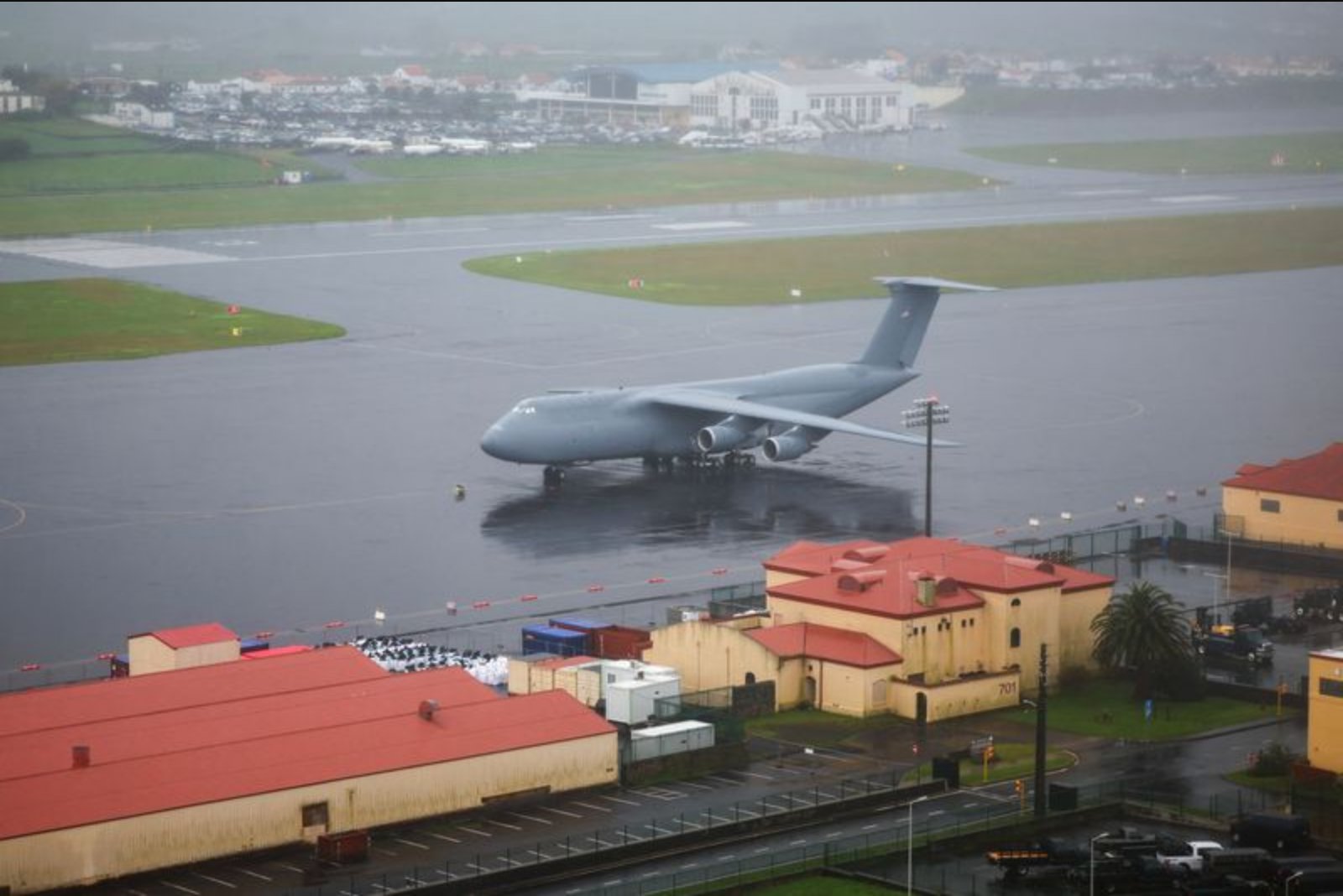
Portugal has granted permission for 76 landings and 25 overflights by U.S. aircraft at Lajes Air Base in the Azores since the start of the U.S.-Israeli war on Iran, on the express condition that those facilities not be used to attack civilian infrastructure, the Portuguese foreign minister told lawmakers.
Speaking at a parliamentary hearing, Foreign Minister Paulo Rangel said that Washington had complied with Lisbon's stipulation and that authorisations had been granted in the spirit of "loyal cooperation" between the two NATO allies. He added, however, that on several occasions Portuguese authorities refused requests for landings.
Rangel emphasised Portugal's opposition to strikes on civilian targets and reiterated the terms under which the country allows its base to be used. Lisbon provides authorisation for use of Lajes in the event of an attack on the United States, provided any U.S. response is "necessary and proportional" and does not target civilians.
The foreign minister also noted that other European governments take their own decisions on access to airspace and bases. Spain, France, Italy, Austria and Switzerland have either restricted or refused U.S. military aircraft access to their airspace or bases in connection with the war in Iran.
Rangel said the Portuguese government seeks to handle authorisations transparently, informing the public when it approves landings and when U.S. aircraft transit through Portuguese territory. He reiterated that Portugal supports a diplomatic resolution of the conflict involving Iran.
Lajes Air Base, situated on Terceira island in the Azores, is a strategic facility that hosts the 65th Air Base Wing of the U.S. Air Force. The base provides both local support and en route assistance for U.S., NATO and allied operations.
The broader regional context includes a forceful statement by U.S. President Donald Trump, who gave Iran until 8 p.m. on Tuesday in Washington - 3:30 a.m. on Wednesday in Tehran - to end its blockade of Gulf oil or see the U.S. destroy every bridge and power plant in Iran.
Clear summary
Portugal authorised a total of 76 landings and 25 overflights by U.S. aircraft at Lajes since the start of the U.S.-Israeli war on Iran, on condition that the base not be used to attack civilian infrastructure. The U.S. has complied with that condition, according to Foreign Minister Paulo Rangel, though Portugal has refused landings at times. Several other European countries have limited U.S. military access, and Portugal continues to press for a diplomatic solution.
Key points
- Lisbon authorised 76 U.S. aircraft landings and 25 overflights at Lajes Air Base since the start of the U.S.-Israeli war on Iran, subject to the restriction that civilian infrastructure not be targeted - impacts defence and aviation sectors.
- Foreign Minister Paulo Rangel said the U.S. respected Portugal's condition and that authorisations were managed transparently, while also noting that some landing requests were refused - relevant to military logistics and allied cooperation.
- Spain, France, Italy, Austria and Switzerland have restricted or denied U.S. military aircraft access in connection with the conflict - a development affecting regional basing and operational planning.
Risks and uncertainties
- Restrictions or refusals of access by European countries, including occasional refusals at Lajes, could constrain U.S. military basing options and logistics - affecting defence and aviation services.
- The explicit threat cited by the U.S. President to destroy bridges and power plants in Iran highlights the risk to civilian infrastructure in the conflict - with potential implications for energy and utilities sectors.
- Reliance on transit and en route support through allied bases like Lajes means operational plans remain sensitive to national authorisations and diplomatic positions - a factor for defence contractors and military planners.