
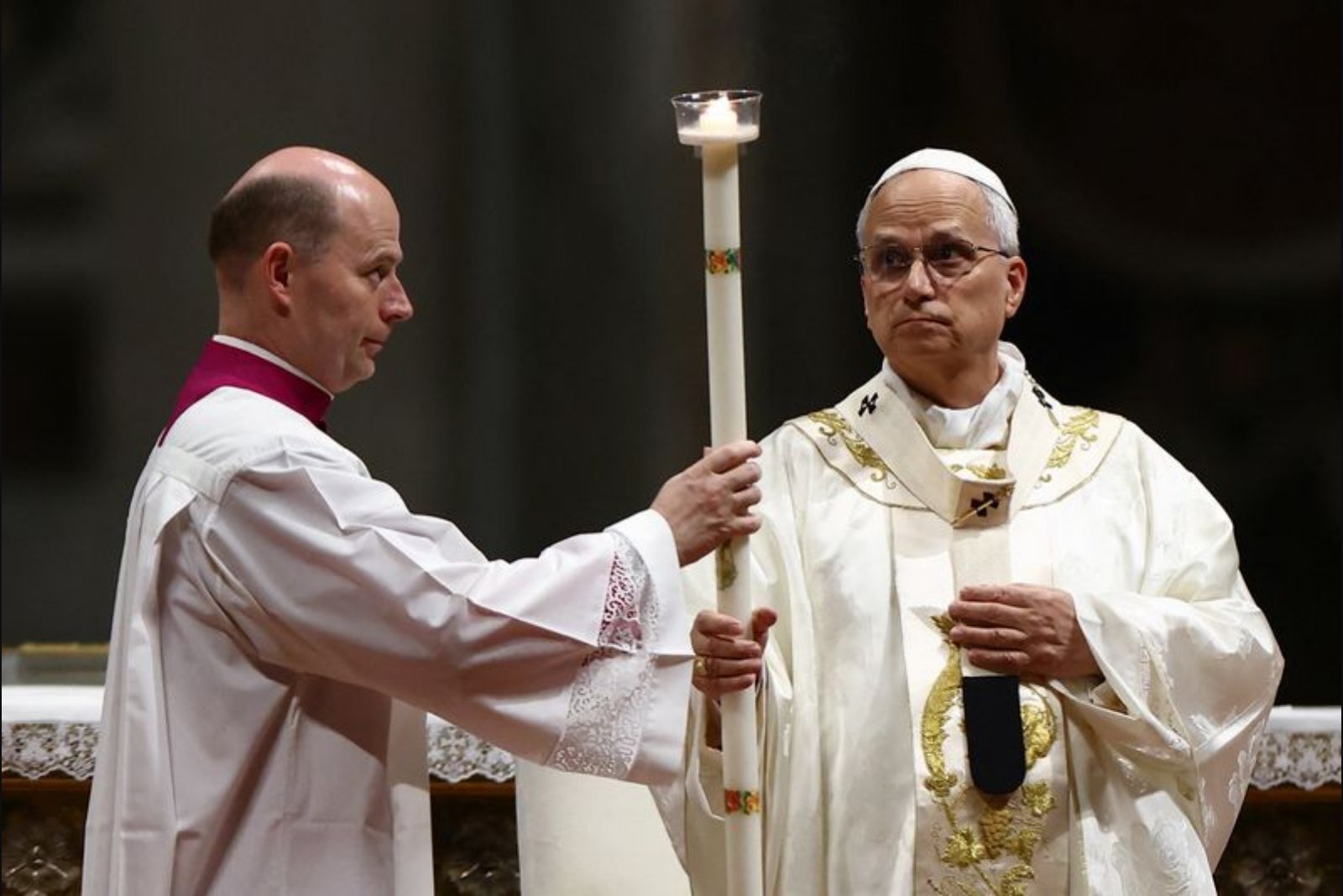
VATICAN CITY, April 4 - Pope Leo led Catholics into the Easter vigil at St. Peter's Basilica on Saturday night, using the holiest liturgy of the Christian calendar to press a moral case against indifference to the many conflicts affecting the world.
In a homily delivered to thousands assembled in Christianity's largest church, the pope warned that mistrust and fear have been permitted to "sever the bonds between us through war, injustice and the isolation of peoples and nations." He cautioned worshippers not to let the scale of those conflicts dull their resolve to work for peace.
"Let us not allow ourselves to be paralyzed!" the pontiff declared during the service that marks the night when the Bible says Jesus rose from the dead. Observers noted that, while the message condemned the wider effects of war and division, the pope did not single out any particular fighting during the vigil.
The ceremony included the baptism of 10 adults who entered the Catholic Church, a traditional element of the Easter vigil. In his homily, the pope urged the faithful to emulate saints who struggled for justice so that what he called the "Easter gifts of harmony and peace may grow and flourish everywhere."
Known for deliberate and measured language, the pope has in recent weeks become increasingly vocal in his criticism of the Iran war. Last Sunday he stated that God rejects the prayers of leaders who launch wars and carry "hands full of blood." On Tuesday he addressed U.S. President Donald Trump directly, urging the president to identify an "off-ramp" to bring the war to an end.
The pope's Easter observances are scheduled to conclude on Sunday morning with a Mass in St. Peter's Square, during which he will give a special blessing and message. That occasion is traditionally a moment when the pontiff makes prominent international appeals.
Context and tone
The vigil combined sacramental rites and a clear moral appeal: an insistence that faith demands action in the face of conflict and a plea against becoming desensitized to suffering caused by war, injustice and isolation between peoples and nations.