
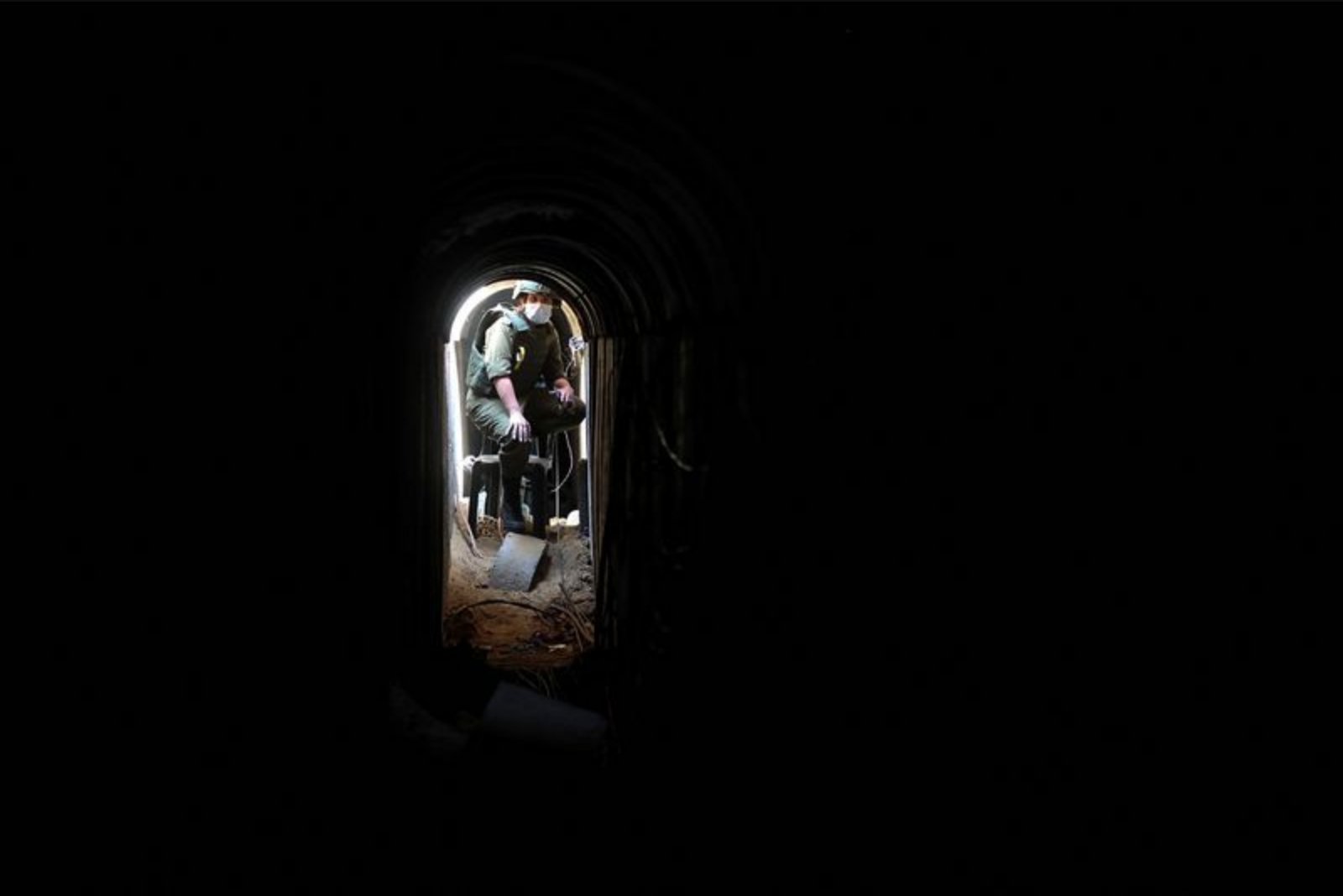
The framework laid out by the U.S. President's "Board of Peace" requires Hamas to permit the elimination of its extensive tunnel network as part of a step-by-step process to relinquish arms, according to the full text of the proposal seen by Reuters. The plan spans eight months, beginning with a transfer of security control in Gaza to a U.S.-backed committee of Palestinian technocrats and ending with a complete Israeli withdrawal contingent on verified absence of weaponry.
The disarmament of Hamas remains a central and contentious element in efforts to implement the plan and to consolidate an October ceasefire that halted two years of intense warfare. Although Hamas has publicly maintained its refusal to disarm, officials within the group have in private signaled conditional openness to disarmament if it advances a political track toward Palestinian statehood. The 12-point document attached to the timeline, however, makes no reference to Palestinian statehood or independence.
Document composition and verification
The plan comprises two linked parts: a 12-point document titled "Steps to Complete the Implementation of Trump’s Comprehensive Peace Plan for Gaza," and a five-stage operational timeline that sequences weapons surrender and other measures over eight months. The full text was first reported by Al Jazeera and was shared with Reuters by two Palestinian officials involved in the talks; a Hamas official verified the document's authenticity. The Board of Peace presented the plan to Hamas last week, and Hamas has not issued a public response beyond confirming it is reviewing the proposal.
The proposal assigns oversight of the disarmament process to a body of Palestinian technocrats referred to as the National Committee for the Administration of Gaza (NCAG). A separate verification body, the Weapons Collection Verification Committee, would be established by Nickolay Mladenov, the Board of Peace's lead envoy, to confirm compliance with weapons collection and demilitarization measures.
One authority, one law, one weapon
The plan articulates a governance principle it calls "one authority, one law, one weapon." Under this principle, only individuals explicitly authorized by NCAG may lawfully bear arms, and all armed factions would cease military activities. Reconstruction work, the document specifies, would be limited to zones designated as demilitarized.
Five-stage timeline: actions and sequencing
The five-stage schedule sets out specific tasks and time windows for the transition. Key elements of each stage are as follows:
- Stage 1 (days 1-15): NCAG takes administrative and security control of Gaza and begins preparatory steps for weapons collection.
- Stage 2 (days 16-60): Israel removes heavy weapons from areas under its control, including heavy artillery and tanks, while an international security force is deployed.
- Stage 3 (days 30-90): The proposal describes a concentrated phase in which Hamas would surrender all heavy weapons and military equipment to NCAG and would "allow the destruction of all tunnels, explosives, and military infrastructure."
- Stage 4 (days 91-250): NCAG's police forces would proceed to collect and register all remaining arms, including small arms and rifles. Israeli forces would begin phased withdrawal during this stage.
- Stage 5: Final verification of disarmament would be carried out; Israeli forces would withdraw completely from Gaza except for a presence maintained in a security perimeter, and comprehensive reconstruction efforts would commence.
Political and operational context
The October ceasefire left Israel controlling significantly more than half of Gaza geographically, while Hamas continued to control the remaining territory and the lives of Gaza's roughly two million residents. The enclave has endured sustained Israeli bombardment over two years, resulting in widespread homelessness and extensive damage to infrastructure. Hamas publicly insists on armed resistance and rejects calls to disarm, citing its commitment to resistance and stated aims regarding Israel; privately, some officials have indicated that disarmament could be acceptable if tied to progress on political objectives.
On Thursday, three Palestinian factions, including Islamic Jihad, released statements criticizing the proposed plan. Their public objections focused on what they described as an imbalanced prioritization of disarmament over reconstruction and the withdrawal of Israeli military forces.
Verification, reconstruction and remaining questions
The text places verification at the center of the transition, tying reconstruction eligibility to demilitarized designations and confirmation from the Weapons Collection Verification Committee. It assigns concrete duties to NCAG in the collection, registration and oversight of arms. What remains unresolved in public statements is how competing priorities - security verification, phased withdrawals, and the sequencing of reconstruction - will be reconciled among the various parties whose cooperation is necessary for the plan to proceed.
As the proposal is studied by Hamas and other Palestinian groups, the balance between security measures and reconstruction, and the degree to which international and regional actors will be accepted on the ground, will shape whether the plan advances beyond paper into implementation.