
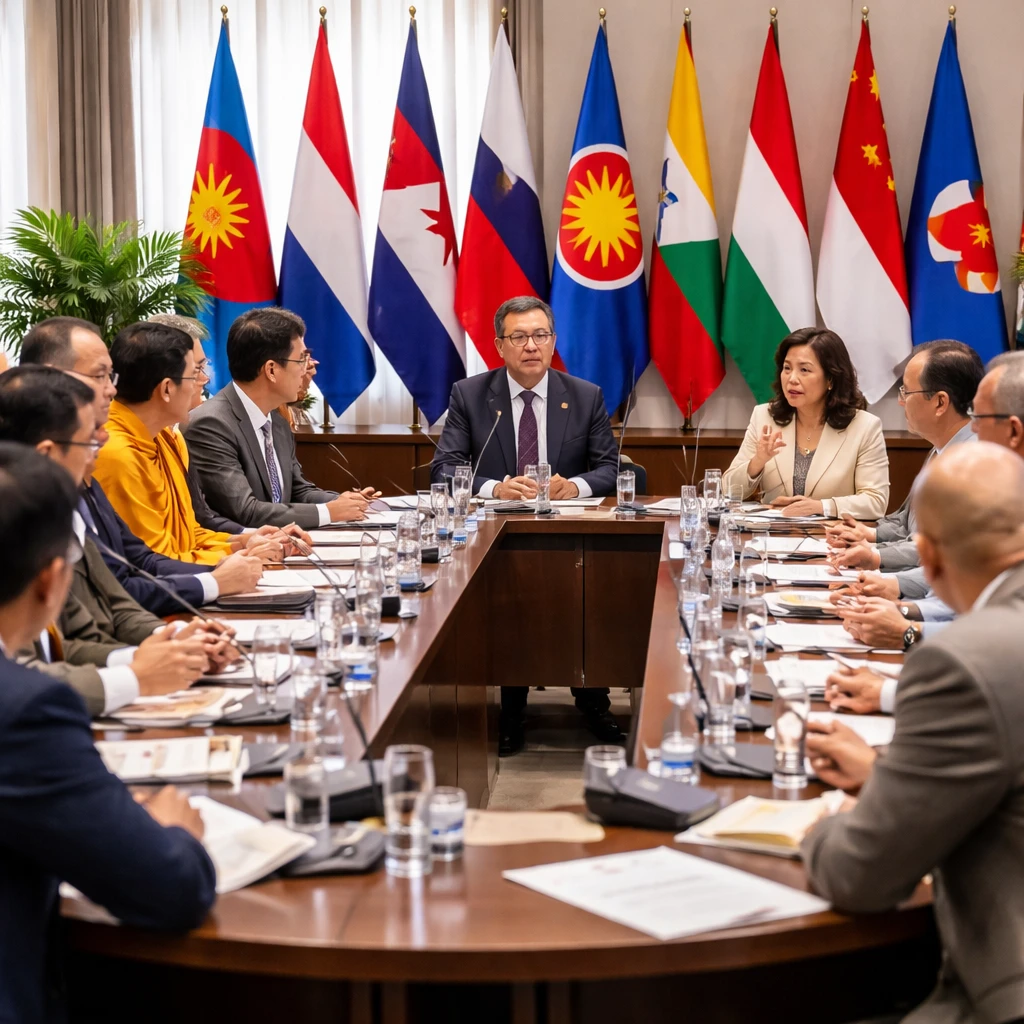
The Philippines, presiding as chair of the Association of Southeast Asian Nations (ASEAN), has expressed a commitment to intensifying conversations with political actors challenging Myanmar's military regime. While it stops short of supporting the ongoing electoral process in Myanmar, the Philippine government signals readiness to respond constructively to developments from the elections.
Myanmar's electoral procedures are unfolding in three distinct phases, with the initial rounds pointing to a strong performance by a party aligned with the military leadership. Official tallies from the completed phases confirm this trend despite notably low voter participation. The military junta has proclaimed the elections as a triumph for popular will and a catalyst for political stability across the country.
Nevertheless, the Philippines, acting through ASEAN, has refrained from officially endorsing the electoral exercise. Ma. Theresa Lazaro, ASEAN's special envoy managing the Myanmar situation, conveyed in an interview that, although the elections are not formally supported, ASEAN remains receptive to any consequential developments emerging from this process.
Since a military coup in 2021 toppled Myanmar’s civilian government, the country has endured persistent conflict. The coup precipitated widespread public protests which were violently suppressed, triggering a protracted civil war involving various loosely affiliated ethnic and opposition rebel organizations.
International observers and several Western nations have condemned the elections as manipulated to entrench military influence through proxy political entities. Reflecting this skepticism, ASEAN has elected not to deploy electoral monitors.
This past week in Tagaytay, Philippines, a forum convened under ASEAN’s auspices brought together a mixture of Myanmar stakeholders, emphasizing initiatives aimed at reducing tensions, improving humanitarian aid access, and facilitating political dialogue. The Chin National Front—representing an ethnic minority with armed influence near Myanmar’s boundary with India—participated in this two-day meeting, with its spokesperson affirming the gathering’s positive tone and early achievements in inclusive communication.
However, representatives from Myanmar’s military government were unreachable for comment at the time of reporting, and the Myanmar National Unity Government, an opposition shadow administration, had not yet responded to inquiries regarding the meeting's outcomes. Lazaro confirmed that the shadow government was among the participants.
The dialogue series followed Lazaro’s recent visit to Myanmar, where she met with the military chief, General Min Aung Hlaing. The discussions were characterized by Manila as cordial and constructive, laying groundwork for further engagement.
Looking ahead, Lazaro articulated aspirations to broaden interactions to encompass additional actors whose perspectives are critical to constructing a comprehensive peace approach. She described the stakeholders’ meeting as providing meaningful insights into possible adoption of the peace framework ASEAN devised in 2021.
Lazaro also suggested the potential benefit of extending the appointment term for ASEAN envoys involved in Myanmar affairs beyond the current one-year cycle. Any such change, she noted, would require deliberation and consensus among ASEAN’s eleven member countries.
Despite these diplomatic endeavors, Myanmar’s peace process has advanced minimally in the face of ongoing hostilities, with notable improvement primarily limited to humanitarian relief access. ASEAN’s previous chair, Malaysia, had previously voiced hopes that diplomatic outreach might pave the way for conflict resolution, though entrenched fighting has continued to impede progress.
Myanmar, formerly a British colony, has long been under military control for much of the last sixty years and is now subject to severe humanitarian distress. The United Nations reports indicate that since the 2021 coup, over three million people have been displaced and thousands have lost their lives in the continuing conflict.