
World January 29, 2026

Pentagon Says U.S. Forces Ready to Act on Iran if President Orders

Defense secretary signals military readiness as Trump weighs options amid heightened tensions with Tehran

By Marcus Reed
Pentagon Says U.S. Forces Ready to Act on Iran if President Orders

U.S. Defense Secretary Pete Hegseth told officials that the U.S. military is prepared to carry out any direction President Donald Trump gives regarding Iran to prevent Tehran from obtaining nuclear capabilities. With a substantial U.S. force already in the region, Hegseth said the Defense Department - referenced using the administration's informal label - will be ready to deliver on presidential expectations. U.S. officials say Trump is still reviewing options and has not decided whether to order strikes. Tensions between Washington and Tehran have escalated following a violent crackdown on protests inside Iran, though those demonstrations have eased in recent weeks. Trump has repeatedly warned he would intervene if Iranian authorities continued to kill protesters and has stated the U.S. would act should Iran resume its nuclear program after joint June airstrikes on nuclear sites by Israeli and U.S. forces.

Key Points

  • Defense Secretary Pete Hegseth stated U.S. forces are prepared to execute whatever actions President Trump orders to prevent Iran from obtaining nuclear capabilities - impacts defense readiness and contractors.
  • President Trump is reviewing options but has not decided whether to strike Iran - this uncertainty affects geopolitical risk assessment and markets sensitive to conflict escalation.
  • U.S.-Iran tensions rose after a violent crackdown on nationwide protests in Iran; those demonstrations have since abated - political stability in the region remains a factor for strategic planning.

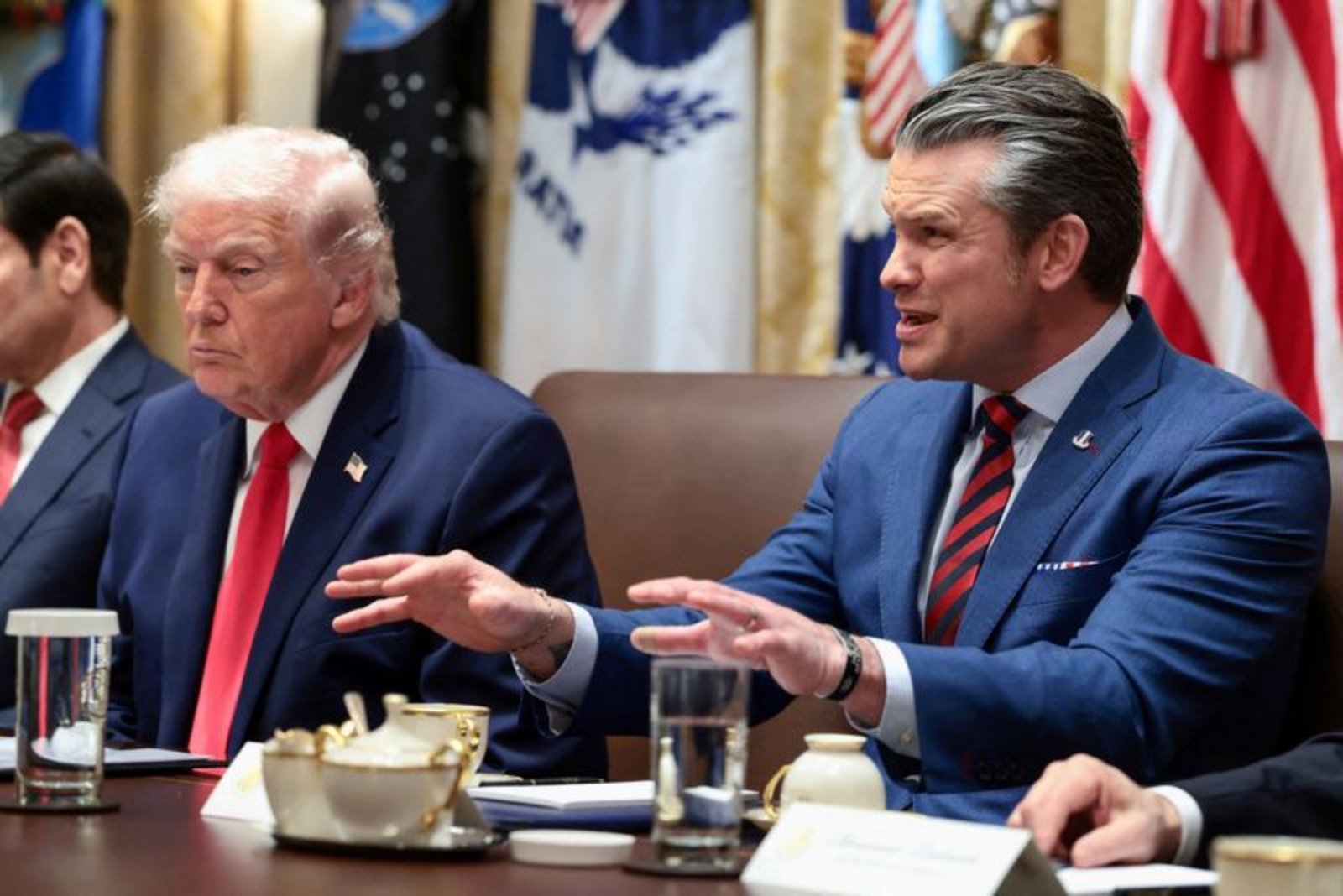
U.S. Defense Secretary Pete Hegseth said on Thursday that the United States military stands ready to carry out any actions President Donald Trump decides upon regarding Iran, with the explicit aim of preventing Tehran from pursuing nuclear weapons capability.

Speaking as a large U.S. military presence remains concentrated in the region, Hegseth was asked by the president during a cabinet meeting to comment on the situation. He replied that Iran "should not pursue nuclear capabilities" and affirmed that "we will be prepared to deliver whatever this president expects of the War Department," using the administration's unofficial label for the Defense Department.

U.S. officials have said the president is reviewing options but has not yet made a decision on whether to carry out strikes against Iran. The uncertainty comes amid sharply increased U.S.-Iran tensions that followed a bloody response by Iran's clerical authorities to nationwide protests in recent weeks.

Those demonstrations, which were driven by economic grievances and political repression, have since abated, according to available reporting. President Trump has repeatedly warned that the United States would intervene if Iranian authorities continued to kill protesters. He has also stated that the United States would take action if Tehran resumed its nuclear program, referencing the period after the June airstrikes on key nuclear installations carried out by Israeli and U.S. forces.


Context and posture

Hegseth's comments underline a posture of readiness by U.S. military leadership to execute presidential directives directed at preventing nuclear proliferation by Iran. Officials in Washington continue to evaluate policy options while maintaining a significant force presence in the region.


What remains unresolved

Officials emphasize that the president has not reached a decision on whether to authorize strikes, leaving the next steps contingent on further review and deliberation within the administration.

Note: Reporting is based on statements made during the cabinet meeting and subsequent official characterizations of the situation; details about specific operational plans or timelines have not been disclosed.

Risks

  • A decision to conduct strikes remains unresolved, creating uncertainty about potential military escalation - this risk directly concerns the defense sector and geopolitical-risk-sensitive markets.
  • Heightened tensions following Iran's crackdown on protests could lead to further instability if circumstances change - this uncertainty can influence government policy, defense spending, and regional security dynamics.
  • Statements that the U.S. would act if Iran resumed its nuclear program after the June airstrikes leave open the possibility of future interventions depending on Tehran's actions - industries tied to national security and investors monitoring geopolitical developments face exposure to policy-driven volatility.

More from World

Greenland’s premier says U.S. still aims for control despite ruling out military action Feb 2, 2026 Kremlin says Russia has long offered to process or store Iran’s enriched uranium Feb 2, 2026 Long-Awaited Rafah Reopening Prompts Hope and Anxiety Among Palestinians Stranded Across Border Feb 2, 2026 Rafah Reopens but Core Questions Persist Over Implementation of Trump’s Gaza Blueprint Feb 2, 2026 Rafah Crossing Reopens on Foot with Strict Limits as Gaza Remains Under Strain Feb 2, 2026