
World March 23, 2026

Pentagon Implements Court-Ordered Media Restrictions While Filing Appeal

Department of Defense revises press access rules, closes Correspondents’ Corridor and moves press workspace pending appeal

By Caleb Monroe
Pentagon Implements Court-Ordered Media Restrictions While Filing Appeal

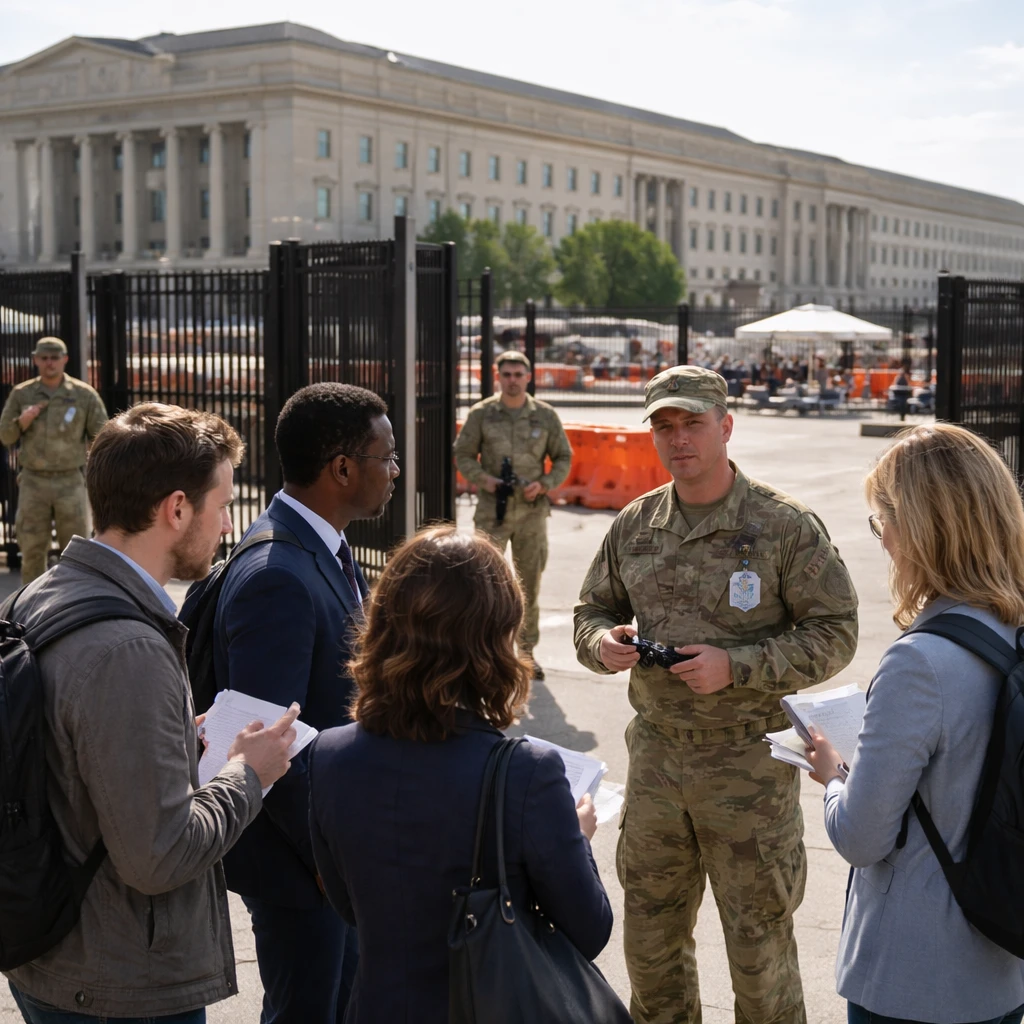
The Department of Defense announced immediate changes to Pentagon press access following a federal court order that blocked the prior restrictive policy. The new rules require all journalists on the Pentagon campus to be escorted by authorized Defense Department personnel, close the Correspondents’ Corridor, and relocate the press workspace to an area outside the Pentagon but still on Pentagon grounds. The department said it will comply with the court order while pursuing an appeal.

Key Points

  • The Department of Defense said it will comply with the court order but is appealing the ruling; policy revisions are effective immediately.
  • New rules require all journalists accessing the Pentagon to be escorted by authorized Defense Department personnel and close the Correspondents' Corridor.
  • A replacement press workspace will be established outside the Pentagon building but still on Pentagon grounds and will be available when ready. Sectors potentially affected include media organizations and operations tied to defense infrastructure and communications.

WASHINGTON, March 23 - The Pentagon has adjusted its media access procedures in response to a federal court order, the Department of Defense said on Monday as it moves forward with an appeal.

In a statement posted on X, Pentagon spokesman Sean Parnell said, "The Department always complies with court orders but disagrees with the decision and is pursuing an appeal." Parnell added that the revisions to media policy are effective immediately.

Under the modified guidance, entry to the Pentagon by members of the press will require an escort provided by authorized Defense Department personnel. The change formalizes an escort requirement for all journalists seeking access to Pentagon facilities.

As part of the immediate adjustments, the Pentagon announced the closure of the "Correspondents' Corridor." Officials said a new press workspace will be set up outside the Pentagon building, though it will remain on Pentagon grounds. The department indicated the space will be opened once it is ready.

The revisions follow a federal judge's decision on Friday to block the Trump administration's previous Pentagon press access policy. That policy had included measures that the court found restrictive, and which could have resulted in journalists being designated as security risks if they pursued information not authorized for public release.

The department's public statement describes the current actions as a compliance measure with the court order, while simultaneously noting the department's intent to challenge the ruling through the appeals process. The statement did not provide a timeline for the appeal or for when the new press workspace will be available.

This procedural shift affects how reporters will interact with Pentagon personnel on-site and changes the physical arrangements for media operations at the Defense Department complex. The department's announcement focuses on adherence to the court's direction combined with a formal objection through legal channels.


Summary

The Pentagon has implemented a revised media access policy after a judge blocked a prior, more restrictive policy. The revisions - effective immediately - require escorts for journalists, close the Correspondents' Corridor, and relocate the press workspace to a site outside the main Pentagon building but still on the grounds. The department said it will comply with the court order while appealing the decision.

Risks

  • Uncertainty over the appeal process - the department is appealing the court decision, and the final legal outcome could change media access rules again; this affects media operations and legal observers.
  • Temporary disruptions to press workflow - the immediate closure of the Correspondents' Corridor and relocation of the press workspace may delay or complicate journalists' access to Pentagon information; impacts media logistics and communications functions.
  • Potential classification disputes - the judge's blocking of the previous policy cited risks of journalists being labeled security risks for seeking unauthorized information, an unresolved contention that could affect press-defense relations and transparency.

More from World

Kim Jong Un Declares North Korea's Nuclear Status Permanent, Labels South Korea 'Most Hostile State' Mar 23, 2026 Zelenskiy: Ukraine Intelligence Shows Russia Is Providing Iran With Data Mar 23, 2026 U.S. Education Department Opens Two New Investigations Into Harvard Mar 23, 2026 Iranian National Released from Custody After Alleged Attempt to Access UK Submarine Base Mar 23, 2026 Newark Tower Evacuated After Burning Smell; Morning Ground Stop Briefly Halts Flights Mar 23, 2026