
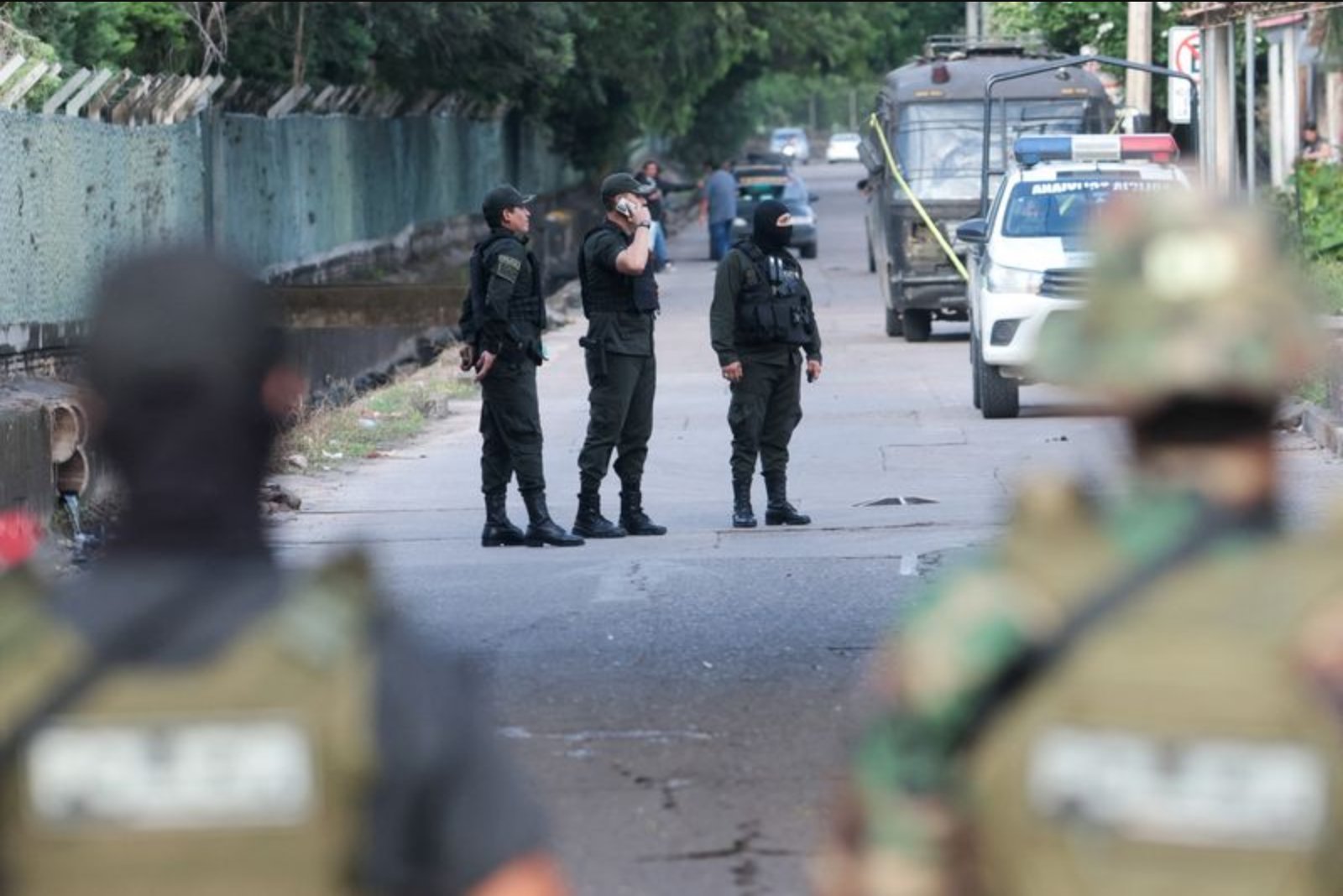
Paraguay's top anti-narcotics official said on Friday that Sebastian Marset, a suspected Uruguayan drug kingpin and one of the United States Drug Enforcement Agency's most wanted fugitives, was captured in Bolivia.
Authorities allege Marset led the First Uruguayan Cartel and pursued trafficking routes that moved cocaine between countries in South America and onward to Europe. Paraguayan prosecutors and Bolivian authorities have both sought him on organized crime charges related to those operations. Separately, the U.S. State Department has said Marset was indicted in the United States on money laundering charges.
Jalil Rachid, Paraguay's anti-narcotics chief, told Paraguayan local radio that Bolivian authorities carried out the operation that resulted in Marset's arrest. A representative of the anti-drug trafficking unit within the Bolivian National Police declined to confirm Marset's detention when asked.
Bolivia is identified by regional officials as a major producer of cocaine and a key transit hub for trafficking activity. The Bolivian government has described its efforts as part of a broad, multinational strategy to combat organized crime. Those efforts have included a recent restoration of operational cooperation with the U.S. Drug Enforcement Agency after a 17-year break, according to statements referenced by officials.
Marset's movements and legal entanglements have attracted attention before. In 2021 he was briefly detained in Dubai while traveling on a forged Paraguayan passport. Within days, Uruguayan authorities issued him a new passport, which allowed his legal departure from the United Arab Emirates. That sequence prompted a domestic scandal in Uruguay and resulted in the resignations of several senior Uruguayan officials.
In 2022, Colombian President Gustavo Petro publicly named Marset as linked to the assassination of Marcelo Pecci, a leading Paraguayan anti-crime prosecutor who was shot dead on a Colombian beach while on his honeymoon. Marset has not been charged in the Pecci killing.
The network surrounding Marset has drawn multinational law enforcement attention. His brother, Diego Nicolas Marset, was arrested in Brazil in 2023 after being listed as one of South America’s most wanted fugitives by Interpol. That arrest was carried out in a police operation that involved agencies from Brazil, Bolivia, Paraguay and Uruguay.
Context and implications
The reported arrest highlights ongoing cross-border coordination in South America on narcotics-related investigations and prosecutions, and reiterates scrutiny on financial flows tied to alleged laundering activities. Official confirmation from Bolivian police remains outstanding.