
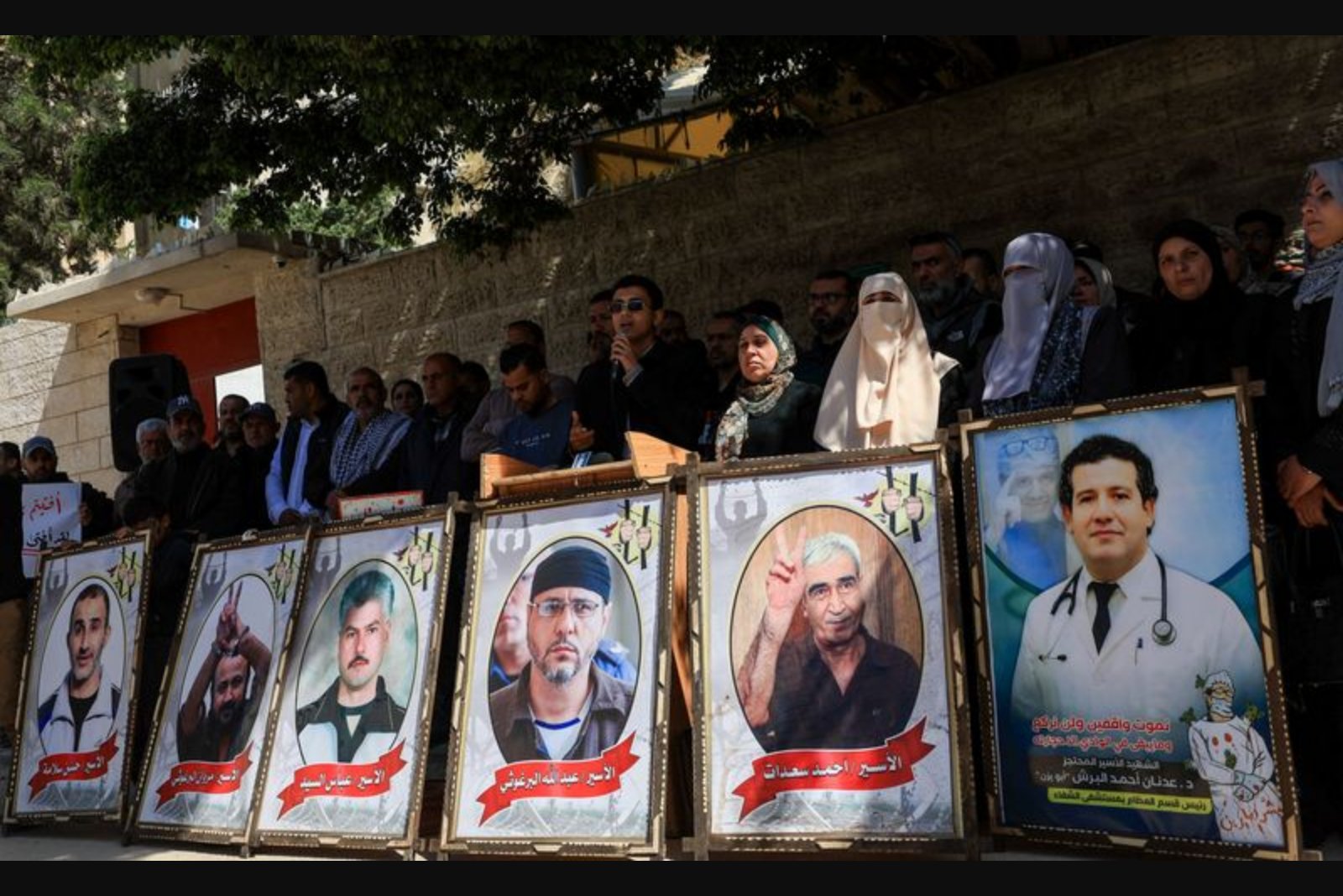
Israel’s recent legislation making the death penalty the presumptive sentence for lethal attacks described as negating the state’s existence has alarmed Palestinians whose relatives are held in Israeli detention and prompted legal and international challenges.
The law, approved late on Monday, sets hanging as the specified method of execution and generally requires that any death sentence be carried out within 90 days of sentencing. It eliminates a right to request clemency and allows judges to opt for life imprisonment only in unspecified "special circumstances." Legal observers and rights groups say the statute will fall disproportionately on Palestinians, because the definition of the targeted offenses - those said to "negate Israel’s existence" - makes it unlikely the law would be applied to Jewish Israelis.
Legal challenge and international criticism
Rights groups have announced appeals to Israel’s Supreme Court, arguing that the law contravenes elements of an international convention that Israel has ratified. Israeli legal experts addressing the new statute said the legislation appears to breach the Fourth Geneva Convention of 1949, which guarantees condemned persons the right to petition for pardon and requires at least six months between sentencing and execution.
The U.N. human rights chief publicly stated that the legislation violates international humanitarian law. Israeli law professors and other commentators expect the Supreme Court to strike the measure down. Mordechai Kremnitzer of the Israel Democracy Institute described the law as "a clear case that invites the Supreme Court to strike it down," and said the likelihood of executions taking place in the near term is low. He added that judges are likely to approach capital punishment with a negative attitude because it runs counter to both universal morality and Jewish morality.
Concerns over the courts and method of execution
The law singles out hanging as the prescribed method, a detail legal analysts say was included amid concerns that medical professionals in Israel might refuse to participate in lethal injections. Human rights organizations and critics point to the military courts in the West Bank - which handle cases involving Palestinians - and their reportedly high conviction rates. Israeli rights group B’Tselem has said those military courts have a 96% conviction rate and a history of obtaining confessions under duress or through torture; Israel denies these allegations.
Because the law would apply in both civilian and military courts, its application in the West Bank has drawn particular worry. In Israel’s civilian courts, the law would similarly permit death or life imprisonment for homicide intended to "negate Israel’s existence," a formulation rights lawyers say will rarely, if ever, be applied to Jewish defendants.
Reactions from detainees' families
Families of Palestinians detained by Israeli authorities held a protest in the West Bank city of Ramallah on Tuesday, urging repeal of the new law and voicing acute concern for relatives currently in custody. Maysoun Shawamreh said she feared for her 29-year-old son Mansour, who is imprisoned on attempted murder charges. "I am afraid for my son and for all the prisoners. The news came down like a thunderbolt on the prisoners’ families," she said.
Other families expressed similar dread. Abdel Fattah al-Himouni said his son Ahmed, who is awaiting trial over a combined shooting and stabbing attack at a light-rail stop near Tel Aviv in October 2024 that killed seven people, including a woman clutching her baby, now faces the prospect of the death penalty if convicted. He said he doubts his son will receive a fair trial and called on international human rights organizations to pressure Israel so the law will not take effect.
Scope, exceptions and non-retroactivity
The measure will, according to civil rights groups, be applied only to killings that occur after it takes effect and will not operate retroactively. The Association for Civil Rights in Israel (ACRI) has said the law will not apply to hundreds of Hamas militants involved in the October 7, 2023 attack that killed 1,200 people in southern Israel, because parliament is still drafting the legal framework to try those detainees.
Raed Abu al-Hummus, the Palestinian Authority’s minister for prisoners, estimated that 45 to 47 Palestinian detainees currently awaiting sentencing on murder charges could face death sentences if the new law is implemented. ACRI confirmed the law would apply only to criminal acts of killing going forward.
Political implications and domestic backing
For Israel’s political far-right, the bill represented a long-sought victory and a fulfillment of a 2022 campaign pledge by National Security Minister Itamar Ben-Gvir. Ben-Gvir’s Jewish Power party argues the death penalty will deter Palestinians from carrying out deadly attacks or attempting kidnappings intended to secure prisoner swap deals.
Amnesty International, which monitors countries that retain or reinstate capital punishment, cautioned against the deterrence argument, saying there is "no evidence that the death penalty is any more effective in reducing crime than life imprisonment."
Settler violence and prosecutorial patterns
The adoption of the law has come amid heightened scrutiny of Israel over increasing violence by settlers in the West Bank and its conduct during the war in Gaza. Israeli monitoring group Yesh Din has observed that attacks by settlers on Palestinians rarely result in indictments in military or civilian courts. Yesh Din said the last case it recorded of an Israeli citizen being indicted for killing a Palestinian was an incident in 2018.
Attorney Debbie Gild-Hayo of ACRI argued that the law’s wording effectively ensures it will be applied predominantly to Palestinians. Suhad Bishara, of the rights group Adalah, which co-wrote the legal appeal with ACRI, said military courts lack basic guarantees for fair trials and that Israel’s parliament does not have jurisdiction to legislate in occupied territory.
Outlook
Legal experts and rights groups expect the Supreme Court to consider the challenges to the law on constitutional and international law grounds. While the new statute imposes strict timelines and prescribes hanging as the execution method, commentators cited in legal analysis say the combination of judicial review, moral reluctance among judges, and international legal obligations reduces the chance that executions will be carried out in the near term.
Still, families of Palestinians in detention and rights organizations insist the law’s passage has immediate human and legal consequences for detainees facing trial or sentencing for lethal attacks described under the measure. The legislation has intensified debate over the fairness of trials in military courts, the jurisdiction of parliamentary legislation in occupied territory, and the broader political direction of Israel’s security and judicial policy.