
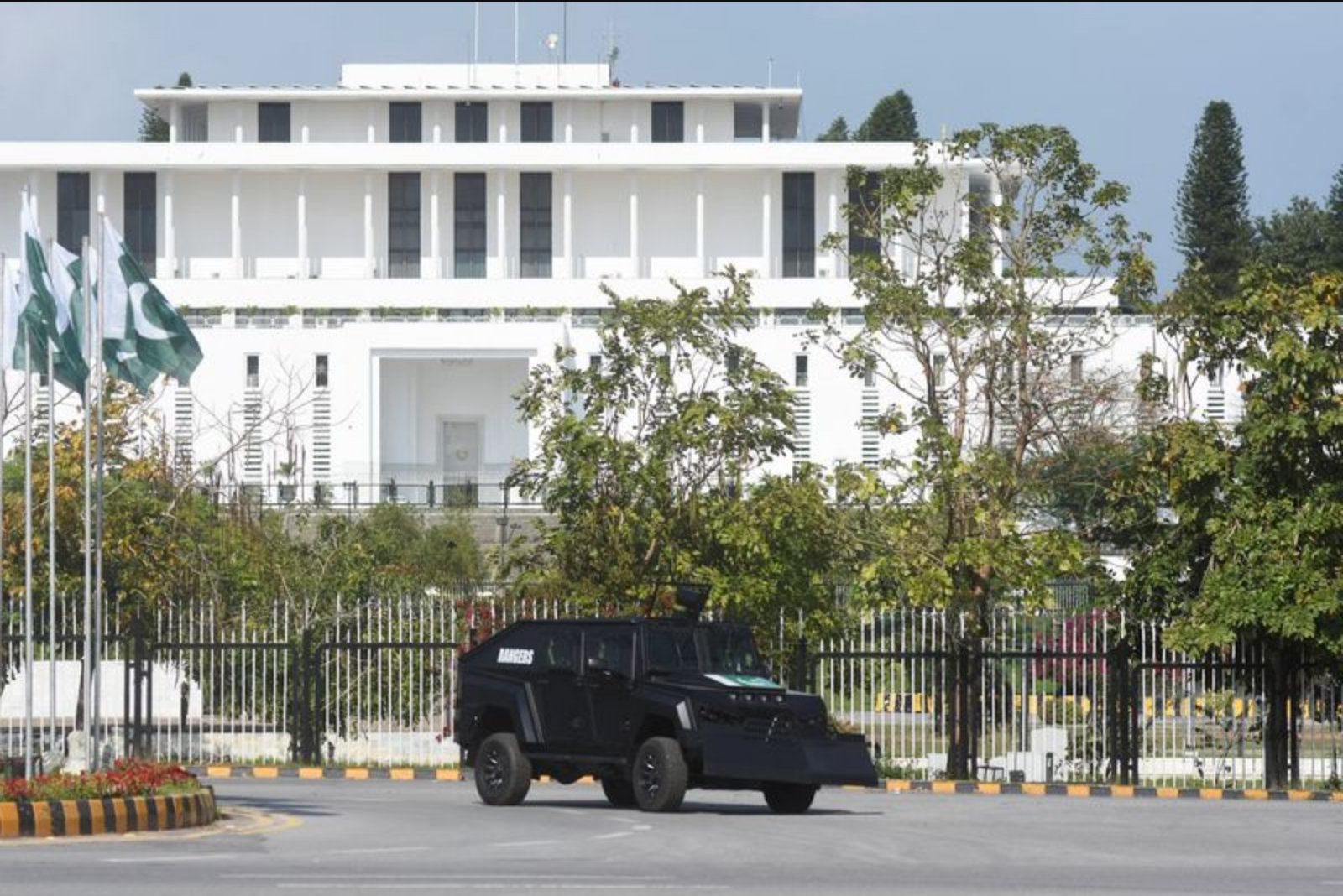
Pakistan has assumed a critical and precarious role in trying to secure a ceasefire between Iran and the United States, a task diplomats describe as exceptionally difficult. Army chief Field Marshal Asim Munir and Prime Minister Shehbaz Sharif have led an intensive diplomatic push intended to halt a conflict that risks worsening instability along Pakistan's western frontier with Iran and Afghanistan, where exchanges of fire have occurred in recent weeks.
Authorities in the capital moved to tighten security as Iranian officials arrived on Thursday and a U.S. delegation led by Vice President JD Vance was set to arrive on Friday. Pakistani officials aim to bring Washington and Tehran together on Saturday and then guide the conversations toward a lasting agreement, analysts say.
For Pakistan, the stakes are both regional and reputational. "Pakistan does not want anarchy in Iran as an outcome of continued warfare, which would greatly exacerbate the pre-existing acute security situation on its western flank," said Kamran Bokhari, senior resident fellow with the Middle East Policy Council. Diplomacy that succeeds would help sustain Pakistan's recent return to diplomatic prominence; failure could quickly undermine the gains its leaders have touted.
"Pakistan has publicly invested political capital in mediation; if talks collapse, it risks being seen as overpromising and underdelivering," said Muhammad Faisal, a security analyst at the University of Technology Sydney.
Security and precautionary measures in Islamabad
In anticipation of the talks, Pakistani authorities fortified the area around the Serena Hotel, where two sources indicated the negotiations were expected to be held. The hotel was cleared of guests and placed under government control. Roads leading to the site were sealed and checkpoints, barricades and patrols increased across the city. Extra security forces were moved into the capital, airspace surveillance was intensified and emergency services were placed on standby, according to security officials.
The breadth of these measures reflects how acutely Islamabad perceives its exposure - not only to militant threats inside Pakistan but also to the risk that any security breach could derail a sensitive diplomatic opening. While Pakistan's major cities have seen fewer large-scale attacks in recent times, militancy along the border with Afghanistan has trended upward since the Taliban's return to power in 2021. A February suicide attack in Islamabad amplified worries and contributed to Pakistan launching airstrikes into Afghanistan in the ensuing days, which escalated into weeks of fighting between the two countries.
"Given those risks, the lack of preparation time, and the high-profile nature of these talks, this is a very challenging visit from a security perspective and speaks to the importance this administration places on the negotiations," said Elizabeth Threlkeld, director of the South Asia Program at the Stimson Center.
Security concerns are not limited to protecting the venue. Analysts warn Islamabad must prevent external events from overwhelming the negotiating process. Security analyst Zahid Hussain noted there are signs that Israel has accepted the ceasefire only conditionally and that any renewed escalations could rapidly shrink the space for substantive diplomacy.
From messenger to mediator - Pakistan’s evolving role
Hours before a two-week ceasefire was announced by U.S. President Donald Trump on Wednesday, mediation efforts appeared to falter. A last-minute intervention by Pakistan's military and civilian leadership brought Iran back to the table, according to analysts tracking the effort.
Bokhari described Islamabad's role as having shifted from a passive relay of messages to an active participant in the negotiating dynamic. "Islamabad has the ability to shape perceptions on both sides," he said. Bokhari added that "The Trump White House chose Munir, Shehbaz et al. because the Americans knew that the Pakistanis could not just talk to them but actually influence the thinking of the Iranians. As the process unfolds, the Pakistanis also gain greater trust of the Americans, which creates an opportunity for Islamabad to shape U.S. thinking as well."
Analysts expect Pakistan to press several regional priorities during the talks. Islamabad is likely to raise the grievances of Gulf countries allied with the U.S. that suffered from Iranian strikes during the conflict. It is also expected to urge Washington to consider extending the ceasefire to Lebanon, following a plea from Lebanon's prime minister to Prime Minister Shehbaz Sharif to secure an immediate halt to Israeli attacks. Iran has said it was on the verge of responding to strikes on Lebanon when Pakistan intervened.
Limits of influence and strategic constraints
Despite the access and credibility Pakistan has earned in recent days, analysts caution it lacks the kind of leverage needed to ensure a definitive outcome - namely the reopening of the Strait of Hormuz, a critical shipping route. Threlkeld emphasized that Pakistan's inability to compel concessions from either side if they are unwilling to compromise is a fundamental constraint.
"What it lacks is meaningful leverage to compel concessions if the U.S. and Iran are not willing to come to terms," she said. "That remains a fundamental limitation to the role it is able to play, and one it must navigate carefully."
Success in guiding Saturday's dialogue toward a durable agreement would reinforce Pakistan's diplomatic standing and validate the political capital invested by its leaders. Conversely, failure could quickly erode the image of success Islamabad has cultivated and leave Pakistan exposed to criticism for raising expectations it may be unable to meet.
What comes next
Over the coming days Pakistan's diplomats and security services will be tested on multiple fronts: keeping the talks on course, maintaining tight protection against potential attacks, and managing the diplomatic fallout should negotiations stall. The balance they must strike is delicate - seeking to preserve a fragile truce while safeguarding domestic security and political credibility at home and abroad.
How the negotiations proceed will determine whether Pakistan's recent return to prominence translates into lasting influence or whether the burdens of mediation expose the limits of its power in an increasingly volatile regional environment.