
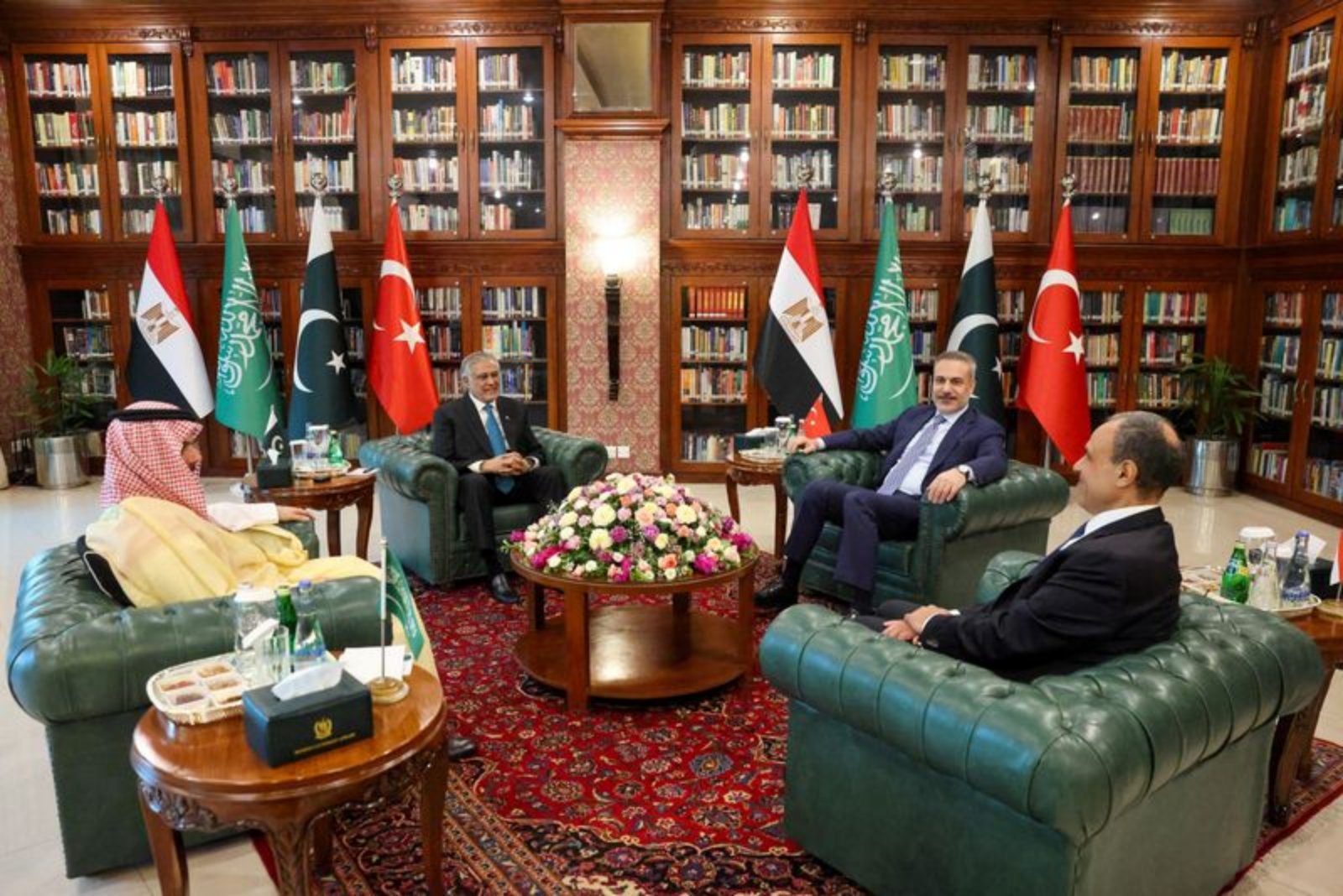
Pakistan has stepped forward with an offer to host what it described as "meaningful talks" in the coming days intended to secure a comprehensive and lasting end to the war that has embroiled Iran and the region. The announcement came after a meeting of regional foreign ministers, where participants examined possible pathways toward an early and permanent cessation of hostilities as well as the prospect of U.S.-Iran discussions being convened in Islamabad.
Speaking after the ministerial session, Pakistan's Foreign Minister Ishaq Dar said the gathering had explored ways to bring about an early and permanent termination of the conflict and had discussed the potential for U.S.-Iran talks in Pakistan's capital. "Pakistan will be honoured to host and facilitate meaningful talks between the two sides in coming days, for a comprehensive and lasting settlement of the ongoing conflict," he said. It was not immediately clear if either Washington or Tehran had accepted invitations to attend such talks.
The prospect of Pakistan playing mediator faces immediate complications because the United States, Israel and Iran have set out maximalist stances about what constitutes an acceptable end to the fighting. Iranian parliament speaker Mohammad Baqer Qalibaf accused the United States of sending mixed signals - engaging in messages about potential negotiations while at the same time preparing to dispatch troops. He warned that Tehran would respond if U.S. forces were deployed and declared that Iran would not accept what he described as humiliation.
Initial conversations among Pakistan, Saudi Arabia, Turkey and Egypt reportedly focused on plans to reopen the Strait of Hormuz to shipping. Sources familiar with those discussions said the proposals are aimed at restoring a vital maritime route that has been effectively blocked by Iranian actions since the start of intense hostilities on February 28. Iran's disruption of oil and gas shipments through the strait has spread economic pain across global markets amid growing concerns over energy and trade flows.
As the conflict entered its second month, fighting showed no sign of abating. Israel's military reported conducting more than 140 air strikes on central and western Iran, including in the capital Tehran, during a 24-hour period to Sunday evening. Those strikes struck a variety of military targets, including ballistic missile launch sites and storage facilities, according to the Israeli military.
Separately, the World Health Organization's director said expanding Israeli operations in southern Lebanon had led to the death of an additional health worker, bringing the total of killed health workers in that theatre to 52. Israel has accused Hezbollah of using medical facilities as cover for militants, an allegation denied by the group.
In southern Israel, a missile or falling missile debris struck a chemical plant near Beer Sheva as Israeli forces intercepted multiple salvos reportedly launched from Iran. Officials issued public warnings to avoid the area because of the presence of hazardous materials. Another missile landed in open ground near residential areas in Beer Sheva, a city that is also home to several military bases, injuring 11 people.
The widening war has produced significant civilian and industrial damage across the Middle East. Over the weekend, major aluminium plants in Bahrain and the United Arab Emirates sustained damage from air strikes. The UAE has signalled it will seek reparations from Iran for attacks on civilian infrastructure and vital facilities and has demanded guarantees against repeat incidents, an adviser to the UAE president said.
Yemen's Houthi fighters, aligned with Iran, expanded their involvement in the conflict on Saturday by launching their first attacks on Israel. Analysts and observers warned that the Houthis could threaten the Bab el-Mandeb Strait, a second key maritime chokepoint, and that renewed operations there would exert further pressure on the global economy.
On the military reinforcement front, the United States has dispatched thousands of Marines to the Middle East. The first of two contingents arrived on Friday aboard an amphibious assault ship, the U.S. military said. Media reporting quoted U.S. officials saying the Pentagon was preparing for weeks of ground operations in Iran, though it remained uncertain whether the U.S. president would approve such plans. Other reporting has indicated the Pentagon has considered options that could include the use of ground forces.
Commenting on the choices facing the U.S. administration, former U.S. deputy national intelligence officer for the Middle East Jonathan Panikoff said President Trump faces a stark choice between seeking a negotiated exit or initiating a military escalation that could prolong the crisis and weigh further on his approval ratings. "President Trump has poor options all around to end the war," Panikoff said. "Part of the challenge is the lack of clarity related to what a satisfactory outcome would be."
Washington said it had offered a 15-point ceasefire plan last week that included reopening the Strait of Hormuz and placing restrictions on Iran's nuclear programme. Tehran rejected that plan and submitted its own alternative proposals.
Israel has stated it will continue to strike what it describes as military targets inside Iran and indicated no intent to reduce the intensity of its campaign ahead of any potential talks between the U.S. and Iran. The campaign has included strikes on a range of facilities and installations across Iran.
In Tehran, a building that housed Qatar's Al-Araby TV office was struck, according to Iran's semi-official Mehr news agency. Video from the scene showed extensive damage to walls and windows of the multi-storey block. "The missile hit. The ceiling and everything fell on our heads. Unfortunately, we couldn't continue to work. It was a real miracle we survived," said Al-Araby camera operator Mohammadreza Shademan, who added that he did not believe there was a military target at that location.
Back in the United States, public demonstrations against the war took place on Saturday, with protesters taking to city streets in a display of opposition that reflected the conflict's domestic political ramifications as the U.S. heads toward midterm elections. A European diplomat warned that any further military escalation would complicate attempts to bring the two sides to the negotiating table and could push back prospects for talks by weeks or longer.
Finally, Iran's threats against commercial shipping have deterred most oil tankers from attempting passage through the Strait of Hormuz. Pakistan's foreign minister said Iran had agreed to permit an additional 20 Pakistani-flagged vessels to pass through the strait, a move he described as a "harbinger of peace." The ability to reopen and secure these waterways remains central to many of the diplomatic proposals under discussion.
Summary
Pakistan has offered to host negotiations between the United States and Iran aimed at achieving a comprehensive settlement, following a regional ministerial meeting that also discussed reopening key chokepoints such as the Strait of Hormuz. Tehran has accused Washington of signalling readiness to negotiate while preparing for possible ground operations, and fighting continues to expand across multiple fronts - from strikes inside Iran and southern Lebanon to missile impacts in southern Israel and Houthi attacks that threaten additional shipping routes.
Key points
- Pakistan has offered to facilitate U.S.-Iran talks in Islamabad to pursue a comprehensive and lasting end to the conflict - political/diplomatic sector.
- Ongoing strikes, blockades of the Strait of Hormuz and new Houthi attacks threaten global shipping and energy supplies, with implications for the oil and transport sectors.
- Military reinforcements and planning - including the arrival of U.S. Marines and reported consideration of ground operations - keep defense spending and regional security dynamics in focus.
Risks and uncertainties
- Escalation risk - Further military action by the United States, Israel or Iran could broaden the conflict and delay or derail diplomatic efforts; this affects defense, insurance and global trade sectors.
- Maritime disruption - Continued threats to the Strait of Hormuz and potential attacks near the Bab el-Mandeb Strait could keep oil and gas shipping constrained, pressuring energy markets and logistics chains.
- Humanitarian and infrastructure damage - Expanding military operations in populated areas and attacks on industrial facilities raise risks for healthcare services, public safety and critical industrial supply chains in the region.