
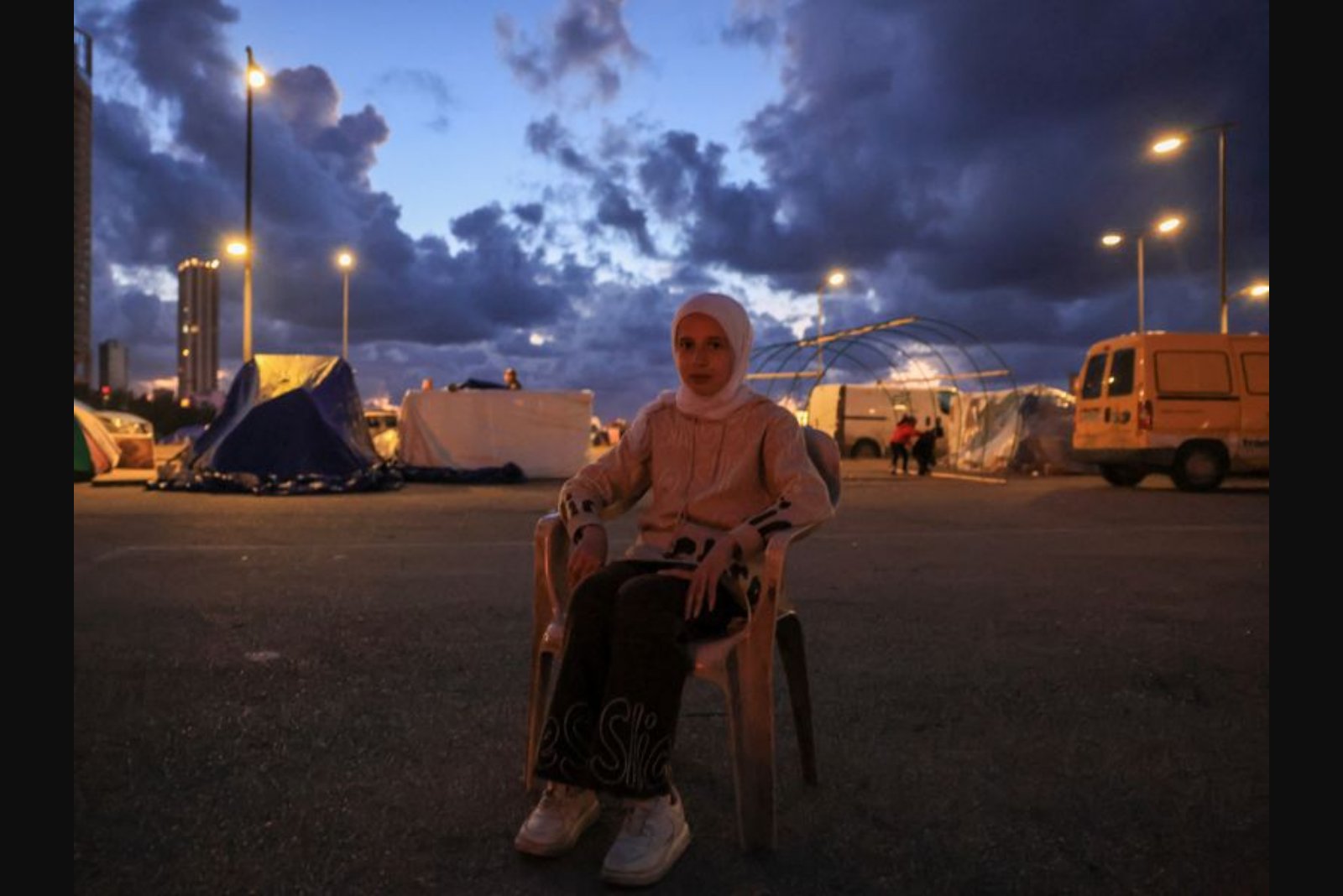
Nariman al-Issa was a child with the ordinary routines of a 12-year-old - playing with toys and riding a bicycle in the stairwells and courtyards of Beirut's southern suburbs. A single military strike in mid-March changed that life forever, killing her parents, two brothers and a sister and destroying the building where they lived.
Issa was staying nearby at her aunt's when the strike struck. She raced back to her parents' home and found the structure had collapsed on them, she said. The aftermath left her and the surviving relatives displaced in the Lebanese capital, joining an exodus that authorities say now numbers more than 1 million people displaced by expanding air strikes and mass evacuation orders.
Her family had previously fled Beirut's southern suburbs during fighting in 2024 between Israel and the Lebanese armed group Hezbollah, only to return once that two-month confrontation ended. Since fighting resumed on March 2 - alongside what the article describes as the U.S. and Israeli war with Iran - Issa's life has again been torn apart.
Today Issa and the surviving members of her extended family sleep on the street and rely on donations distributed by humanitarian groups. They lost their work as cleaners and concierges in the southern suburbs, and have no immediate income. By night, when cold descends, they gather around a bonfire fuelled by branches, cardboard and even plastic to keep warm.
Childhood memories and the question of return
Issa described what she has lost: "In the past, I was in my house, my friends would come over and I had a lot of toys and things ... I had a bicycle and my friends and I would play downstairs. I was very happy in that house. But now that I'm here, no, I'm not well."
Her aunt, Majida al-Moussawi, who had been caring for her at the time of the strike, said the family has no remaining home in Aleppo, the part of northern Syria they fled about a decade ago. Moussawi said she cannot send Issa away because the girl is missing her parents and still asks when her mother will return.
"I can't leave the girl because she's missing a lot - no mother, no father," Moussawi said. "Thank God she's 12 - if she was older and more aware, it would have ruined me. In the beginning when I was taking her she was asking, 'where did mama go, when is mama coming?'"
Both Issa and her aunt told Reuters they want only a return to routine - school, friends and a stable home. Issa summed up that hope plainly: "I hope I can go back to school, I hope I can play with my friends again, and that life returns to how it was before."
Scale of the crisis and population movements
Lebanese authorities say more than 1,200 people have been killed in Israeli strikes on Lebanon since March 2. The Lebanese health ministry's statements include at least 11 Syrian fatalities among those figures, though the public breakdown does not consistently specify each Syrian death. In the first two weeks of the renewed hostilities, the International Organization for Migration reported that more than 180,000 Syrian nationals left Lebanon.
Thousands of Syrians have been resident in Beirut's southern suburbs for years after fleeing their own country's conflict that began in 2011. The family at the centre of this account were among those who returned after the 2024 fighting concluded, only to be displaced again during the latest wave of strikes.
The conflict widened after Hezbollah fired rockets at Israel in solidarity with Tehran, two days after Iran was attacked by Israel and the United States on February 28, an exchange that prompted new Israeli ground and air operations.
Livelihoods and relief
With the collapse of jobs for many in the neighbourhoods targeted by strikes, families such as Issa's have become dependent on aid distributions. The combination of lost income, loss of housing and the movement of large numbers of people across Lebanon has left many in improvised conditions and with limited access to formal shelter.
Issa's account and the statements from her aunt reflect both the personal and practical consequences of the strikes - grieving a sudden family loss, the absence of a durable home in Syria to return to, and the immediate need for winter warmth and food provided through donations.
As fighting continues and civilian casualties mount, the situation of displaced children like Issa raises questions about access to education, stable housing and consistent humanitarian assistance for families who have already been uprooted once before.