
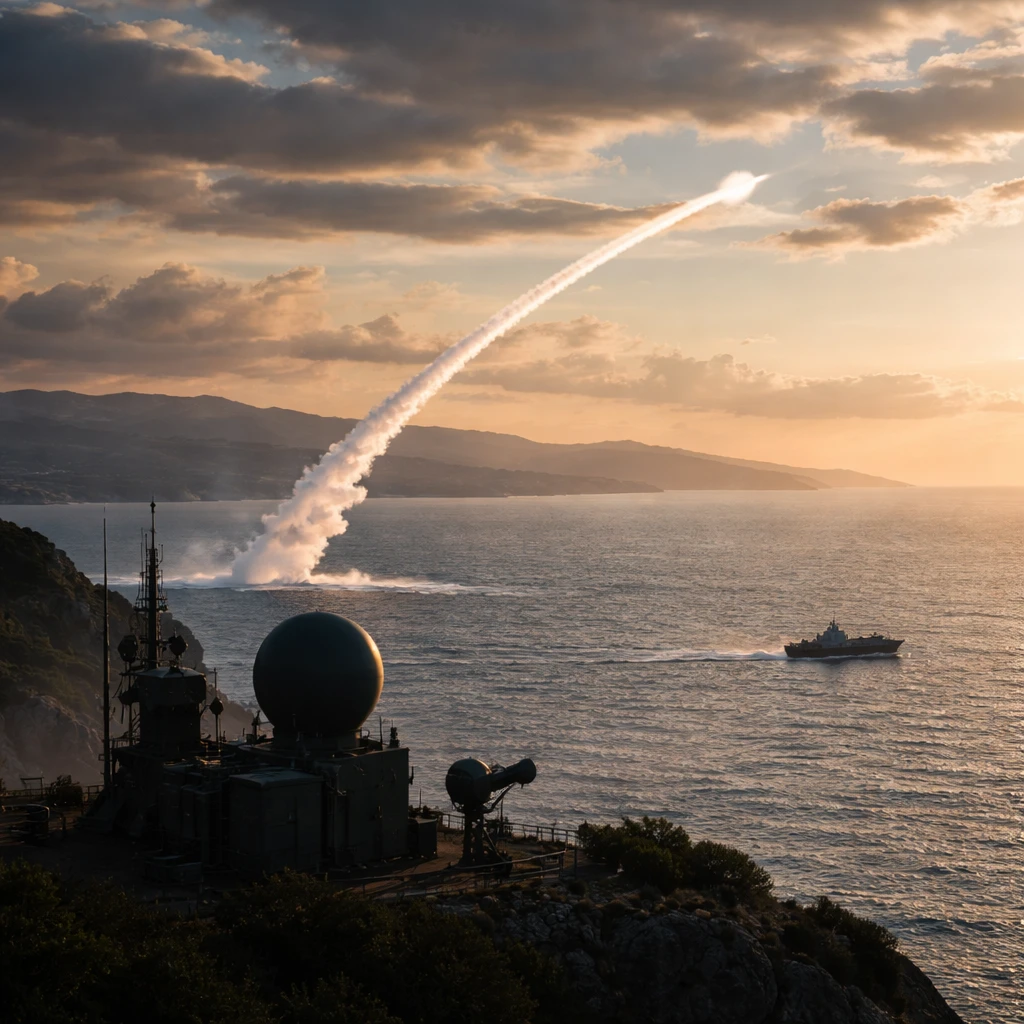
South Korean and Japanese authorities reported that North Korea fired multiple ballistic missiles toward the sea on Tuesday, in launches that were assessed as likely short-range projectiles.
South Korea's Joint Chiefs of Staff said the missiles were launched from an area near Pyongyang at about 3:50 p.m. local time (0650 GMT) and headed toward waters off North Korea's east coast. The office said the missiles flew approximately 350 km (217 miles).
Japan's coast guard separately reported detecting what could be ballistic missiles launched by North Korea that fell into the sea a few minutes later. Japanese officials added that the missiles reached a maximum altitude of 80 km. Prime Minister Sanae Takaichi stated that the launches would have no impact on Japan.
Seoul's Office of National Security called on North Korea to immediately stop ballistic missile launches, condemning the actions as provocative and in violation of U.N. Security Council resolutions. In its statement, Japan said repeated launches of ballistic missiles by North Korea threaten the peace and security of Japan, the surrounding region and the international community. The Japanese government said such launches violate relevant U.N. Security Council resolutions, constitute a serious issue for public safety, and that it had lodged a strong protest and strongly condemned the actions.
North Korea has carried out test launches in recent months of short-range ballistic missiles and multiple-launch rocket systems. Pyongyang has described those weapons as being developed as a central element of a tactical nuclear arsenal intended to defend against perceived threats from the United States and South Korea.
Interest in North Korea's short-range ballistic missiles and artillery has increased following reports that Pyongyang supplied such systems to Russia for use in the conflict in Ukraine under a mutual defence pact signed with Moscow in 2024.
The latest round of launches coincided with a visit to South Korea by a senior U.S. Defense Department official. During the visit, U.S. and South Korean representatives discussed modernising their military alliance as Washington seeks a more limited role in combined defence planning and operations directed at North Korean threats.
Context and significance
The launches underline continued weapons testing by North Korea that Seoul and Tokyo view as provocative and in breach of U.N. restrictions. Officials in both countries publicly condemned the activity and reiterated calls for restraint. The timing of the firing, during high-level talks on alliance posture, highlights the security sensitivities shaping discussions between the United States and South Korea.
Information in this report is drawn from official statements by South Korean and Japanese authorities and reflects the details those offices released about the timing, trajectory and assessed range of the missiles.