
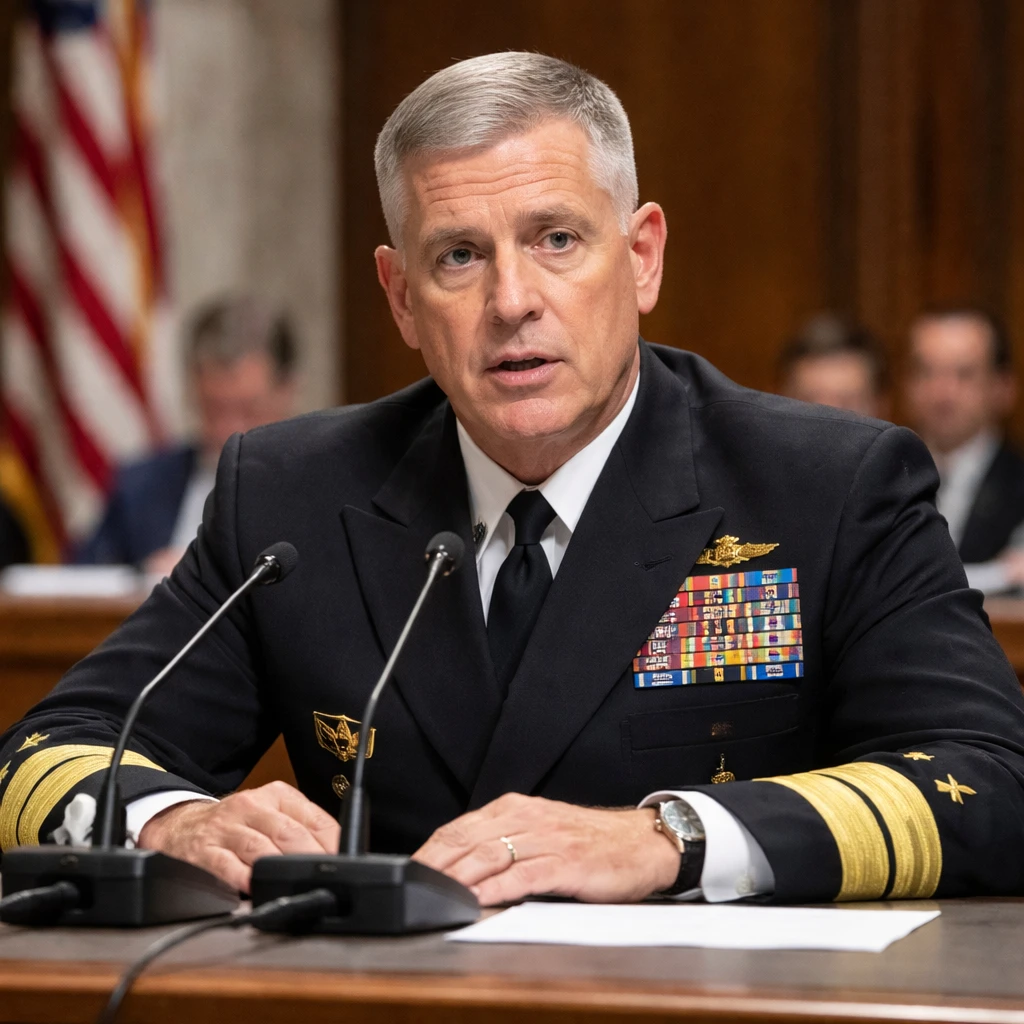
WASHINGTON, March 26 - The Navy admiral nominated to take charge of U.S. nuclear forces affirmed that he sees no military need to resume nuclear warhead testing, citing the annual safety and reliability certifications produced by the Energy Department and the Pentagon.
Admiral Richard Correll made the remarks while testifying before the Senate Armed Services Committee during his confirmation hearing to become chief of U.S. Strategic Command. Senators asked whether, in his view, there was a current military requirement to conduct nuclear warhead tests - the last of which occurred in 1992.
Correll voiced support for the most recent interagency certification for 2025-2026, noting that the Energy Department and the Pentagon "indicated we have the capabilities and sufficient testing to satisfy ourselves on the reliability and efficacy of our nuclear warheads."
"But we monitor that very closely and I will continue to provide my best military advice."
His testimony arrives as administration officials deliberate on how to carry out a presidential directive issued in October that calls for conducting nuclear weapons tests. Correll emphasized reliance on the regular assessments by the Energy Department and the Pentagon as the basis for his judgment about the current state of the arsenal.
The exchange at the confirmation hearing underscores a practical tension: senior military leaders and civilian agencies responsible for the stockpile report ongoing confidence in warhead performance based on existing evaluation methods, while policymakers have ordered a review of testing options.
Correll did not offer new technical details about the assessments themselves, instead reiterating the departments' recent conclusion that current capabilities and testing regimes suffice to assess warhead reliability and efficacy. He also reaffirmed that oversight and monitoring would remain central to his approach if confirmed.
The hearing centered on the question of whether there is a present military justification for resuming explosive testing of nuclear warheads, and Correll's answer aligned with the most recent formal certification from the responsible departments. At the same time, officials continue to examine how to implement the October directive calling for tests.
His confirmation process and further policy decisions will likely determine whether the status quo is maintained or if testing resumes after decades without explosive warhead tests.