
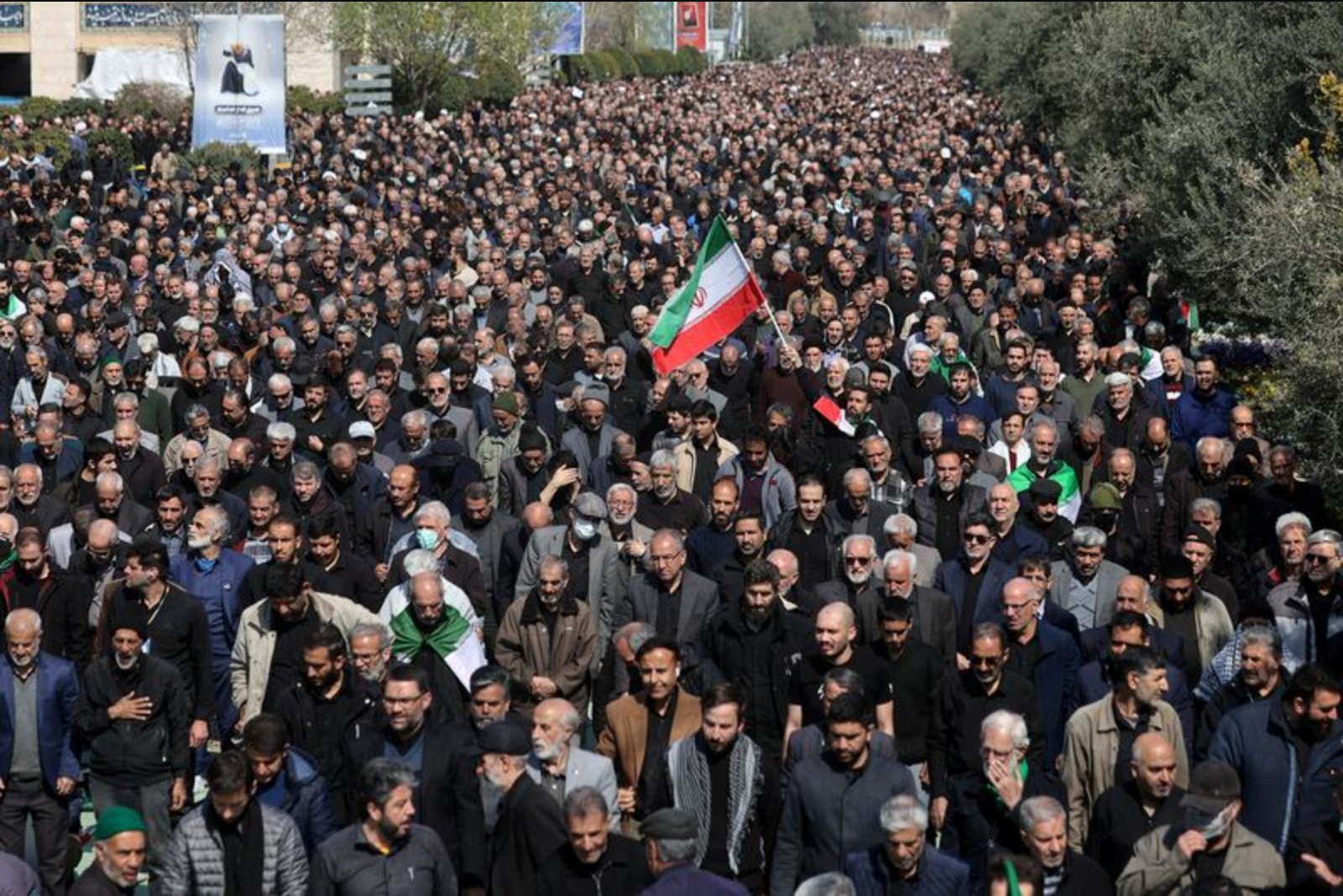
The individual who steps into Iran’s highest office will inherit a nation under severe external assault and mounting internal strain. With the current supreme leader killed by U.S. and Israeli strikes a week ago, attention has focused on potential successors, among them the hardline figure Mojtaba Khamenei, viewed by many as a frontrunner. Yet reports from interviews with three Basij members, ordinary Iranians, officials, insiders and political analysts indicate the pool of loyalists who once confidently sustained the Islamic Republic may now be considerably smaller and less steadfast.
"The strategy in choosing a hardliner as the new leader would be to consolidate the base, but they’re ending up with an increasingly small circle of supporters," said Ali Ansari, a modern history professor at the University of St Andrews in the UK. "And the longer this goes on, the more it will all fray at the edges," he added, reflecting growing doubts about how effectively a successor can command the same level of popular, institutional and ideological fidelity seen in earlier decades.
The Islamic Republic was born from a mass movement in 1979 that mobilised millions. Decades of governance since then - marked in public perception by corruption, repression and mismanagement - have thinned that broad base of backing, alienating significant swathes of ordinary citizens. Still, a determined core of loyalists persists: people who regularly vote for the system and who can be mobilised to suppress opposition demonstrations.
Highly organised and fast to mobilise, these loyalists remain a major barrier to any outside hopes of regime change. "We have given many martyrs. They have sacrificed themselves for our leader. Now we must show that the path of the leader Khamenei continues. We will solve any problems and support whoever is chosen as leader. We will even give our lives for him," said Mahdi Rastegari, 32, a religion teacher and member of the Basij, an official volunteer militia. His remarks illustrate the depth of conviction among some within the movement.
At the same time, electoral figures underline the limited numerical strength of the hardline vote in recent national contests. In the last presidential election, the most hardline candidate, Saeed Jalili, received around 9 million votes in the first round and 13 million in the second, according to official results. By comparison, over 61 million of Iran’s more than 85 million people were eligible to vote that year, underscoring that the hardliners’ reliable core is a minority within the population.
Beyond ballots, the state leverages a network of control that reaches deeply into towns, villages and neighbourhoods. Members like Rastegari exemplify this web of power - a system that extends from the supreme leader’s now bombed-out office in central Tehran to local checkpoints and community surveillance. Every night since the supreme leader’s death, state-backed mourning ceremonies have continued in the hardest-hit areas despite ongoing bombardment.
Not all participants in this network are driven solely by ideology. Some are true believers, prepared to die as martyrs for rule by a divinely guided cleric. Others are motivated by material incentives tied to their public loyalty: preferential access to university places, job offers and subsidised bank loans. These benefits have long reinforced allegiance to the system.
Ali Mohammad Hosseini, 29, illustrates the blending of ordinary life and mobilised loyalty. He spends his days working at his father's grocery shop in the Shi'ite seminary city of Qom and his evenings manning checkpoints to deter public dissent. "The most important issue is preserving the regime, which is what the Americans are targeting," he said, and stressed he would support whichever cleric replaced Khamenei as a "religious duty" for which he was prepared to die.
However, not every Basij member expresses ironclad certainty about the future. One Basij member who asked to be identified only by his first name, Hassan, and located in the shrine city of Mashhad, voiced doubt about the Islamic Republic’s survival. "We need to be realistic," he said, pointing to sustained U.S. pressure and the ruinous aftermath of pulverising airstrikes if a hardliner like Mojtaba Khamenei is named as the new leader.
Such concerns are echoed in the wider society, where fears of chaos have been inflamed by continued bombardment. "The Guards and the system are still powerful. They have tens of thousands of forces ready to fight to keep this regime in place. We, the people, have nothing," said Babak, 34, a businessman in Arak who requested his family name be withheld. His comment highlights the perceived disparity between well-armed state forces and an electorate that feels increasingly powerless.
Compounding political and security challenges is a collapsing economy that threatens the privileges which have propped up loyalist support. Members of the Basij and others demonstrating fidelity to the system have long benefited from advantages such as reserved university slots, employment opportunities and subsidised loans. Yet, as those perks are imperiled by economic ruin, the calculus of loyalty may shift.
"We do not even have airports any more. No ports. How are they going to rebuild this economy?" said Hassan, 29, capturing a sense of bleakness about reconstruction prospects in the wake of widespread strikes and damage to infrastructure.
With their leader killed early in the conflict and visible fissures appearing across the country’s leadership, the durability of hardline backing will soon be tested in unprecedented ways. The regime retains organised forces and devoted adherents capable of rapid mobilisation, but the balance between ideological commitment and material incentives, the extent of popular alienation, and the consequences of sustained bombardment create a volatile mix.
Whether a successor - particularly a staunch hardliner like Mojtaba Khamenei - can marshal more than a narrow circle of supporters remains uncertain. What is clear from interviews across social and political lines is that the Islamic Republic's traditional networks of control are under strain in the face of external military pressure and internal disillusionment. The outcome will hinge on how these competing pressures interact in the weeks and months ahead.