
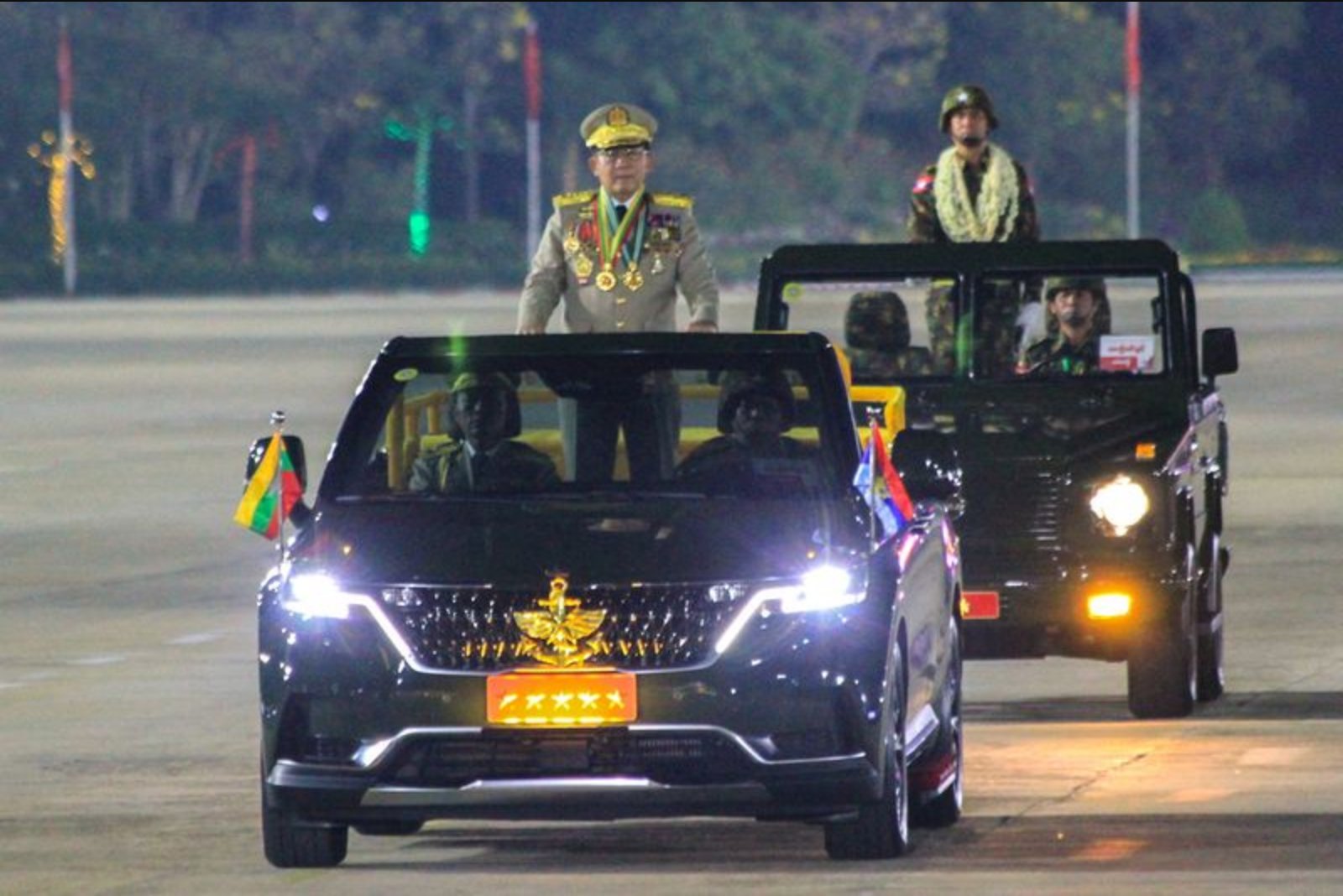
April 3 - Myanmar's military chief, Min Aung Hlaing, obtained the parliamentary majority needed on Friday to assume the presidency, consolidating his hold on power in a nation that has been mired in conflict since he removed an elected government five years ago.
The 69-year-old general, who led a 2021 coup that deposed the administration of Nobel Peace Prize laureate Aung San Suu Kyi and placed her under arrest, presided over a transition from his role as top military commander to the country's civilian presidency. That coup provoked mass protests and evolved into armed resistance across much of Myanmar.
The formalisation of Min Aung Hlaing's presidency follows a one-sided election held in December and January, which was dominated by an army-backed political party. The vote was widely criticised by opponents and some Western governments as a sham intended to mask continued military rule behind a façade of democratic institutions.
During a live broadcast of the parliamentary vote tally, Min Aung Hlaing secured the level of support required to be declared president. The legislature is heavily skewed in favour of the Union Solidarity and Development Party - which won the election - and includes a quota of appointed military legislators that further ensured a pro-military outcome.
Reshuffle and succession within the armed forces
Min Aung Hlaing's promotion to the presidency was preceded by a significant reorganisation of the armed forces' leadership, where he had been at the helm since 2011. As he was nominated for the presidency in parliament, he designated Ye Win Oo, a former intelligence chief perceived as a loyalist, to take over leadership of the military.
Analysts view the parallel military handover and Min Aung Hlaing's move into a civilian office as a calculated effort to centralise authority, protect the armed forces' institutional interests, and pursue a degree of international recognition while retaining effective control.
"He has long harboured the ambition to trade his title of commander-in-chief for president and it appears his dreams are now becoming a reality," said Aung Kyaw Soe, an independent analyst focused on Myanmar.
Conflict persists despite political changes
Even as political manoeuvres in the capital unfolded, the civil war that has devastated Myanmar for much of the past five years continues to rage. Several anti-junta factions - including remnant elements of Suu Kyi's party and established ethnic minority armed groups - have this week formed a new combined front to oppose the military government.
"Our vision and strategic objectives are to completely dismantle all forms of dictatorship, including the military dictatorship, and to collectively initiate a new political landscape," the Steering Council for the Emergence of a Federal Democratic Union said in a statement.
Analysts caution that the newly consolidated resistance forces may face a heavier military response. They also note the possibility of heightened diplomatic and economic scrutiny from neighbouring countries, some of which may seek to deepen ties with Min Aung Hlaing's administration.
Reflecting on the internal challenges the opposition may face, analyst Sai Kyi Zin Soe warned: "Amidst global oil and fuel shortages and economic crises, maintaining organisational stability could become difficult. As these hardships grow, it may become even harder to build mutual understanding and trust between groups, reach firmer agreements, and sustain cooperation."
What remains clear
Min Aung Hlaing's elevation to the presidency formalises a course toward civilian-front governance led by a figure who has steered the military for more than a decade. The parliamentary mechanics that facilitated his victory - the dominance of an army-backed party and a bloc of appointed military legislators - underline the limited competitiveness of the recent electoral process.
At the same time, the persistence of armed resistance and the formation of a unified front against the junta underline that control in the country is contested on multiple fronts. Observers point to the dual pressures the opposition faces: intensified military actions and the broader economic strains cited by analysts, each of which could influence the resilience and cohesion of anti-junta coalitions moving forward.