
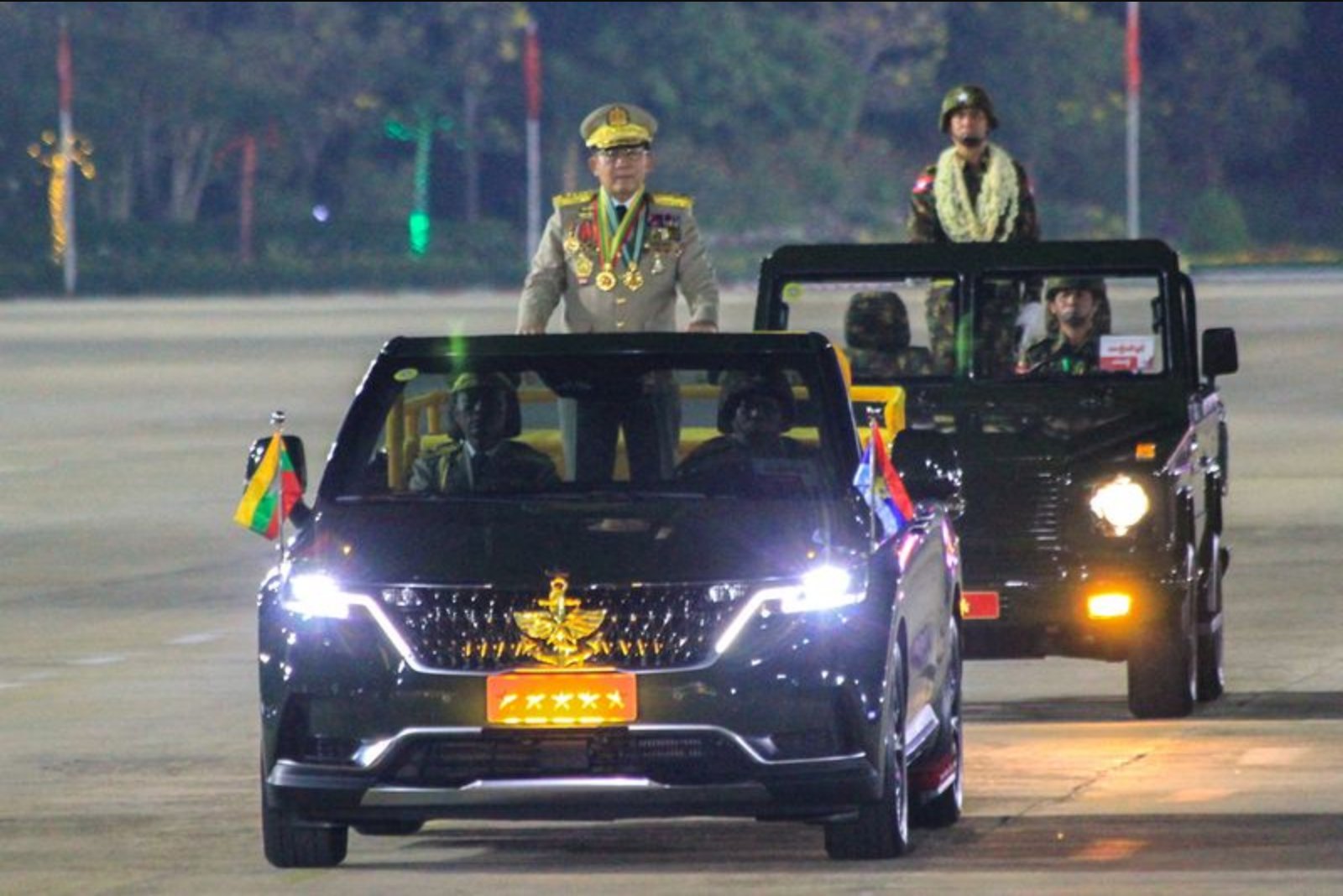
Min Aung Hlaing, the general who led Myanmar’s 2021 coup, formally relinquished his role as commander-in-chief on Monday in order to be eligible for the presidency in a forthcoming parliamentary vote. The 69-year-old, who has led the country’s armed forces since 2011, was presented by lawmakers in the newly convened lower house as one of two vice-presidential candidates to be put forward for the later presidential selection.
Lawmakers from the lower chamber named two vice-presidential candidates, one of whom was identified on the floor as "Senior General Min Aung Hlaing is proposed as a vice-presidential candidate," said Kyaw Kyaw Htay, a lawmaker from a military-aligned party, according to a live broadcast of the proceedings on state media. The upper house is expected to nominate its own vice-presidential candidate, and the three nominees will subsequently be considered in a vote to pick the president. No date for that presidential vote has been announced.
The parliamentary maneuver follows a controversial electoral process held across December and January that the military-backed Union Solidarity and Development Party won. That vote has been widely criticized as a sham by the United Nations and many Western countries, according to statements reflected in parliamentary and international commentary.
The country has been engulfed by widespread violence since the military overthrew the democratically elected government of Aung San Suu Kyi in 2021, a seizure of power that precipitated the civil conflict still affecting the nation.
At a separate ceremony in the capital Naypyitaw, Min Aung Hlaing transferred command of the armed forces to Ye Win Oo. The outgoing commander-in-chief said in televised remarks carried by military-owned media: "I will continue to serve the interests of the people, the military, and the national interests of the country."
Ye Win Oo, who became Myanmar’s intelligence chief in 2020 and was promoted to commander-in-chief earlier this month, was described by an independent analyst as a close ally of Min Aung Hlaing. "The fact that he received two major promotions within two months clearly demonstrates that he is one of Min Aung Hlaing’s most trusted loyalists," said Aung Kyaw Soe.
Ye Win Oo’s background includes graduation from the Officer Training School rather than the Defence Services Academy, a trajectory that distinguishes him from many in the officer corps. He has commanded an infantry division and the Southwestern Command in the Ayeyarwady delta, and held sensitive portfolios at the apex of the military administration since the coup. The Institute for Strategy and Policy - Myanmar, a Thailand-based think tank, wrote in a March analysis that "Even so, General Ye Win Oo appears to lack the breadth of leadership experience that spans both battlefield command and institutional administration."
Min Aung Hlaing’s path to the top of the armed forces was steady. Born to a family from Myanmar’s south, he studied law before joining the military and rose through the ranks until his elevation to military chief 15 years ago. Observers have characterized him as a rigid leader who uses tactical appointments and the placement of loyalists to consolidate control, while sidelining political rivals.
Analysts and commentators have noted that the general has long sought the presidency. "This has been Min Aung Hlaing’s goal all along," said independent analyst Htin Kyaw Aye. "It’s just a shift from ruling as a military leader to ruling as president." That ambition persists despite the military’s prestige and control having been eroded by the ongoing civil war.
The parliamentary nominations and the change in military leadership mark another stage in Myanmar’s post-coup political trajectory. With the presidential vote yet to be scheduled and contestation over the legitimacy of the recent polls, the nation remains in a state of political flux.
Key quotes from the day capture the political transition and assertions of continuity from the outgoing commander. Kyaw Kyaw Htay’s announcement on the floor of the lower house formally placed Min Aung Hlaing among the candidates who could be elevated to the presidency in the next phase of parliamentary decision-making. The incoming commander, Ye Win Oo, has drawn attention for rapid promotion and close ties to the former commander-in-chief, though assessments differ on the scope of his leadership credentials.
As Myanmar’s institutions move through the procedures laid out for selecting a head of state, significant questions remain unanswered publicly, including the exact timing of the presidential vote and how the contested election results will affect the country’s ongoing conflict and governance.