
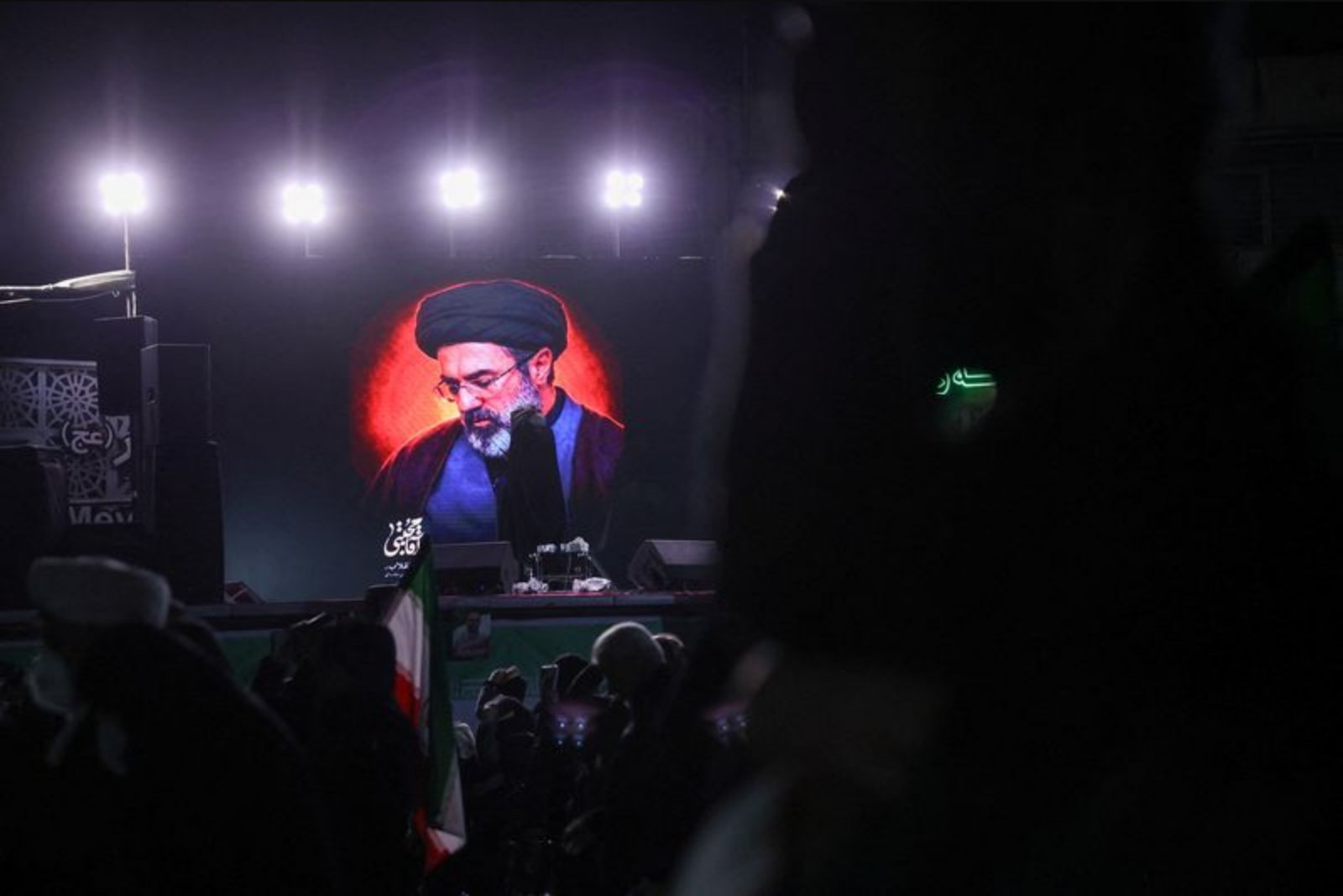
March 9 - Mojtaba Khamenei was named on Monday to succeed his father, Ali Khamenei, as supreme leader of Iran, a consolidation of hardline authority in Tehran announced as the U.S.-Israeli war with Iran pushed energy prices higher and battered Asian equity markets.
The Assembly of Experts, the 88-cleric body vested with selecting the nation’s highest authority, issued a statement shortly after midnight Tehran time saying: "By a decisive vote, the Assembly of Experts, appointed Ayatollah Seyyed Mojtaba Hosseini Khamenei as the third Leader of the sacred system of the Islamic Republic of Iran." The role confers ultimate authority over state affairs.
The appointment took place as the conflict entered its 10th day, with a fresh round of missile and drone exchanges between Israel and Iranian forces reverberating across the region. The intensifying hostilities have produced strikes and interceptions in multiple countries and raised international concern about civilian and infrastructure damage.
Religious leader issues urgent appeal
Pope Leo, speaking at the Angelus prayer in St. Peter’s Square on Sunday, warned of "a tragedy of enormous proportions" as a result of what he described as the "widespread climate of hatred and fear" in Iran and across the Middle East. He urged collective prayer that "the roar of bombs may cease, that weapons may fall silent, and that space may be opened for dialogue in which the voices of peoples can be heard."
Widening battlefield and military claims
The Israeli military said on Monday it had launched a wave of strikes into central Iran and had hit infrastructure linked to Hezbollah militants in Beirut. Iran and allied proxies also appeared to have carried out attacks across the region. Police sources said rocket and drone strikes against a U.S. diplomatic facility near Baghdad’s international airport were intercepted by the C-RAM defence system.
Security sources reported a drone strike on a U.S. military base near Erbil airport in Iraqi Kurdistan. Saudi authorities announced they intercepted a drone east of the northern Jawf region. In Bahrain, Reuters footage showed thick smoke rising from near the BAPCO oil refinery after the government said an Iranian drone strike hit the area, causing injuries and damage.
Domestic power and international reaction
Mojtaba Khamenei, described in the Assembly statement as a cleric with influence inside Iran’s security apparatus and extensive business networks linked to his father, had been widely viewed as a frontrunner in the run-up to the vote by the Assembly of Experts. His elevation is likely to entrench a hardline posture in Tehran at a pivotal moment of external confrontation.
The appointment is expected to draw a sharp reaction from Washington. U.S. President Donald Trump said on Sunday that the United States should have a say in the selection, telling ABC News: "If he doesn’t get approval from us, he’s not going to last long." Ahead of the announcement, Israel had warned it would target whoever was chosen. In an interview with the Times of Israel after the selection, Trump declined to elaborate and said: "We’ll see what happens," and added that ending the war would be a "mutual" decision with Israeli Prime Minister Benjamin Netanyahu.
Casualties and losses reported
The conflict has produced battlefield and civilian losses on multiple sides. The U.S. military reported that a seventh American has died from wounds sustained during Iran’s initial counter-attack a week earlier, a day after U.S. officials presided over the return of the remains of six other Americans killed. The Israeli military said two of its soldiers were killed in southern Lebanon, the first Israeli troop fatalities since Israel-Hezbollah hostilities resumed, though the military did not immediately elaborate on the circumstances.
Hostilities in Lebanon also resulted in civilian casualties. An Israeli strike on an apartment in the Ramada hotel building in central Beirut early on Sunday killed at least four people, with Israel saying it had targeted Iranian commanders operating in the Lebanese capital. Iran’s U.N. ambassador said U.S.-Israeli attacks have killed at least 1,332 Iranian civilians and wounded thousands.
Energy markets disrupted, global trade routes affected
Oil markets reacted sharply to the conflict and supply disruptions. U.S. crude futures rose more than 20% in early trade on Monday, reaching their highest levels since July 2022, as major Middle Eastern producers curtailed supply because they could not safely transit shipments through the Strait of Hormuz. The Strait, a critical maritime artery, accounts for about 20% of global oil and liquefied natural gas supply, and traffic through it was largely halted after Iran attacked at least five ships, leaving only a limited number of tankers transiting.
Brent crude jumped 17% to $108.73 a barrel on Monday, after soaring 28% the previous week. The war has forced production stoppages by exporters across the region from Qatar to Iraq, and Kuwait announced output cuts over the weekend. Analysts expect the United Arab Emirates and Saudi Arabia may soon reduce output as oil storage capacities fill. The G7 finance ministers planned to discuss on Monday a joint release of oil from emergency reserves coordinated by the International Energy Agency, according to reporting in the Financial Times, with three G7 countries, including the United States, expressing support for the idea.
A senior Japanese parliamentarian said the government instructed a national oil reserve storage site to prepare for a potential crude release. Japan relies on the Middle East for around 95% of its crude supplies, with roughly 70% shipped through the Strait of Hormuz.
Market fallout in Asia
The spike in energy prices and heightened geopolitical risk weighed heavily on Asian stock markets. Japan’s Nikkei index fell 5.8%, while South Korea, an import-dependent economy, saw its stocks drop 6.5%.
Context and constraints
The Assembly of Experts’ decision to install Mojtaba Khamenei as supreme leader formalizes a transfer of ultimate political authority at a time of intense military confrontation across the Middle East. The immediate economic consequences include dramatic moves in global energy markets and sharp declines in equity indices in major Asian markets. The humanitarian toll and longer-term strategic implications remain unfolding as strikes and counter-strikes continue.