
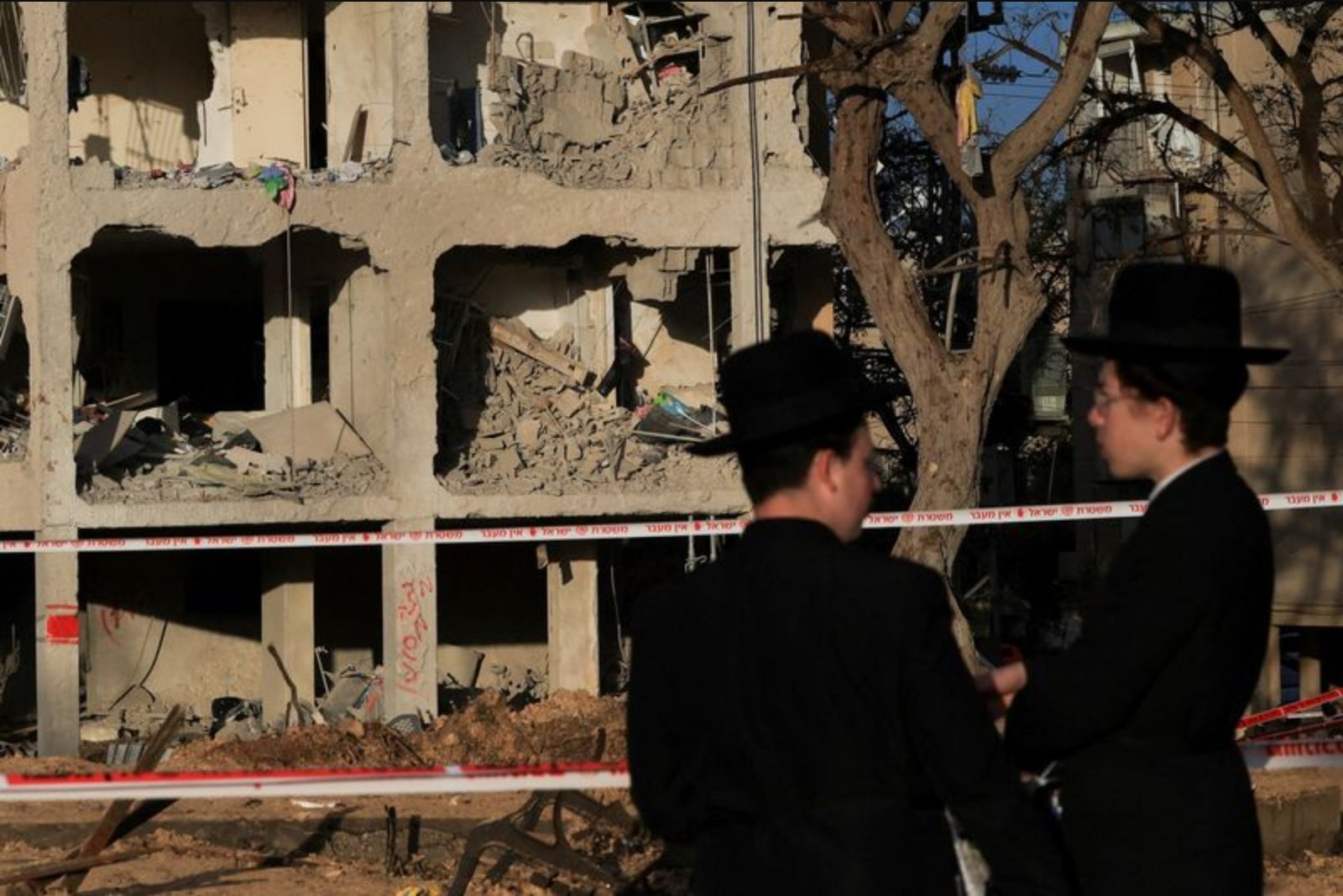
Southern Israeli communities awoke on March 22 to extensive destruction after two missiles launched from Iran struck overnight, including a hit on a multi-story apartment block in the desert town of Arad. The blasts left entire floors of the building exposed and created a crater near the residential blocks, local emergency and medical officials said.
Uri Shacham, the chief of staff of Israel's ambulance service, reported that at least eight buildings suffered damage from the strike in Arad. Verified footage showed flames consuming the top floor of an apartment building soon after impact, and search and rescue teams were seen moving floor to floor inside structures that had been partially blown apart.
Israeli military spokesperson Lieutenant Colonel Nadav Shoshani stated that both impacts had been caused by conventional ballistic missiles. When asked about preliminary results from a military inquiry into why air defences did not intercept the projectiles, he declined to comment.
The strikes came despite the warning system that notifies most Israelis by mobile alert and air raid sirens when launches from Iran are detected. Those alerts are intended to give people minutes to reach protected rooms or public shelters.
"It is a miracle that no-one was killed," Prime Minister Benjamin Netanyahu said on Sunday as he stood in the crater at the Arad impact site. Pointing to the blown-out façade of the apartment block and to an intact wall that led to an underground shelter, he warned against complacency and said that if everyone had reached shelter in time, no one would have been hurt.
Hospital officials said 31 people from Arad, including 18 children, were hospitalized, with at least nine in serious condition. Dozens more sustained light injuries. In Dimona, another southern city that was struck, five people were hospitalized, including a 12-year-old boy in serious condition, according to local medical services.
Israeli authorities accused Iran of directing strikes at civilian population areas. Iran's Revolutionary Guards, however, said they had targeted military and security-related sites in retaliation for Israeli strikes against Iranian locations.
Both Arad and Dimona lie near Israel's secretive nuclear reactor and several military installations, including Nevatim Air Base, one of the country's largest. The proximity of the strikes to those facilities was noted by officials as part of situational reporting, but details beyond the locations struck were not disclosed.
Since joint U.S.-Israeli strikes on Iran on February 28, Israel has been subjected to daily missile fire from Iran, officials said. The ongoing exchanges have resulted in civilian fatalities and injuries on both sides of the confrontation. At least 20 civilians have been reported killed across Israel and the Palestinian territories, according to casualty figures cited by officials, including one Israeli killed in an attack by the Iran-backed Lebanese group Hezbollah on Sunday.
Emergency services reported at least 15 people were hospitalized on Sunday in fresh Iranian attacks, including from a cluster munition that struck in Tel Aviv. Iranian and U.S. strikes have been reported to have killed at least 1,300 people in Iran, according to the Iranian government. A U.S.-based rights group that tracks human rights violations in Iran has recorded 3,320 deaths, including 1,406 civilians and 1,167 military personnel, with the remaining deaths not yet categorized. These figures could not be independently verified.
Rescue operations continued in the damaged residential blocks as investigators and emergency crews worked to account for the injured and secure unstable buildings. Military and civil authorities offered limited comment on technical details of the air defence failure and the ongoing operational response.
Summary
Two conventional ballistic missiles launched from Iran struck Israeli towns in the south on March 22, severely damaging apartment buildings in Arad and causing dozens of injuries. Authorities reported multiple hospitalizations, extensive structural damage and ongoing search and rescue operations. Iranian and Israeli accounts differ on whether military or civilian targets were intended, and casualty totals from strikes inside Iran remain contested and unverified.
Key points
- Two conventional ballistic missiles struck Arad and Dimona, causing major structural damage and dozens of injuries - sectors affected: defense, emergency services, insurance.
- At least 31 people from Arad, including 18 children, were hospitalized with nine in serious condition; five were hospitalized in Dimona, including a 12-year-old in serious condition - sectors affected: healthcare, local municipal services.
- Strikes occurred near Israel's nuclear reactor and major military bases, underscoring potential implications for national security and military operations - sectors affected: defense, energy.
Risks and uncertainties
- Failure of air defence systems to intercept the missiles raises uncertainty about near-term civilian protection and defence readiness - potential impact on defense procurement and military operations.
- Conflicting claims about whether civilian or military sites were targeted increase the risk of further escalation and complicate operational responses - potential impact on regional security and energy infrastructure.
- Casualty figures from strikes within Iran remain contested and could not be independently verified, leaving uncertainty in assessing the full human and political toll - potential impact on diplomatic relations and humanitarian response planning.