
When Fabiola first heard that Renee Good had been shot and killed during an Immigration and Customs Enforcement enforcement action, she said she was devastated and afraid. Yet within days she joined a growing number of Minnesotans who are volunteering to monitor federal immigration agents, a choice she took even as she worried for her seven-year-old son, Asher.
Fabiola, a naturalized U.S. citizen originally from Latin America who has lived in the country for 20 years and runs a construction company, said the killing - which occurred just blocks from her home - prompted her to act. "I do feel scared, but at the same time, I know I have to take care of my people too," she said.
The fatal shooting of Good has spurred a surge of volunteers, activists say, even though the presence of heavily armed, masked federal agents has led to confrontations and carries the potential for violence. Federal agents on Saturday shot dead a Minneapolis resident, the second such death since the Trump administration deployed an additional 3,000 immigration enforcement officials to the city. The agent involved was identified as Jonathan Ross.
In the wake of the shooting, Vice President JD Vance said during a visit to Minneapolis that Good had attempted to ram Ross with her car. Analyses of bystander video show Good's wheels were turned away from Ross and that his legs were clear of the vehicle at the moment he fired.
Actions and precautions by volunteers
Fabiola described the practical steps she has taken to protect her child and to support neighbors she believes are vulnerable. She taught Asher how to spot federal agents by their uniforms, gave him whistles to blow when they see agents on their way to school, and made him memorize his grandparents' phone numbers in case she is detained. She has also begun delivering food to people who are afraid to leave their homes and regularly visits the makeshift memorial for Good.
"She's got kids, and her kids don't have their mom now," Fabiola said of Good. "If something happened to me, where is my boy going to go?"
Organizers and advocacy groups say they have been overwhelmed by the influx of volunteers who want to observe, document and warn communities about enforcement actions. At least five organizations now offer training on how to monitor ICE operations, notify immigrants of agent presence and record any use of force against detainees and protesters. One group's online sessions have reached capacity quickly; the training platform has been filling up to its 1,000-person maximum within hours, according to Kate Wegener, an immigration attorney who runs those trainings.
Training sessions emphasize safety and legal boundaries. Typical guidance includes staying at least eight feet away from federal agents, following lawful orders given by officers, and maintaining a safe distance when driving behind convoys of agents.
Motivations and expanding participation
Many volunteers said the killing of Good was a turning point. Aaron, a 41-year-old marketing professional who took to watching for agents near schools on his regular run, said he had been aware of enforcement activity but only "woke up" to the severity after Good was killed. He and his wife now patrol neighborhoods by bike, scanning for agents even in freezing weather.
Janet, a resident of a Minneapolis suburb who declined to provide her last name because she feared being doxxed, said she has written letters to be opened by friends and family if she is killed. Other volunteers described having been teargassed and arrested while observing operations.
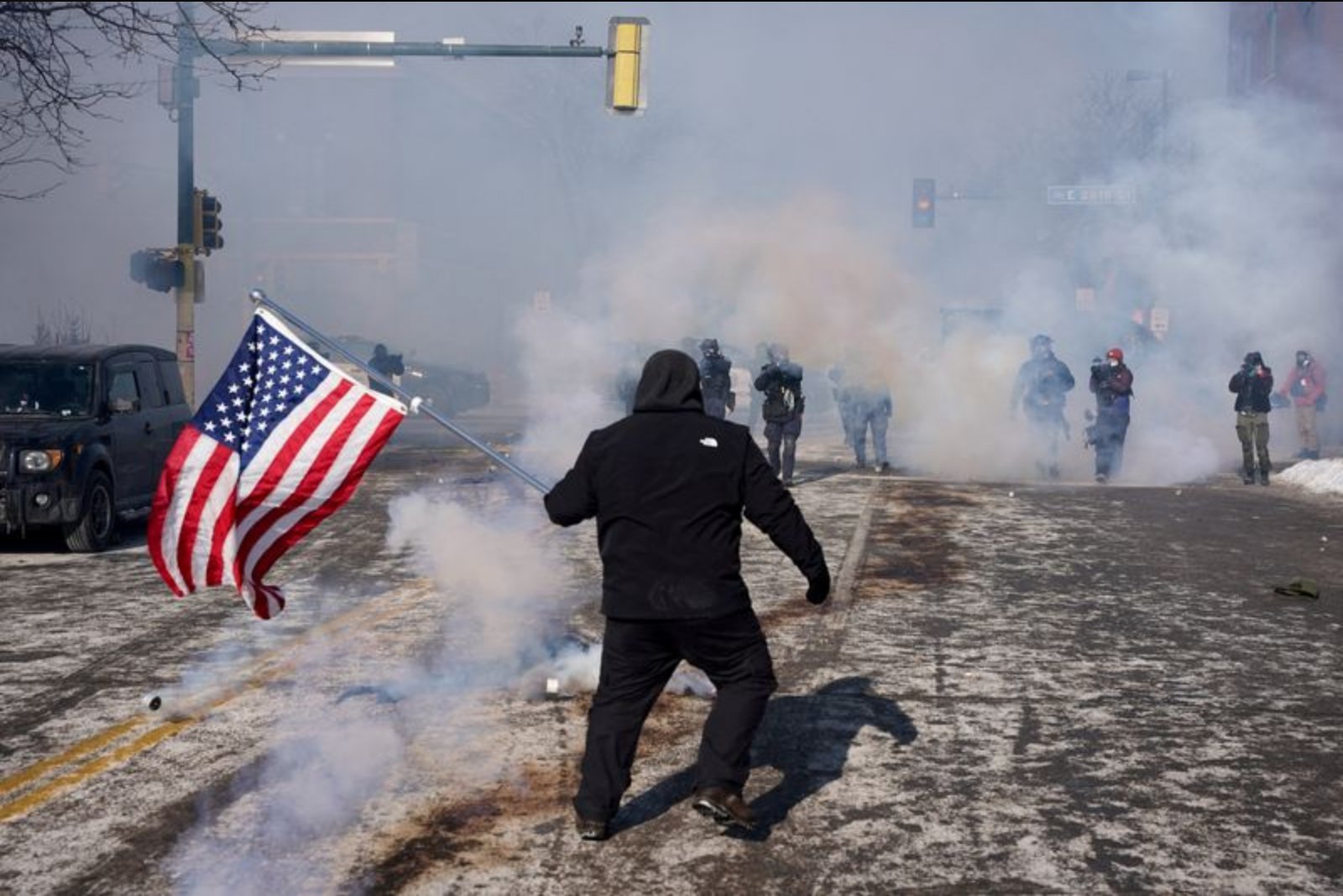
State and local authorities in Minnesota have publicly encouraged documentation of federal activity. Governor Tim Walz urged residents to take out their phones and record federal agents, and observers commonly wear fluorescent green vests and carry whistles to signal one another. They have become a frequent presence along busy roads and in residential areas when federal agents deploy in tactical gear.
Confrontations and official responses
Organizers and volunteers say community pushback has made the city a more challenging environment for enforcement. Border Patrol Chief Gregory Bovino said the city presents a "difficult operating environment" for agents. Officials in the Trump administration and some allied politicians have criticized the observers; Kristi Noem, described in public statements as the DHS secretary along with other Trump administration officials, characterized protesters and observers as "anti-ICE" and "far left" agitators.
Patty O'Keefe, a 36-year-old non-profit worker, recounted an incident she said occurred earlier this month while she followed ICE agents in her car. She said five federal agents smashed her vehicle's window, handcuffed and photographed her, and placed her in an unmarked SUV before holding her for eight hours in a Minneapolis detention center; she was later released without charge. O'Keefe said agents insulted her while she was detained. Department of Homeland Security did not respond to a request for comment on her account, and independent verification of the episode was not available.
Despite the distress such interactions have caused - O'Keefe said she now struggles with anxiety - she and others say they will continue volunteering. "I'm just stubborn, and I'm not wanting to give in to the fear," she said.
Community reaction and memorials
Many residents have expressed reverence for Good and regard her death as a call to action. Dozens braved dangerously cold weather to add flowers, stuffed animals and electric candles to a snow-tinged makeshift memorial near the location where she was killed. Volunteers and mourners have described Good as an inspiration and some say her death has galvanized broader civic engagement reminiscent, organizers said, of the surge in activism following the police killing of George Floyd in 2020.
Supporters and volunteers say their efforts are intended to protect neighbors, document enforcement operations and slow down actions that they view as harmful. They believe their presence has forced federal agents to change tactics and to operate with greater caution in public spaces.
Official stances and outstanding questions
Federal officials, for their part, maintain that agents will use lethal force when they fear for their safety. DHS did not provide comment on the risks observers face in Minnesota when asked. State authorities said they were compiling arrest data related to demonstrations and observations, but that the information was not immediately available.
As community members continue to monitor federal operations, organizers and volunteers say they are motivated by protection of residents and by a desire to hold agents accountable. Their activities - from training sessions that fill up quickly online to teams of observers stationed across neighborhoods - reflect a sustained and growing civic response to federal enforcement in Minneapolis.