
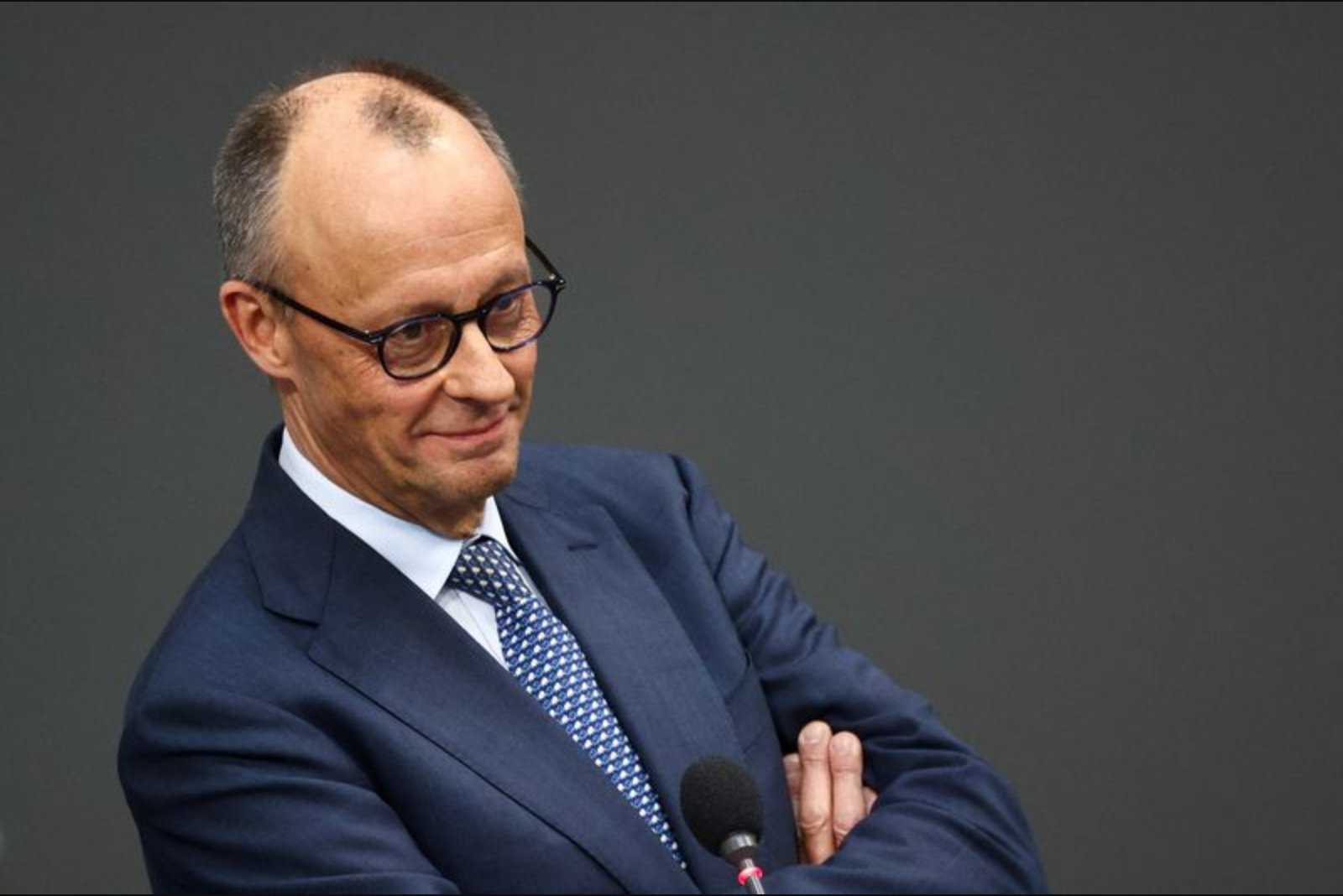
German Chancellor Friedrich Merz on Friday voiced reservations about the clarity and likely success of the strategy pursued by the United States and Israel in the current Iran conflict, while signalling that Germany could be prepared to support post-conflict stabilisation should fighting cease.
Merz made his comments at a conference organised by the FAZ newspaper, describing his doubts about the effectiveness of the actions taken by Washington and Tel Aviv. "I’m just not convinced that what’s happening right now - what Israel and America are doing - will actually lead to success," he said.
The chancellor reiterated that Berlin is participating in diplomatic initiatives to seek solutions, whether through bilateral engagement with Gulf states or in forums such as the G7. He said Washington has shown some willingness to find common ground during these talks, according to his remarks.
Merz acknowledged limits to Germany’s influence. "We are trying to influence Israel, with limited success, I admit," he told the conference audience. He also described a recent phone conversation with U.S. President Donald Trump in which he sought to make clear that the conflict is not NATO’s war. "I think he understood this," Merz added.
The chancellor outlined a conditional scenario under which Germany could play a role in securing maritime routes affected by the conflict. He said Berlin could, in future, assist in securing the Strait of Hormuz - for example by conducting mine clearance - but only if there were an international mandate and approval from the German parliament.
Merz stressed that such an option remains distant and explicitly said it is not on the table while hostilities continue. The comments come after a sequence of retaliatory and offensive actions linked to the conflict: the United States and Israel attacked Iran on February 28; Iran has since carried out strikes against Israel, U.S. bases and Gulf states, and has effectively blocked Middle East fuel exports through the Strait of Hormuz.
European states, the chancellor noted, have largely been reluctant to become involved in the fighting, a stance that has drawn criticism from U.S. President Donald Trump. Merz’s remarks highlight Germany’s current posture - engaged in diplomacy, cautious about direct military involvement, and open to narrowly defined, internationally mandated tasks once fighting ends.
Summary
Chancellor Friedrich Merz questioned whether U.S. and Israeli actions will succeed in ending the Iran conflict, said Germany is pursuing diplomatic channels, and indicated conditional willingness to help secure the Strait of Hormuz in a post-conflict phase if authorised by an international mandate and the German parliament.