
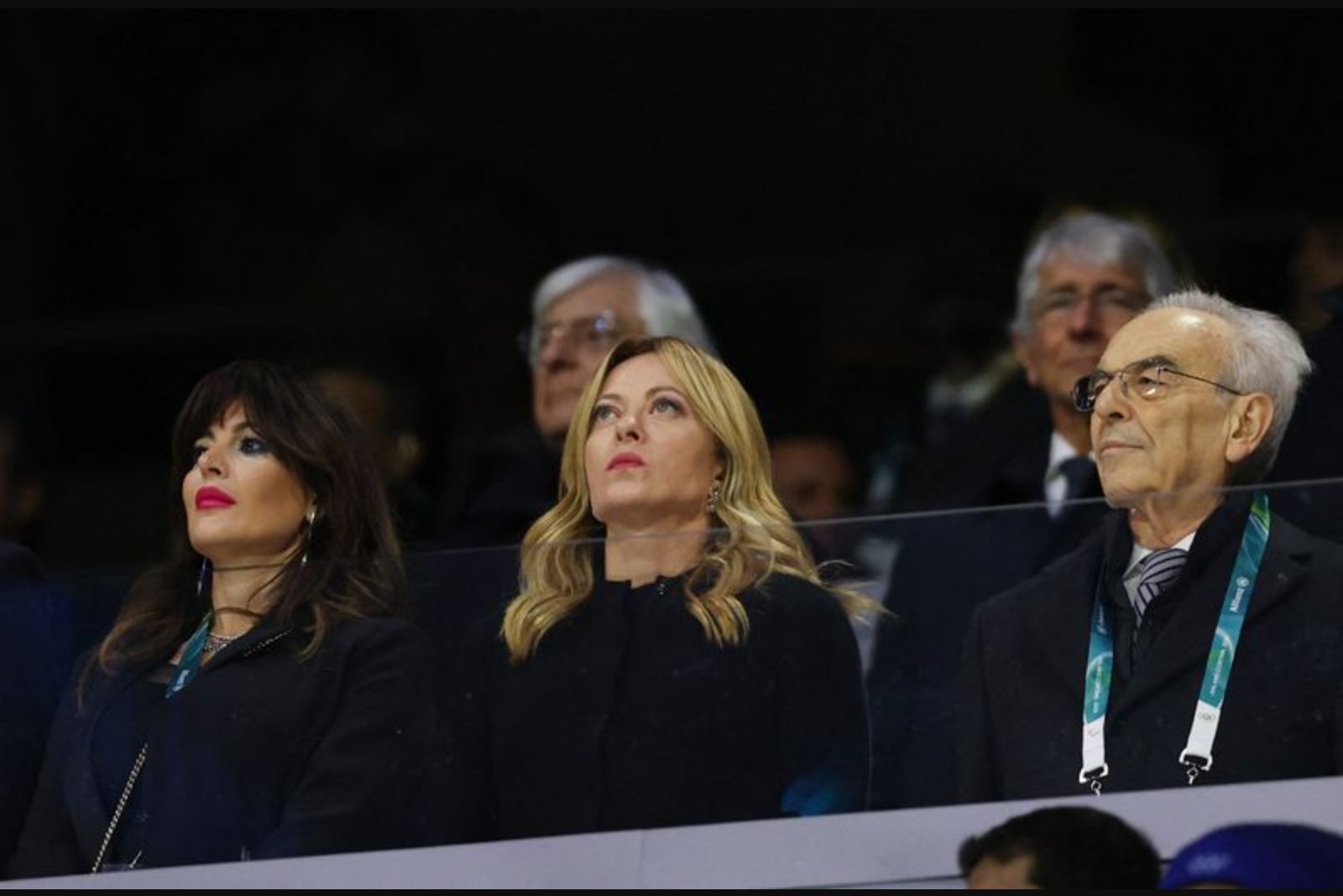
Italian Prime Minister Giorgia Meloni strongly criticized protesters she said were acting against the nation after clashes in Milan and deliberate damage to sections of the national rail network on the opening full day of the Winter Games that Milan and Cortina d'Ampezzo are hosting.
Meloni singled out the activists in an Instagram post on Sunday, praising "the thousands of Italians who are working to make the Games run smoothly and present a positive face of Italy" while condemning those she said sought to undermine the event. "Then there are those who are enemies of Italy and Italians, demonstrating 'against the Olympics' and ensuring that these images are broadcast on television screens around the world. After others cut the railway cables to prevent trains from departing," she wrote.
The disturbances in Milan followed a large street demonstration in which an estimated 10,000 people marched to protest housing costs and environmental issues tied to the Games. A splinter group of roughly 100 people broke away from the main demonstration and engaged in violent actions at the margins, throwing firecrackers, smoke bombs and bottles at police officers, according to police accounts.
Authorities moved to restore order using water cannon and detained six individuals in connection with the clashes. Meloni expressed solidarity with law enforcement and local authorities. "Once again, solidarity with the police, the city of Milan, and all those who will see their work undermined by these gangs of criminals," she added, noting the broader political context in which she leads a right-wing coalition.
Separately, officials reported deliberate damage to rail infrastructure near the northern city of Bologna on Saturday. Police described three separate incidents at different locations that disrupted high-speed, Intercity and regional services, producing delays of up to two and a half hours. No group has come forward to claim responsibility for the attacks on the rail network.
The police in Italy have recently been granted expanded arrest powers. That change follows violent disorder at a protest in Turin last weekend, during which more than 100 police officers were reported injured. Authorities have cited those earlier disturbances in explaining the new powers given to law enforcement.
As the Games proceed, officials face the dual task of maintaining public order and minimizing disruptions to transport and visitor operations while organisers, security forces and local workers continue efforts to keep events on schedule and limit the international visibility of unrest.