
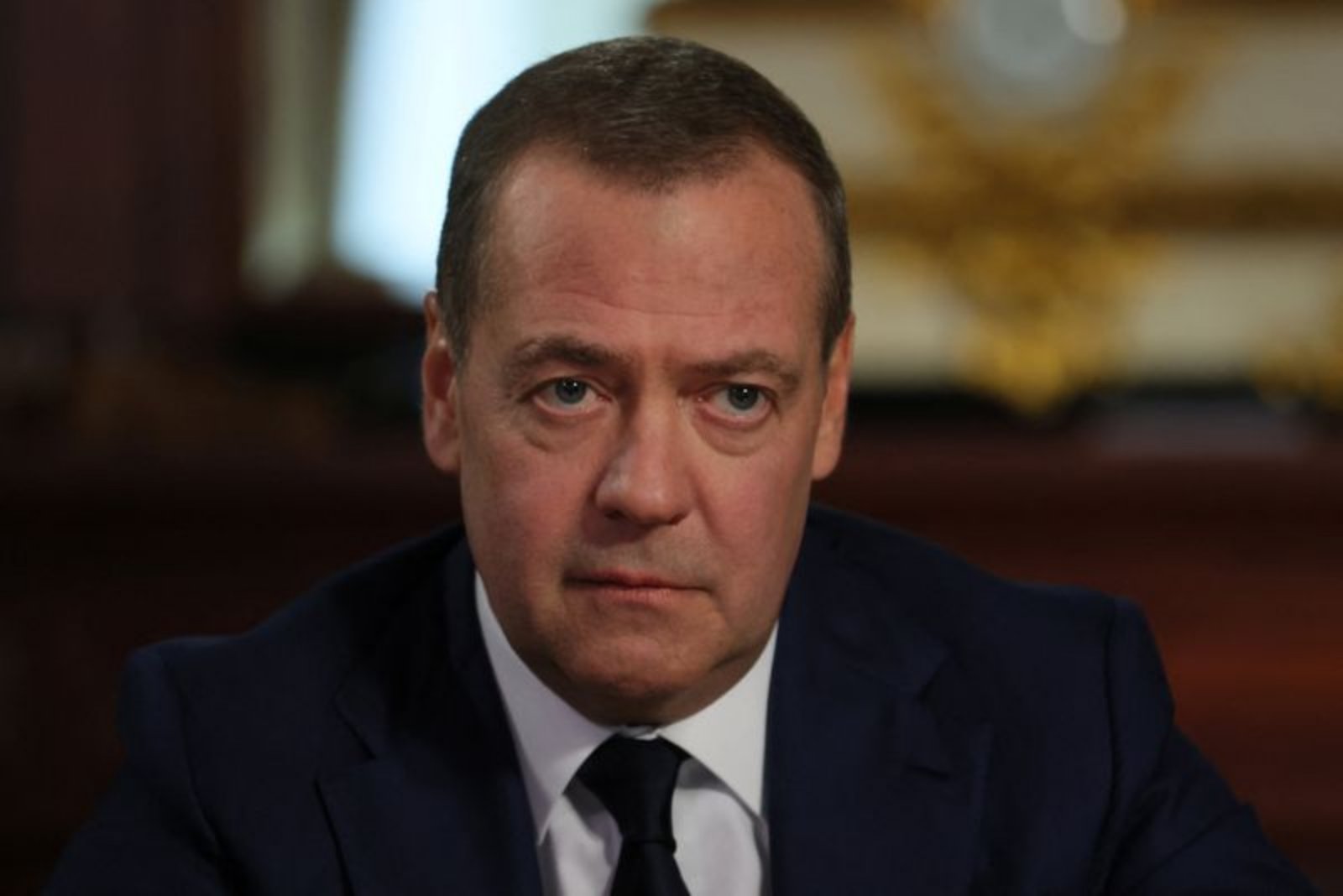
Dmitry Medvedev, a senior member of Russia’s Security Council and a former president, said the international situation has grown increasingly perilous but insisted that Moscow does not seek an all-out global conflict.
Speaking in an interview conducted at his residence outside Moscow with Reuters, TASS and the WarGonzo Russian war blogger, Medvedev warned that the risk environment is deteriorating. "The situation is very dangerous," he said, adding that "The pain threshold seems to be decreasing." He repeated a line he has used before: "We are not interested in a global conflict. We’re not crazy," while also allowing that "A global conflict cannot be ruled out."
Medvedev, who now serves as deputy chairman of Russia’s Security Council - a body often compared to a modern-day politburo for Russia’s top officials - has long been identified with hawkish voices inside the Kremlin. He served as Russian president from 2008 to 2012 and, in the interview, provided insight into the thinking of hardliners within the Russian elite even as President Vladimir Putin remains the ultimate decision-maker.
The comments come against the backdrop of Russia’s 2022 invasion of Ukraine, which the Kremlin terms a "Special Military Operation" and which has produced the most serious standoff between Moscow and Western capitals since the depths of the Cold War. Medvedev said the operation showed Russia would defend its interests and accused Western powers of repeatedly ignoring those interests.
While acknowledging renewed diplomatic contacts with the United States, he offered praise for U.S. President Donald Trump and described it as encouraging that lines of communication with Washington have reopened. Trump’s envoys are, as noted by Medvedev, attempting to negotiate an end to the war between Russia and Ukraine, according to the context of the discussion.
Medvedev has in the past issued stark warnings about escalation risks, including references to the possibility of a nuclear "apocalypse." In the interview he reiterated tough rhetoric toward Kyiv and Western governments while contending that Western leaders have dismissed Moscow’s concerns. He quoted critics who say: "No way - these Russians are making it all up - they are sowing horror stories and they will never do anything," using those words to underline what he described as a Western refusal to take Russian claims seriously.
Medvedev’s surroundings during the interview underscored his confrontational posture: a cartoon hung in the room showing him, originally a lawyer from St Petersburg, pointing a submachine gun at European leaders. That image, he implied through tone and commentary, reflects the hardened stance he now represents within Russia’s leadership spectrum.
The interview ranged beyond Ukraine. When asked about a cluster of notable international developments in January - incidents in Venezuela, tensions over Greenland, and other events - Medvedev dismissed the period as simply "too much." He commented specifically on Venezuela’s President Nicolas Maduro, an ally of Russia, saying that if a U.S. president had been "stolen" by a foreign power, the United States would have regarded it as an act of war.
Medvedev also rejected Western warnings about supposed Russian or Chinese threats over Greenland, calling such accounts false "horror stories" manufactured by Western leaders to rationalize their own actions. His remarks reiterated a theme running through his public statements: that Western narratives often overstate threats from Moscow and Beijing while neglecting Russian grievances.
The broader history referenced in the interview remains the context for current tensions. The conflict first erupted in eastern Ukraine in 2014 after the ousting of a pro-Russian president, events that led to Russia’s annexation of Crimea and years of fighting between Moscow-backed separatists and Kyiv’s forces. Those developments set the stage for the 2022 invasion and the ensuing confrontation between Russia and Western states.
Key points
- Medvedev said the world is growing more dangerous and that the "pain threshold" appears to be falling, while insisting Russia does not want a global conflict.
- He praised resumed contacts with Washington and gave a positive appraisal of U.S. President Donald Trump, noting that envoys are attempting to broker an end to the Russia-Ukraine war.
- Medvedev reiterated hardline views on Ukraine and dismissed Western narratives about threats in other regions as "horror stories." Sectors such as defense, energy and international shipping could feel continued impact from heightened geopolitical risk.
Risks and uncertainties
- Escalation risk: Medvedev warned that a global conflict cannot be ruled out and has previously referenced the danger of a nuclear "apocalypse," creating uncertainty for defense and insurance markets.
- Diplomatic unpredictability: While contacts with Washington have resumed, outcomes of ongoing negotiations to end the war in Ukraine remain uncertain, affecting energy markets, trade routes and freight flows.
- Perception and miscalculation: Medvedev accused Western leaders of manufacturing "horror stories" over issues like Greenland; such mutual distrust raises the chance of misinterpretation and market volatility in sectors tied to geopolitical stability.
Summary conclusion
Medvedev’s interview underlines a dual message from a leading Russian hawk: an assertion that Moscow does not seek global war and an insistence that the international environment is increasingly dangerous. His comments highlight the enduring tensions around Ukraine, the potential for broader escalation, and the continuing role of diplomacy between Moscow and Washington.