
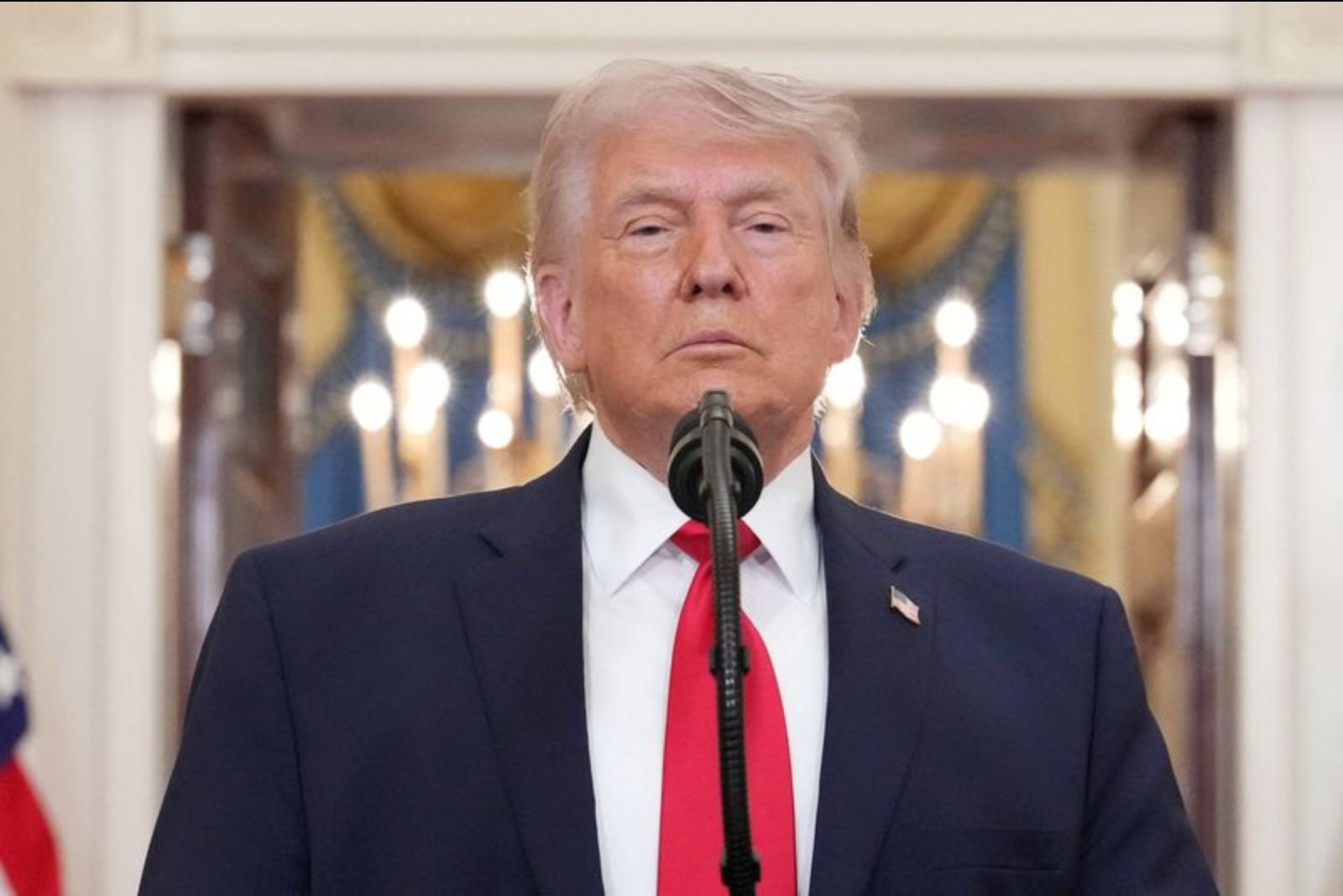
U.S. President Donald Trump used a prime-time address on Wednesday evening to warn of stepped-up military operations against Iran, a declaration that dimmed investor hopes for a rapid end to the widening Middle East conflict and sent oil prices sharply higher.
In the speech, Trump said military operations would be intensified over the "next two to three weeks" and claimed U.S. forces were "on track to complete all of America’s military objectives shortly, very shortly." He added: "We’re going to hit them extremely hard over the next two to three weeks. We’re going to bring them back to the Stone Ages where they belong."
Markets reacted quickly. Benchmark Brent crude surged roughly 5% to $106.16 per barrel as investors found little reassurance in the address about reopening the Strait of Hormuz, the vital energy passage that has been effectively closed by Iranian actions. Equities also fell: U.S. index futures were down about 1% while European futures dropped more than 1.5%. In Asia, almost all bourses traded lower, with Japan’s Nikkei down 1.8% and MSCI’s index of other Asia-Pacific shares off more than 1.5%.
Investor sentiment and market volatility
Market participants, looking for signals on how and when the conflict might end, found little comfort in the speech. "If he (Trump) was trying to inspire confidence in the markets, he has not done that," said Russel Chesler, Head of Investments and Capital Markets at Vaneck Australia. Chesler added that the dominant question for investors is "When is this going to be over?", a lack of clarity he identified as a driver of volatility.
Earlier in the day oil prices had eased from a previous session’s gains, but the tone of the president’s remarks reversed that improvement. The prospect of further strikes, including the possibility raised by Trump of targeting Iran’s energy and oil infrastructure, intensified concerns over global energy supplies.
Escalation on the ground
Following the address, the Israeli military reported it had identified missiles launched from Iran toward Israeli territory. The region has seen heavy casualties: thousands of people have been killed since February 28, when joint U.S. and Israeli strikes on Iran triggered a cycle of Iranian attacks on Israel, U.S. bases, Gulf states and opened a new front in Lebanon.
Iran has also effectively closed the Strait of Hormuz, a waterway that carries about a fifth of global oil and liquefied natural gas flows. That disruption has already pushed energy costs higher and has become a political liability for the U.S. administration with midterm congressional elections approaching.
Diplomatic channels and ceasefire prospects
President Trump said on social media earlier on Wednesday that Iran had requested a ceasefire, a claim Iran denied. A senior Iranian source told a news outlet that Tehran is seeking a guaranteed ceasefire to stop its attacks and that no intermediary talks had occurred for a temporary truce. Separate security sources from Pakistan, which has been mediating, said Islamabad proposed a temporary ceasefire but had not heard back from either side.
U.S. Vice President JD Vance was reported to have communicated with Pakistani intermediaries as recently as Tuesday, according to a person briefed on the matter, and the administration indicated it would consider a ceasefire only if Iranian forces lifted the Strait of Hormuz blockade. Trump said discussions were ongoing with Iranian leaders he described as less radical than their predecessors.
In the speech, Trump asserted U.S. and Israeli strikes had ensured Iran would not obtain nuclear weapons and suggested the United States could return with "spot hits" if the threat resurfaced. He said U.S. forces had delivered "swift, decisive, overwhelming victories on the battlefield" and were "systematically dismantling the regime’s ability to threaten America or project power outside of their borders," comments he made without presenting evidence.
Global institutions sound the alarm on asymmetric impacts
International financial and energy institutions warned of severe international consequences. The International Monetary Fund, World Bank and International Energy Agency said the conflict is producing "substantial, global and highly asymmetric" effects and announced plans to coordinate responses, which could include financial support for countries most affected by the crisis.
Those warnings underscore the uneven distribution of costs from the conflict, with energy-importing countries and those on the front lines likely to face the greatest immediate impacts.
Political strains among allies
Trump challenged allied countries that depend on Middle Eastern oil to work toward reopening the Strait of Hormuz or to acquire supplies from the United States. He said: "Many Americans have been concerned to see the recent rise in gasoline prices here at home. This short-term increase has been entirely the result of the Iranian regime launching deranged terror attacks against commercial oil tankers of neighbouring countries that have nothing to do with the conflict."
He urged those countries to "build up some delayed courage" and at one point told allies, "Go to the Strait and just take it." The call for direct action in the strait drew a rebuke from at least one European official: France’s junior army minister Alice Rufo said operations by NATO in the Strait of Hormuz would constitute a breach of international law.
Where things stand
Despite multiple channels of communication and mediation attempts, prospects for a near-term resolution remain unclear. Claims of ceasefire requests and denials of such requests, competing statements about the causes and consequences of the conflict, and plans to escalate military operations in the weeks ahead have collectively left markets and governments searching for certainty that has so far failed to materialize.
For investors and policymakers, the immediate focus will be on whether strikes intensify in the coming two to three weeks as the president indicated, whether the Strait of Hormuz reopens, and whether international coordination - both military and financial - can reduce the asymmetric burdens identified by global institutions.
In the absence of those developments, energy markets, global equity indices and countries dependent on Gulf oil flows are likely to face ongoing volatility and pressure.