
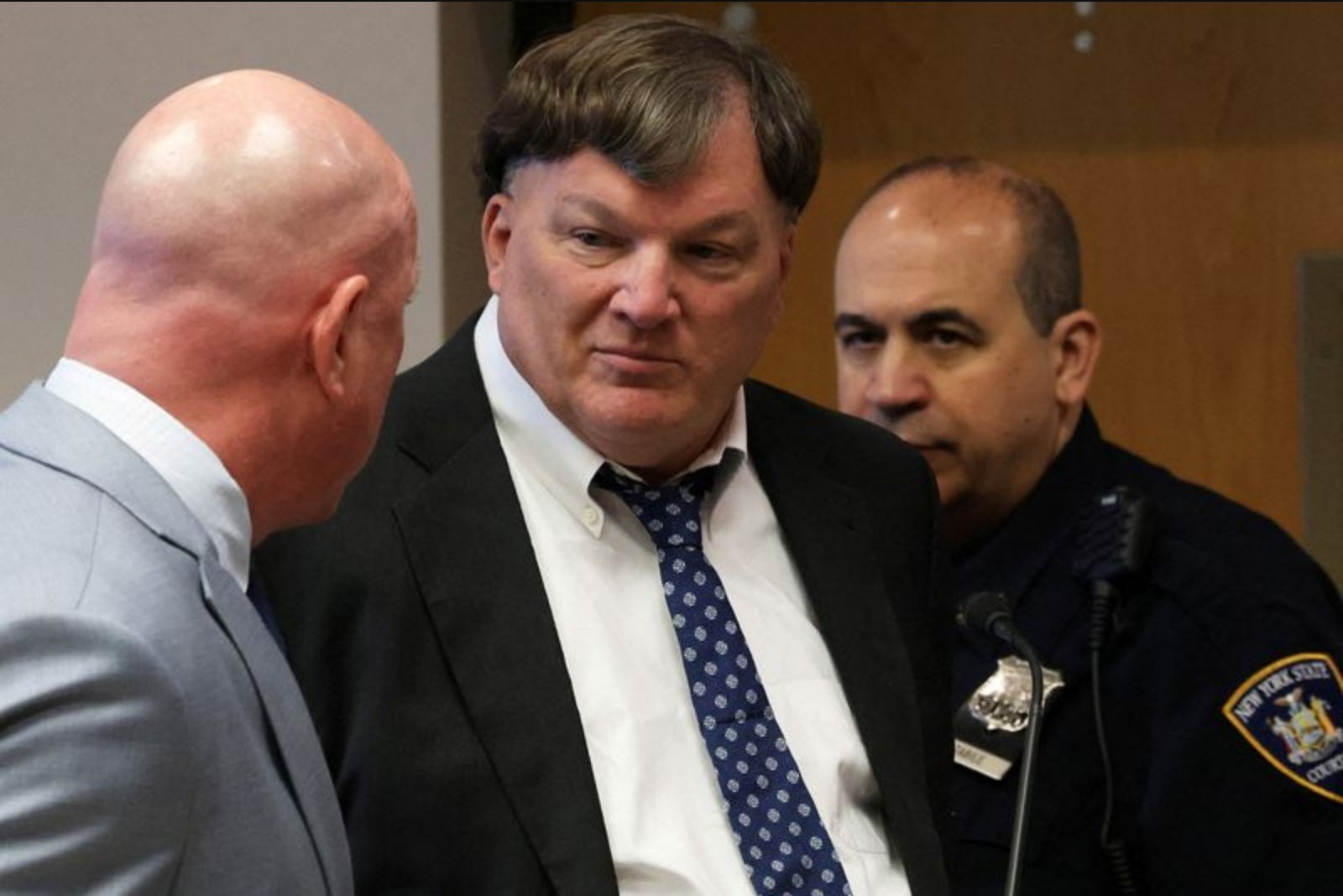
A Long Island architect acknowledged in court on Wednesday that he was responsible for the deaths of eight women in a string of attacks beginning in the 1990s, bringing to a close a widely publicized serial killing investigation that had eluded authorities for years. The defendant, identified as Rex Heuermann, 62, made the admissions in a courtroom in Riverhead, New York, according to a statement from the Suffolk County district attorney's office.
Heuermann told the judge that he had strangled the victims, most of whom were in their 20s, and that he had dismembered some of them before discarding their bodies wrapped in burlap, prosecutors said. He had previously been formally charged with seven murders spanning from 1993 to 2010 and had been scheduled to go to trial in the fall.
During the hearing on Wednesday Heuermann additionally confessed to an eighth killing that was not included among the earlier charges. Prosecutors said he is expected to receive a sentence of life in prison without the possibility of parole when he returns to court in June.
The killings, commonly referred to as the "Gilgo Beach murders," attracted national attention after law enforcement officers discovered multiple sets of human remains in 2010 and 2011 along an isolated stretch of shoreline known as Gilgo Beach, located approximately 30 miles (48 km) east of New York City and a short drive from Heuermann's residence. The investigation remained unsolved for years and later became the subject of films and documentary programs.
Authorities said they were ultimately able to link Heuermann to the killings in part through DNA found on a pizza crust recovered after a surveillance team observed him discard the item while being followed in Manhattan. That genetic evidence helped lead to Heuermann's arrest in 2023.
Speaking to reporters after the court appearance, Heuermann's attorney, Michael Brown, said the decision to enter a guilty plea was intended to spare both the families of the victims and Heuermann's own family from enduring a full trial. The plea agreement also includes a commitment from Heuermann to cooperate with the FBI's behavioral analysis unit.
"I think that this today have hopefully some peace and some closure to the family members," Brown said.
The court filings and statements from prosecutors indicate the legal process will continue with a scheduled sentencing hearing in June, at which prosecutors expect to seek life without parole. Beyond that, officials have not provided further public details about any additional investigative steps tied to the plea or any broader unresolved questions surrounding the case.
Context and immediate outcomes
- The defendant admitted to eight killings across a span of approximately 17 years and faces life imprisonment without parole.
- DNA evidence recovered from a discarded pizza crust while Heuermann was under surveillance was a key element tying him to the investigation that had been cold for years.
- The investigation and eventual resolution of these crimes had drawn national attention and inspired film and documentary treatments.