
After months and in some cases nearly a year cut off from loved ones and vital medical care, Palestinians stranded on both sides of Gaza’s Rafah crossing awaited the border’s reopening on Monday as an element of the October ceasefire deal. The prospect of movement has prompted strong emotions, from cautious optimism to acute worry, because it remains unclear how fully crossings to and from Egypt will resume and what constraints will apply given that Israel maintains complete control over Gaza’s frontier.
Rafah was only partially functional early in the conflict between Israel and Hamas militants, and it has been fully closed since the summer of 2024. Since that closure, only very small numbers have been able to travel to or from Gaza via Israel. That prolonged freeze of cross-border movement has left many Palestinians divided from family members, unable to obtain medical treatment abroad, or living in limbo in neighbouring countries.
Personal stories underline the human stakes
Those hoping to return to Gaza say they are mindful that they will come back to a territory that has been widely damaged by what is described as a two-year military campaign triggered by the October 7, 2023 Hamas attack. For others, the priority is leaving Gaza for urgent care, aware that any new entry or exit restrictions could strand them away from home for an indefinite period.
Faten Hamed Abu Watfa, 43, has spent nearly 10 months separated from her three children after departing Gaza on April 5, 2024. She travelled to Egypt initially to accompany her mother-in-law for medical treatment and expected to return within weeks. Instead, the shutdown of Rafah trapped her outside Gaza. While in Cairo she looks at photos of her two sons, aged 21 and 18, and her 15-year-old daughter to try to bridge the distance.
Abu Watfa says her home in Gaza City’s al-Karama neighbourhood was burned, leaving only concrete pillars. She described makeshift measures used to stop rain from leaking into damaged homes and expressed readiness to endure extensive searches and delays on the journey back if it means reuniting with family. "I am ready to enter Gaza, be searched and get tired, not for a day, but for a whole week... to be dragged around during the journey back, until I reach Gaza and see my children and my father safe and sound," she said.
Many who left for Egypt early in the war never anticipated an extended stay. Some exhausted their savings; others are split with relatives on opposite sides of the Rafah border. "I love Gaza, and I don’t see any other place that feels like home," said Mohammad Talal al-Burai, 28, a currency trader who registered with the Palestinian embassy in Cairo as soon as the crossing reopened, despite concerns that spotty communications could disrupt his work.
Burai’s house in Jabalia in north Gaza was destroyed. He said he is prepared to live in temporary conditions upon return and spoke of wanting to reunite with his father. His wedding, postponed since October 2023, remains planned though he said he may not hold a celebration if his mother, currently receiving medical treatment in the United Arab Emirates, cannot attend.
Medical evacuations and life-or-death waits
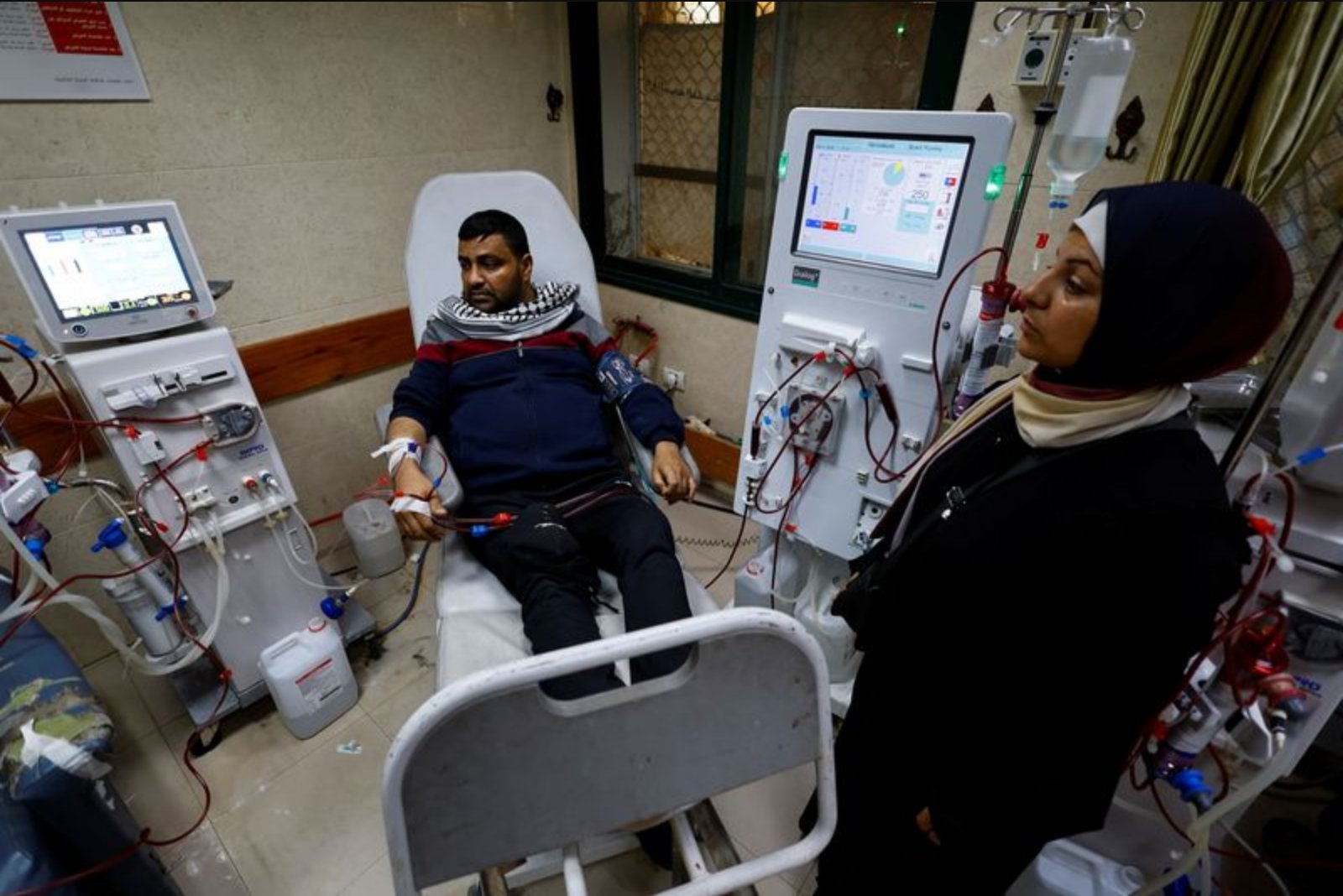
For some individuals, crossing the border is literally a matter of life and death. Tamer Al-Burai, 50, who is related to Mohammad al-Burai’s family, has obstructive sleep apnea and depends on a Continuous Positive Airway Pressure (CPAP) machine. He says his condition has deteriorated because of intermittent power and fuel shortages and that he has appealed to humanitarian organisations, the World Health Organization and Palestinian authorities in a bid to leave and receive consistent care.
The demand for medical travel is large: Gaza’s health ministry has said at least 20,000 patients, including children and cancer patients, are awaiting evacuation. Thousands of Palestinians have registered with the World Health Organization to travel for treatment. Among the registered is Noor Daher, 31, a graphic designer from Gaza City with a chronic heart defect who expressed hope that his condition could finally be addressed abroad.
Not all who waited for a crossing were able to receive help in time. Dalia Abu Kashef, 28, died last week while awaiting placement on a list to cross for a liver transplant. Her husband, Muatasem El-Rass, said volunteers had been found to provide a liver donation, and the family was waiting for the crossing to open to travel for the operation. Instead, her condition worsened and she died prior to getting the chance to travel.
Practical and emotional consequences for families and livelihoods
The reopening brings both relief and anxiety. Some who will return are aware they will do so to devastated neighbourhoods and destroyed houses. Others are anxious about the possibility of being unable to return from abroad should rules tighten again. Traders and professionals who have worked remotely while displaced worry about the impact of poor internet and communications, which they say could undermine income streams they rely upon.
Those who left with minimal planning say they have faced financial strains after prolonged displacement. Many relied on savings or external assistance to cover living costs in host countries. The long separation has fractured households and strained coping mechanisms, with some relatives separated across the border and others spread across different countries for medical care or refuge.
Looking ahead
The partial reopening of Rafah is consequential for thousands seeking reunification or medical evacuation, but key questions remain about the scope and conditions of movement. Israel’s control over the frontier means that practical access could be limited, and the volume of demand for travel - especially for medical cases - far outstrips the capacity immediately available. For those who have already waited months or longer, even a limited reopening is viewed as an overdue step, while the risks that follow a reopening - from renewed conflict to new crossing restrictions - continue to weigh heavily.