
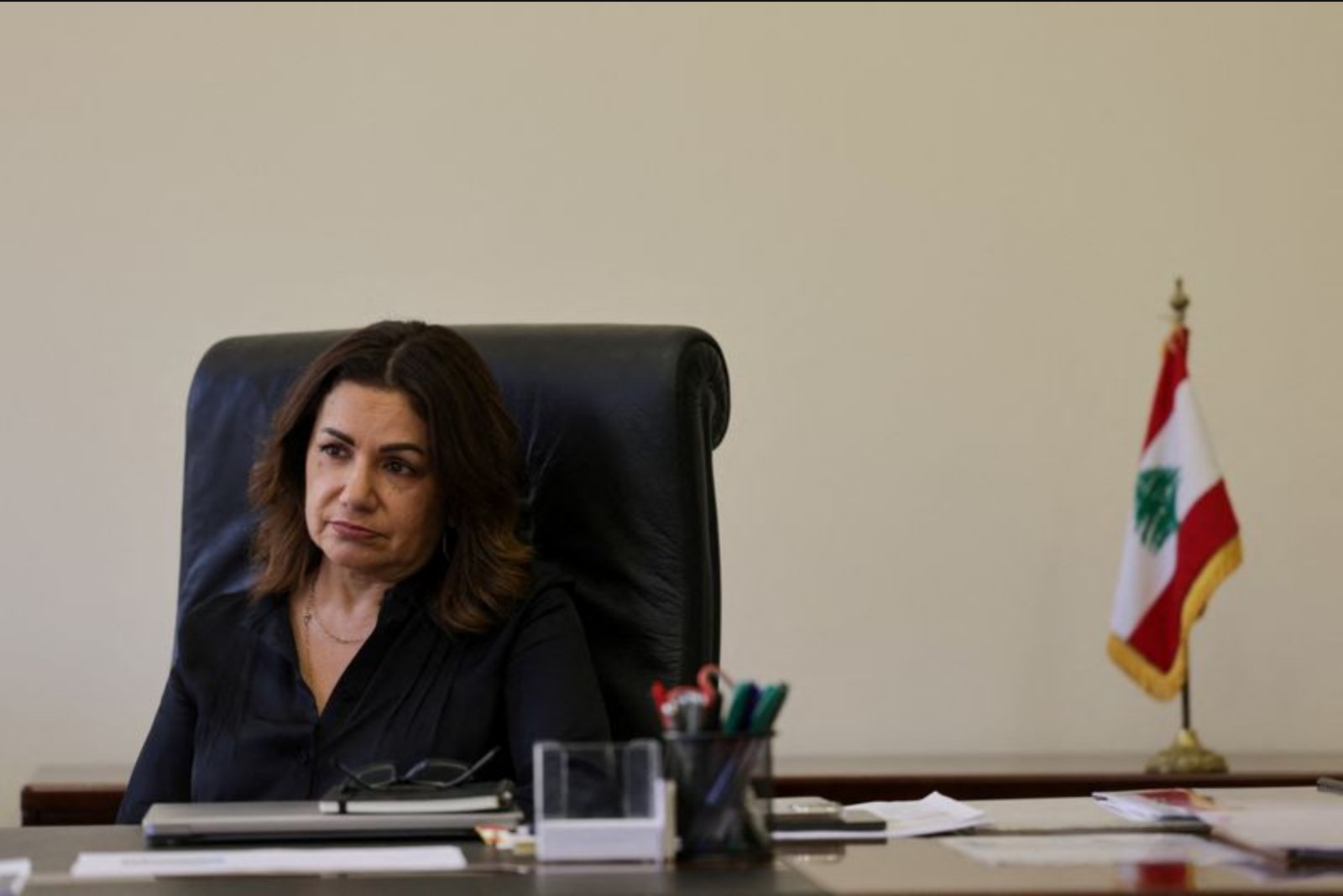
Lebanon is actively planning for the prospect that a substantial portion of those who fled the south amid Israeli strikes and evacuation orders may remain displaced for the long term, the country’s social affairs minister said on Tuesday. The comments followed remarks by Israel’s defence minister that Israel would demolish homes along Lebanon’s border and prevent 600,000 people who fled from returning to their villages.
According to official tallies cited by the ministry, more than one million people have been forced from their homes and at least 1,200 people have been killed in Israeli strikes since March 2, the date the Lebanese armed group Hezbollah opened fire into Israel and drew Lebanon into the wider regional confrontation.
"Long-term displacement is something we are concerned about, of course. We hope it does not happen, but as a government, we have to prepare and think about it," the minister said, describing a range of contingency options under consideration. Those measures include cash-for-rent schemes and identifying "physical places where people might go" - while explicitly saying the government is not planning to build camps at this stage.
The minister also addressed statements by Israeli officials about territorial control. Israel’s defence minister said Israel would maintain authority over southern Lebanon up to the Litani river, which lies roughly 30 kilometres north of the Israel-Lebanon border. That strip of land south of the Litani accounts for almost a tenth of Lebanon’s territory.
On the prospect of new territorial control, the minister said: "And it all depends on how much of a land grab the Israelis will insist on, and of course, it’s totally unacceptable for us. I mean, this is a huge violation of our sovereignty, and we will do everything we can to ensure that this doesn’t happen, whatever we have in our means."
Officials warn that extended displacement could aggravate social tensions across Lebanon’s diverse communities. The minister noted that longstanding political and sectarian faultlines have widened since Hezbollah entered the regional conflict, and that community willingness to host displaced people appears reduced compared with the response during last year’s fighting.
"This is another challenge - ensuring the social cohesion, making sure that people still love each other, if you will. And I mean, I fundamentally do believe the Lebanese have that. And with most of the examples, fantastic examples of the hospitality all over. But at the same time, people’s resources are stretched," the minister said, reflecting the strain on host communities and public facilities.
The social affairs ministry is attempting to plan three months ahead with the aim of meeting the basic needs of displaced families, but officials say a significant funding shortfall is undermining those preparations. During the conflict last year, which lasted just over two months, the United Nations raised $700 million for Lebanon and international partners sent more than 110 aid flights, the minister said. By contrast, as Lebanon moves into the second month of the current war, the U.N. appeal has yielded just $30 million and another $90 million has been pledged by donors. Only seven aid flights have arrived so far.
"We’re not even close. In the last war, within the first month, there must have been at least fifty flights that had already come in," the minister said, underlining the gap between current deliveries and the previous response.
At present, the available assistance covers roughly 30% of what the ministry estimates it needs. Of the more than one million displaced people, about 136,000 are reported to be in collective shelters. The remainder are staying with relatives or are living on the streets.
"Of course, we’re trying all our efforts to make sure that we can at least cover all those that are in shelters. And then the other question, of course, will be the timing. I mean, how long this will last?" the minister said, stressing uncertainty over the duration of displacement.
Operational considerations
- The ministry is prioritising short-term solutions such as cash-for-rent and identifying physical sites for relocation rather than planning camp construction at this time.
- Reduced willingness by some communities to host displaced people, compared with the previous conflict, is increasing the pressure on public shelters and informal hosting networks.
- Current aid flows are significantly lower than during last year’s conflict, presenting logistical and funding challenges for meeting basic needs over a three-month planning horizon.