
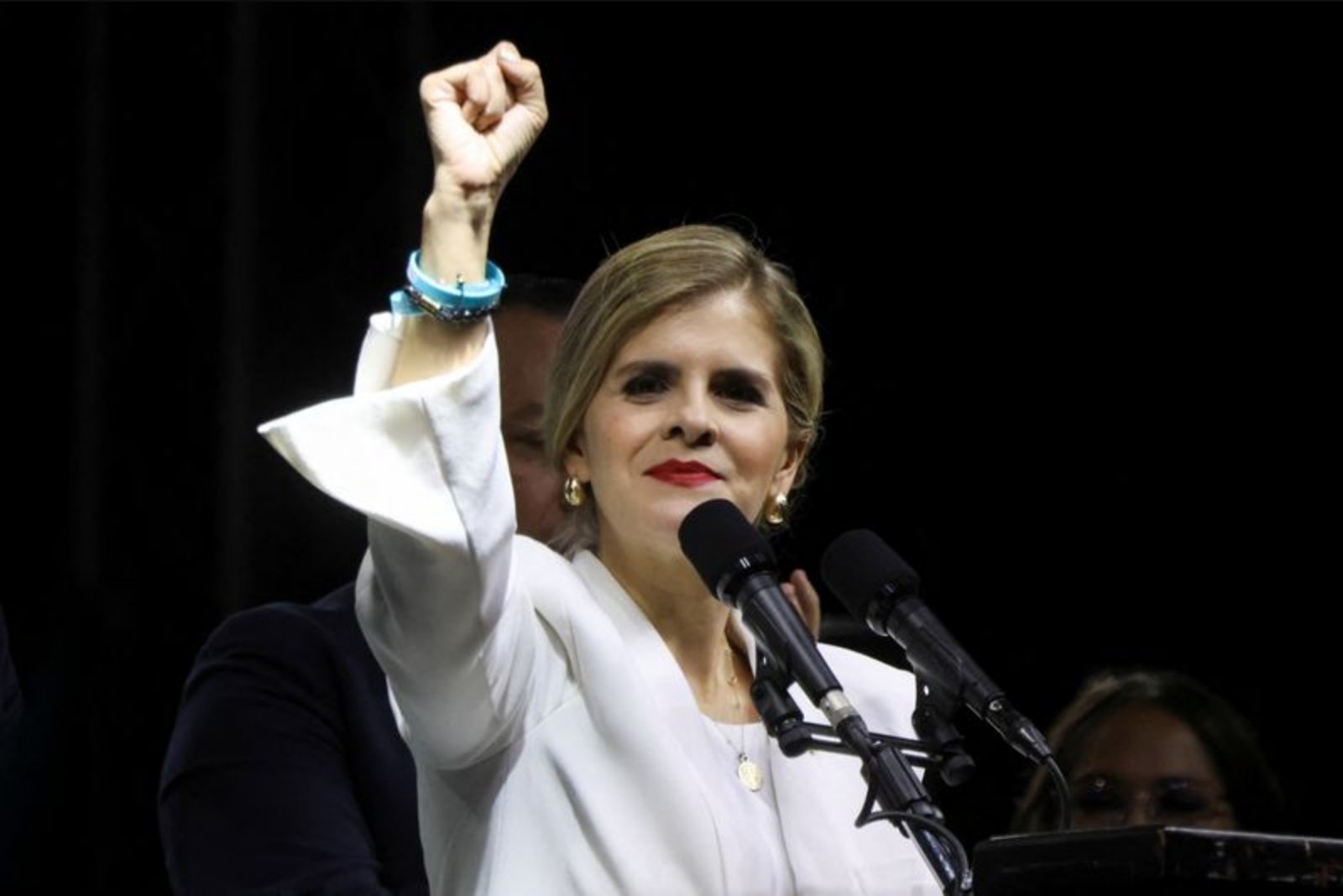
Laura Fernandez will serve as Costa Rica's next president, advancing a political program that many observers say continues the populist orientation established by her predecessor. Her stated priorities include constitutional reforms and the use of emergency measures that would curtail civil liberties in selected high-crime zones, proposals she frames as responses to rising drug-related violence.
Fernandez, 39, developed her career within the public sector as a political adviser and a civil servant at the Ministry of National Planning and Economic Policy. She was appointed minister of that agency by President Rodrigo Chaves in 2022 and later moved on to serve as his chief of staff before launching her own presidential bid. Fernandez has been a vigorous supporter of Chaves throughout her public role and campaign.
Pilar Cisneros, a lawmaker who leads the government's bloc in the Legislative Assembly and who is widely viewed as a central figure in Chaves' political rise, said Fernandez was chosen by a close-knit group of about 10 individuals aligned with the president. Cisneros praised Fernandez's familiarity with government operations, saying, "Few people know the state like she does - she knows where the knots are."
Fernandez developed a public persona that mixes theatrical speaking with an affinity for dancing, which she frequently displays at campaign events. She was born in Esparza in the coastal Puntarenas province and was raised in the capital, San Jose. Married with a young daughter, Fernandez projects a conservative Catholic identity and a family-centered message that has resonated with segments of Costa Rica's expanding evangelical community.
She has publicly expressed admiration for El Salvador's President Nayib Bukele and has embraced policies associated with a hard-line approach to crime and gangs. Fernandez has said she would declare states of emergency in high-crime areas that would entail limits on civil liberties, and she pledged to complete construction of a high-security penitentiary patterned on El Salvador's CECOT mega prison.
During the presidential race, critics accused Fernandez of being a "puppet" of Chaves and raised doubts about her independence. Cisneros addressed that criticism directly, saying, "The one who is going to govern is her - she will be the president - but she would be foolish not to show she has Don Rodrigo's backing. She is loyal to our political project."
After announcing her victory while surrounded by supporters in San Jose, Fernandez framed her win as the start of a new political chapter. "Change will be deep and irreversible," she declared, asserting that Costa Rica's second republic, the political order that followed the 1948 civil war, "is a thing of the past." She added, "It's up to us to build the third republic."
Fernandez will become Costa Rica's second female president, following Laura Chinchilla, who held the office from 2010 to 2014. Since leaving the presidency, Chinchilla has taken positions with international organizations and universities and has emerged as a vocal critic of the current Costa Rican government and its political movement. Chinchilla has accused the movement of following a "predictable script" she associates with other authoritarian leaders in the region and has labeled Fernandez "rude and populist" and "a bad copy of the president."
Context and implications
Fernandez's platform centers on public-security measures and institutional changes that she argues are necessary to confront escalating drug violence. Her ties to the outgoing administration and the public criticism from a former president contribute to a polarized political environment as she prepares to assume office.
Observers and political opponents point to questions about her autonomy and to the substantive nature of her proposals - especially measures that would restrict civil liberties and the expedited construction of a high-security prison - as central issues that will shape public debate and legislative priorities in the months ahead.