
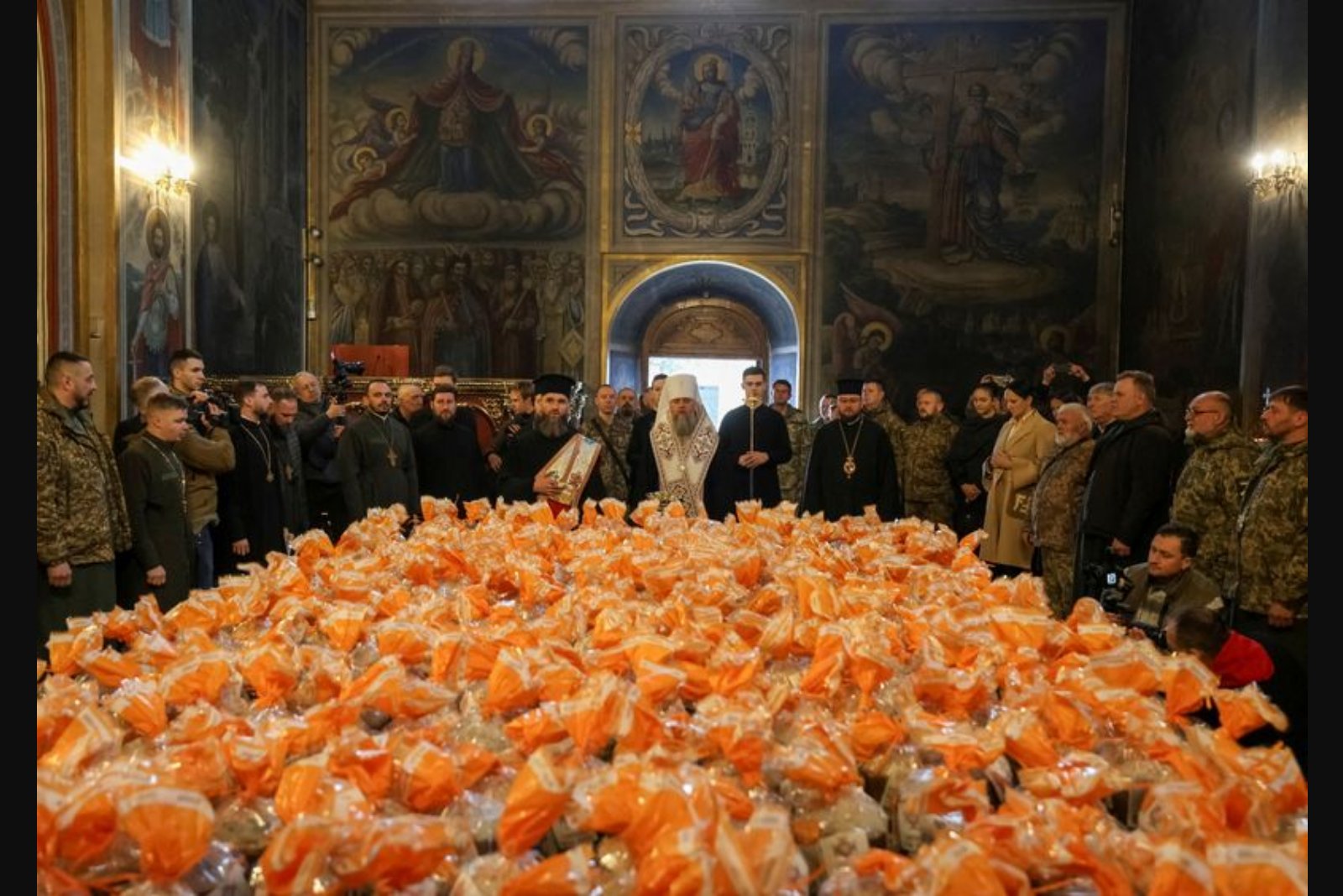
Russian President Vladimir Putin on Thursday declared a 32-hour ceasefire to begin on Saturday afternoon and continue through Orthodox Easter until midnight on Sunday. Kyiv responded quickly, with Ukrainian leader Volodymyr Zelenskiy saying his government would respect the temporary halt and calling on Moscow to transform it into a longer-term move toward peace.
Zelenskiy, who has repeatedly called for an Easter truce, posted comments on Telegram early on Friday saying, "People need an Easter without threats and a real move towards peace, and Russia has a chance not to return to attacks even after Easter." Foreign Minister Andrii Sybiha echoed the appeal, proposing that strikes not be resumed once the holiday concludes and likening the idea to the two-week ceasefire announced on Tuesday in the conflict between the United States, Israel and Iran.
"We believe that a ceasefire is the right strategy to advance diplomatic efforts - whether we are talking about the Middle East or Russian aggression against Ukraine," Sybiha said.
The Kremlin described the Easter pause as a temporary humanitarian measure on Friday, while reiterating its stated preference for a permanent peace deal rather than a ceasefire. Ukraine has characterized the Kremlin's insistence on a permanent settlement as a delaying tactic.
Kremlin spokesman Dmitry Peskov said a visit to the United States by Putin’s special investment envoy was economic in nature and did not indicate a resumption of U.S.-mediated peace talks. The timing also coincides with the imminent expiry on April 11 of U.S. sanctions waivers on Russian oil.
Putin has publicly said that Russia would be willing to stop hostilities if Ukraine cedes the remainder of the industrialised Donbas region - an area of roughly 6,000 square kilometres (2,317 square miles) that his forces have been unable to seize in the more than four years since the invasion. Zelenskiy has rejected such terms, saying they would betray Ukraine’s defenders and that an aggressor should not dictate the conditions for ending the conflict.
On the streets of Kyiv on Friday morning, light snow and wintry temperatures underscored the wary mood. Many residents voiced doubt that the pause announced by Moscow would ease their immediate situation or lead to a durable ceasefire, and several people recalled that previous truces had been quickly broken.
"He can only make promises about some ceasefire. No one is going to hand over our land to him," said 60-year-old Yuliia, bundled in a thick coat as the street thermometer showed 2 degrees Celsius in the Ukrainian capital.
Seventeen-year-old student Varvara, who declined to give a surname, pointed to prior instances where promises of calm were followed by violations. She recalled a recent New Year’s Eve when, despite a promised pause, an air raid alarm sounded throughout the night. "Well, of course I want to believe it, but no, I don’t think it’s going to happen," she said.
Observers noted the similarity between Putin’s announcement and a 30-hour ceasefire he ordered last year; that pause too was followed by accusations from each side that the other had breached the agreement.
This evolving situation leaves significant uncertainties: whether the announced humanitarian pause will be respected, whether it can be extended into negotiations that both sides find acceptable, and how near-term developments - such as the expiry of sanctions waivers on Russian oil and diplomatic engagements described as economic - might influence the trajectory of talks.