
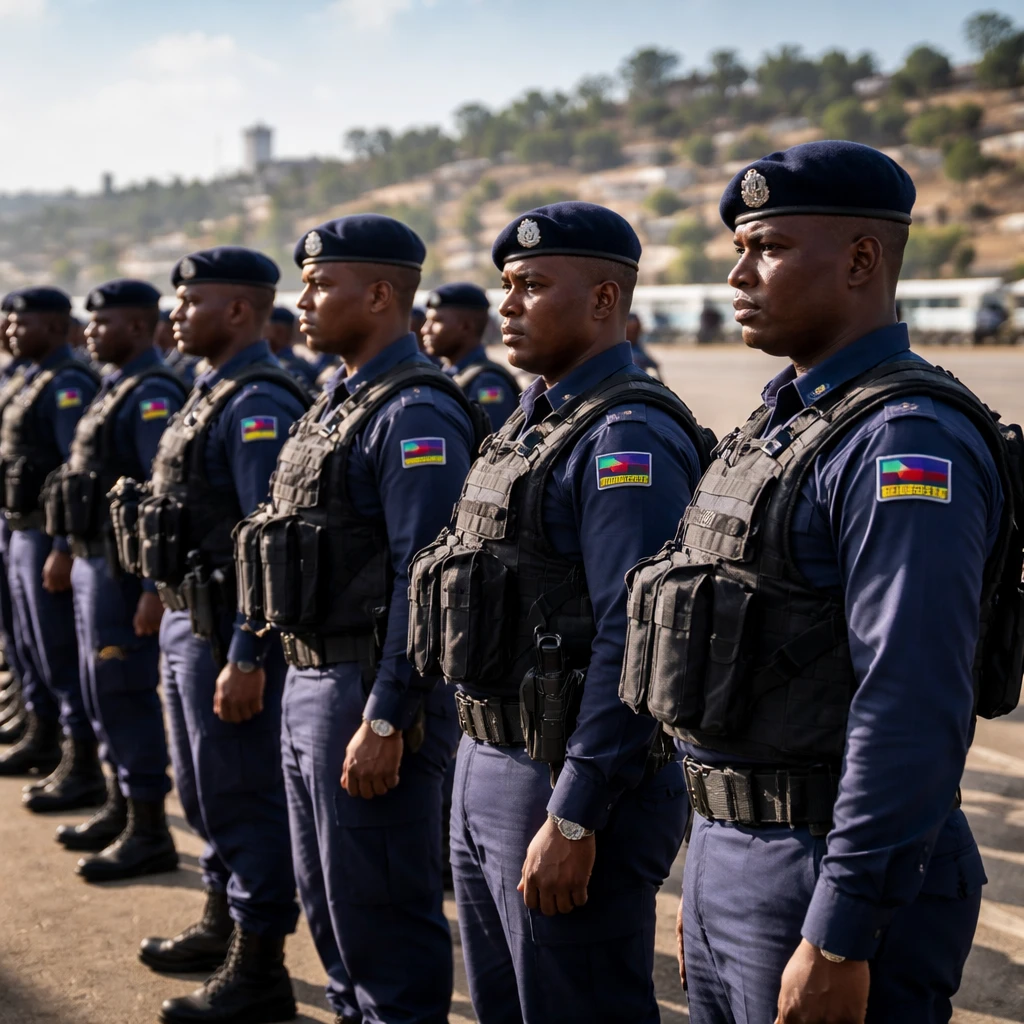
Nairobi has pushed back against a United Nations report that the U.N. Human Rights Office had substantiated four allegations of sexual exploitation and abuse involving personnel serving in a U.N.-backed anti-gang force in Haiti.
The U.N. document, dated Feb. 16 and first reported last week, said investigators had substantiated four allegations from last year directed at members of the multinational unit, which is staffed predominantly by Kenyan police officers.
In response, Kenya's Foreign Minister Musalia Mudavadi sent a letter this week to U.N. Secretary-General Antonio Guterres disputing those findings. Mudavadi wrote that a Kenyan board of inquiry had reviewed the allegations and "found to be unsubstantiated." He also stated that the "investigations conducted were impartial and shared with all relevant stakeholders, including U.N. human rights offices."
A U.N. representative in Kenya did not immediately respond to a request for comment on Thursday regarding Kenya's challenge to the U.N. report.
Kenya provides most of the personnel for the roughly 1,000-strong force, which first deployed in June 2024 with a mandate to confront gangs that control large portions of Haiti's capital. The unit's composition and deployment timeline were cited in the U.N. report and in Kenya's response.
The dispute over the investigative conclusions comes against a backdrop of prior accusations of sexual exploitation and abuse involving U.N. peacekeepers in Haiti. The article notes that during the MINUSTAH mission from 2004 to 2017, there were widespread accusations, including allegations involving child victims, and that only a small number of peacekeepers were prosecuted by their home countries.
The correspondence between Nairobi and the U.N. underscores a clear divergence in conclusions reached by different investigative bodies: the U.N. Human Rights Office reported substantiated allegations, while Kenya's board of inquiry reached the opposite determination. The U.N. document's date and Kenya's letter to the secretary-general are central to the official record presented by both sides.
As of the latest exchange referenced in the U.N. report and Kenya's letter, the situation remains one of contested findings and limited public clarification, with the U.N. office in Kenya not having issued an immediate reply to requests for comment.
This dispute involves factual claims about specific allegations and the outcomes of separate investigations; the public record reflected in the U.N. report and Kenya's letter is the basis for the differing positions.