
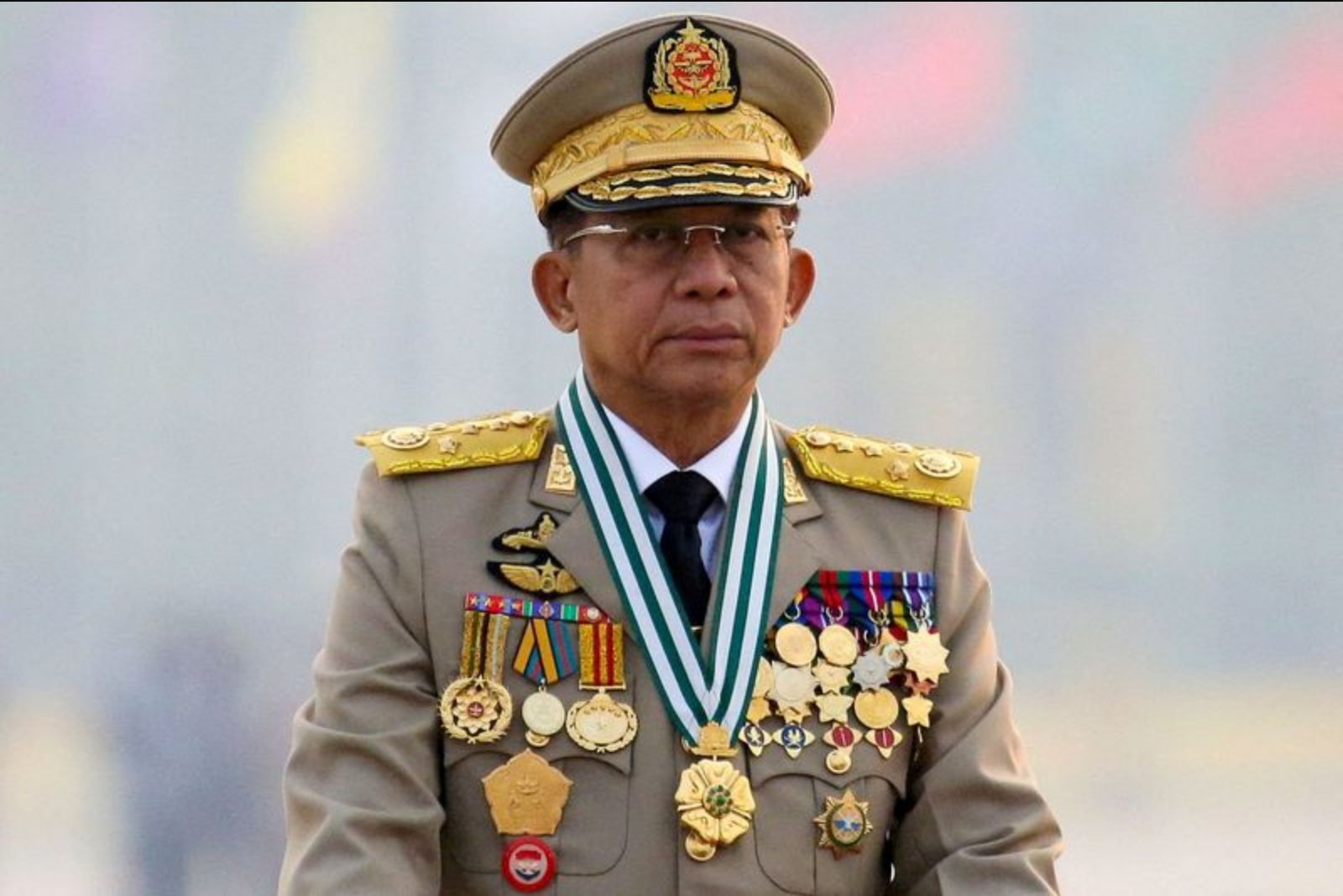
Myanmar's military leadership has declared plans to form a new supervisory organ, the Union Consultative Council, a five-member body that state media said will sit above existing institutions. Analysts and legal observers interpret the move as consolidating the supreme authority of the country’s ruling commander, while preserving direct control over both military and civilian spheres.
The announcement, made in state media late on Tuesday, follows the completion of the last phase of an election that will see a parliament assemble next month and power nominally handed to a civilian government. The junta said it would create the council but offered no public explanation for the decision, according to state-run outlets.
Naing Min Khant, a program associate at the Institute for Strategy and Policy - Myanmar think-tank, described the council’s mandate as unusually wide. He said it would cover every critical element of national security as well as the legislative process. "The formation of the Union Consultative Council represents a significant institutional shift, likely to create a 'super-body' designed to hold supreme authority above the executive, legislative, and judicial branches," he said.
A spokesperson for the junta did not answer calls seeking comment on the council.
Min Aung Hlaing, who led the 2021 coup that removed a civilian administration headed by Aung San Suu Kyi, has indicated he intends to hand over "state responsibilities" to the next government and is widely expected to become president. The coup triggered widespread protests that expanded into a nationwide civil war. More than 93,000 people have since been killed in violence in Myanmar, according to the Armed Conflict Location & Event Data Project.
The military-backed Union Solidarity and Development Party won a dominant share of seats in the recent election, securing 81% of available upper and lower house positions. The contest was criticized by the United Nations, some Western nations and rights groups as a one-sided exercise intended to keep the ruling generals in power through proxies.
Two lawyers who reviewed the announcement said the new council could be used to allow Min Aung Hlaing to assume the presidency while ensuring he maintains full control of the military. They said it would also give him oversight over the civilian administration and legislative matters.
Kyee Myint, one of the lawyers, stated: "I believe that this newly appointed Union Consultative Council will oversee the new (military) Commander-in-Chief on one hand, and the government on the other." He added that the council would prevent any successor to Min Aung Hlaing as military chief from accumulating excessive power.
Observers point out that state media did not set out reasons for establishing the council. According to Naing Min Khant, another striking aspect of the arrangement is a lack of mechanisms for accountability. "A defining feature of this arrangement is its total lack of accountability," he said.
Context and immediate implications
- The council is a five-member body announced by state media and intended to oversee national security and legislative matters.
- The announcement came shortly after the final phase of an election that will lead to a parliament convening next month and the transfer of state responsibilities to a nominally civilian administration.
- Legal observers say the council could enable Min Aung Hlaing to become president while retaining control of the armed forces and oversight of civilian government functions.
Details on the council’s membership, powers in practice, or any internal procedures were not provided in the announcement. The junta has offered no public response to requests for comment on how the council will operate or be held to account.
The formation of the Union Consultative Council marks an institutional change that analysts say elevates a small body above existing branches of government, while questions remain about the balance of authority and oversight mechanisms once the new parliament meets and the next government takes its formal roles.