
Italy has published a comprehensive security plan for the upcoming Winter Olympics that reaffirms Italian leadership of on‑the‑ground operations even as U.S. federal agents will provide assistance to the visiting American delegation.
The Games, scheduled to run from February 6 to February 22, are spread across two main centres - Milan and Cortina d’Ampezzo - with other competitions taking place at venues across northern Italy. Approximately 3,500 athletes are expected to compete, while the government projects some 2 million visitors overall, including an estimated 60,000 attendees for the opening ceremony at Milan’s San Siro stadium.
The U.S. delegation accompanying the event will be led by U.S. Vice President JD Vance and Secretary of State Marco Rubio.
Command and roles
Interior Minister Matteo Piantedosi described the security effort as a combination of field deployments, intelligence‑led prevention and, for the first time at a major event in Italy, a 24‑hour cybersecurity control room. Officials say around 6,000 law enforcement officers will be assigned to guard the multiple Olympic sites, operating alongside no‑fly zones and other restricted‑access areas.
The interior ministry produced a specific clarification on the role of U.S. Immigration and Customs Enforcement (ICE) personnel following announcements from the U.S. State Department that several federal agencies, including ICE, would assist in protecting U.S. visitors as in previous Olympics.
That ministry statement said ICE staffers would "only work in U.S. diplomatic offices such as the Milan consulate, and 'not on the ground'" and added, "All security operations on Italian territory remain, as always, under the exclusive responsibility and direction of the Italian authorities."
U.S. Ambassador to Italy Tilman J. Fertitta wrote on X that ICE will be present through its Homeland Security Investigations (HIS) division but that its role "will be strictly advisory and intelligence-based, with no patrolling or enforcement involvement." He added: "At the Olympics, HIS criminal investigators will contribute their expertise by providing intelligence on transnational criminal threats, with a focus on cybercrimes and national security threats."
Force composition and technology
The deployment breaks down to more than 3,000 regular police officers, roughly 2,000 Carabinieri military police and in excess of 800 members of the Guardia di Finanza tax police assigned to venues, with Milan set to host the largest contingent.
Authorities plan to supplement personnel with a range of technologies, including drone surveillance and robotic inspection systems intended for hazardous or hard‑to‑reach areas. A cybersecurity command centre based in Milan will operate 24 hours a day monitoring Olympic networks and what officials termed "strategic transport infrastructure" that were vulnerable to disruption ahead of the Paris 2024 Games.
To reduce the risk of clashes, the plan includes the activation of several "red zones" during the Games period, from February 6 to 22, which will bar access to people with public‑order convictions.
Public reaction and protests
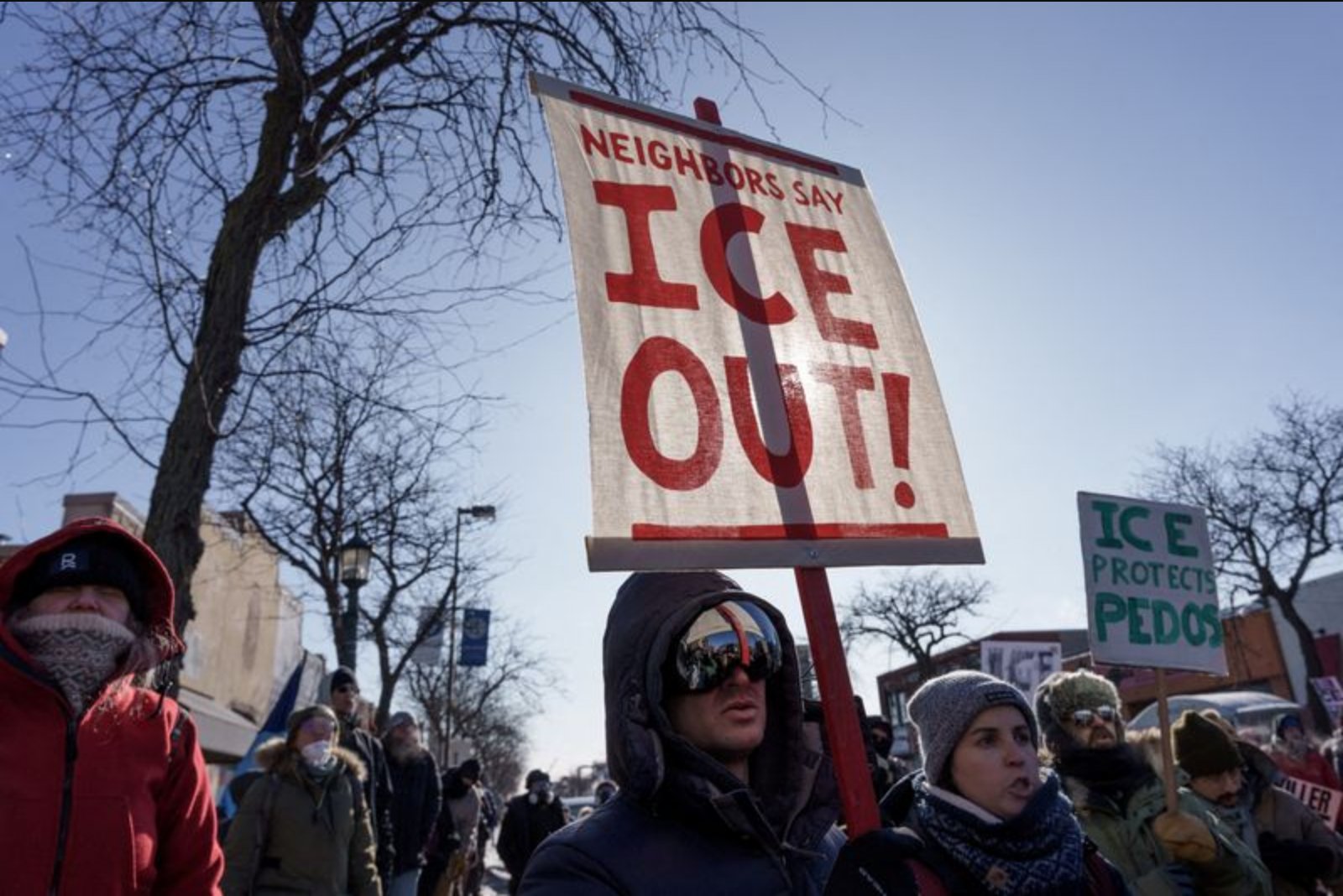
Despite the government assurances, criticism of the involvement of U.S. agents has persisted. The hard‑left USB union has organised an "ICE OUT" rally in central Milan on February 6 to coincide with the opening ceremony. In addition, opposition parties and left‑wing groups have scheduled a protest this Saturday.
Among those voicing concern is Emanuele Ingria, a human resources worker from Milan, who told Reuters he was "very worried" by the prospect of ICE agents operating in Italy. He said: "I don’t think that’s what we need today. Especially considering what’s happening there (in the United States) ... It’s truly a guerrilla force, I don’t like it."
Implications for transport and event operations
Given the scale of the Games and the geographic dispersion of venues, authorities are emphasising the protection of both event sites and the transport networks that connect them. The cybersecurity command centre's stated remit to monitor strategic transport infrastructure highlights the priority placed on keeping passenger movements and supply chains functioning during the event.
With significant visitor volumes expected and high‑profile delegations present, authorities are aiming to combine manpower, technological surveillance and intelligence sharing to maintain security while preserving Italian operational control throughout the Games.