
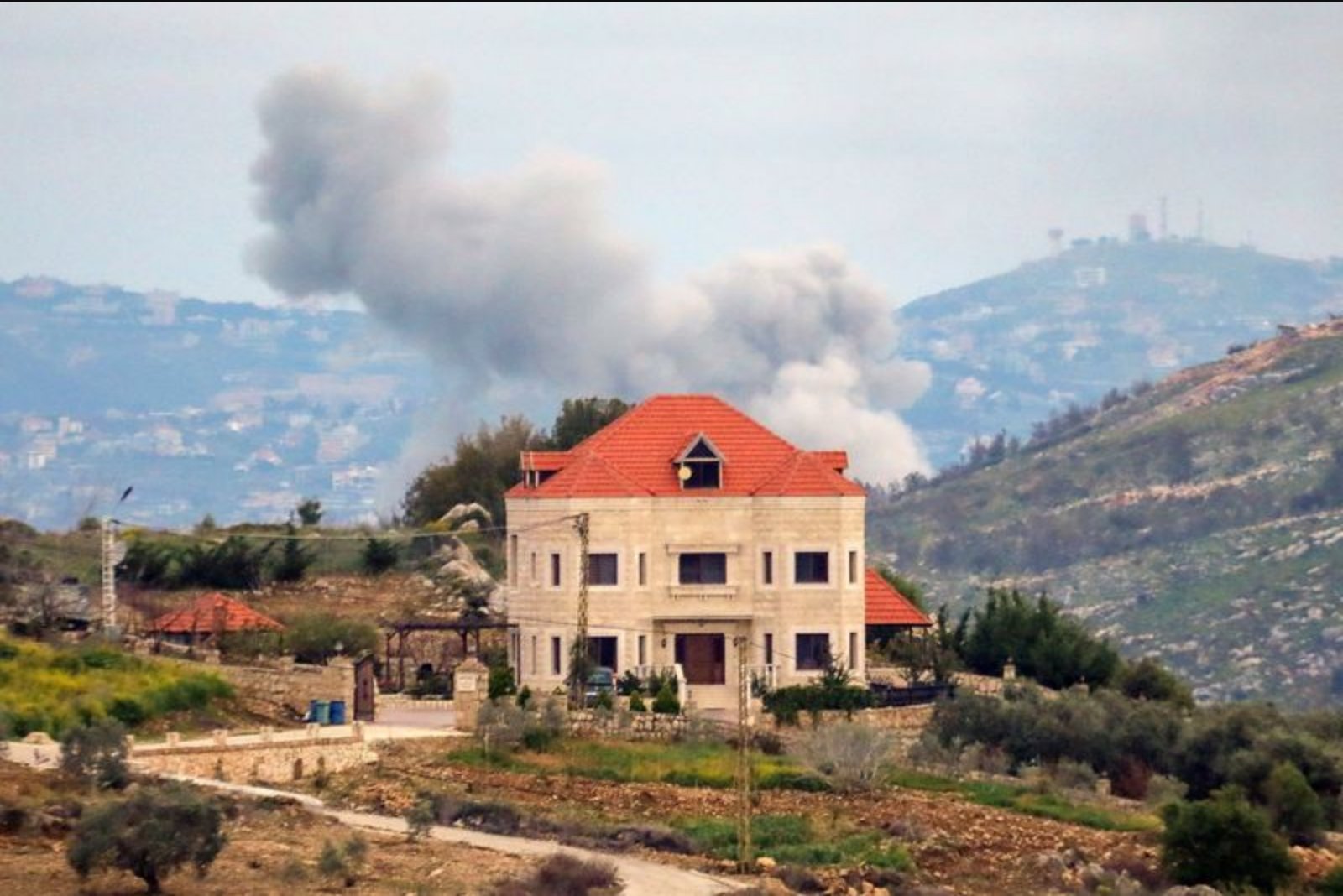
Israel announced actions intended to create a buffer zone in southern Lebanon, defining the Litani River as a northern security line and ordering civilians to leave territory south of that waterway. The move, which Israeli officials say is intended to reduce direct fire at northern Israeli communities, has involved fortifications, limited ground operations, demolition of bridges and homes, and the massing of troops near the border.
On March 4 Israel instructed all residents south of the Litani River to evacuate, two days after Hezbollah fired rockets at Israel in its escalation of hostilities tied to the U.S.-Israeli responses to Iran. The Litani runs east from the Mediterranean and lies roughly 30 km (19 miles) north of the Israeli border. About 8% of Lebanon’s territory is located south of the river.
Since the evacuation order, Israeli ground forces have established fortified positions south of the Litani and have demolished homes in villages that were emptied. Defence Minister Israel Katz stated on March 24 that five bridges over the Litani have been destroyed and that the military intends to control the remaining bridges as well as the security zone up to the river. Katz added that troops would remain in the area while "terrorism and missiles" persist. The military spokesperson, Effie Defrin, said on the same day that the Litani had been designated the "northern security line" and that ground operations were being intensified to prevent direct fire on Israeli communities to the north.
Prime Minister Benjamin Netanyahu said on March 25 that Israel was "expanding this security strip to keep the threat of anti-tank weapons away from our towns and our territory," framing the actions as the creation of a larger buffer zone. The military reports it has deployed thousands of troops in the border area and conducted what it calls limited incursions into Lebanese territory, while not specifying whether or when a larger-scale ground campaign would take place.
Lebanon's response and on-the-ground impact
Lebanon’s central government has not issued a public response to the Israeli plan. Hezbollah declared it would resist any Israeli attempt to occupy the south, calling such a move an "existential threat" to Lebanon. The militia has launched rocket attacks from positions both north and south of the Litani during the current period of hostilities. Those strikes have damaged property and caused injuries in northern Israel and resulted in at least one civilian death.
The Israeli military reported that three Israeli soldiers have been killed in southern Lebanon since March 2, and that one woman was killed in northern Israel by a Hezbollah rocket in the same timeframe. Israel’s ground forces are engaging Hezbollah units in southern Lebanon, and the Israeli air force has conducted heavy bombing runs over the south, parts of the east and the capital Beirut.
Lebanon’s health ministry reports broad humanitarian impact from the fighting. More than 1 million people have been displaced and more than 1,000 people killed, a tally that includes more than 120 children, 80 women and 40 medics. The ministry’s account does not distinguish between civilians and militants in its overall casualty figures.
Among civilians who fled is Shahira Ahmad Dabdoub, a 61-year-old woman now in a displacement centre in Beirut. She voiced a common fear: that an Israeli move to secure the Litani would be followed by operations further north, potentially bringing Beirut within reach of military action. "That’s the fear - if they take the Litani, then they’ll come here next," she said.
Historical pattern of incursions and occupations
The prospect of an expanded Israeli presence south of the Litani evokes a long record of cross-border incursions and occupation in Lebanon. Israel first invaded southern Lebanon in 1978 in an operation against Palestinian guerrilla groups and established a narrow occupation zone, backing the South Lebanon Army, a local Christian militia.
Four years later Israeli forces mounted a larger advance all the way to Beirut, in a campaign that followed escalating cross-border violence. While Israel withdrew its forces from central Lebanon in 1983, it maintained a presence in the south. In 1985 it formalised a wider occupation in southern Lebanon, controlling an area about 15 km deep with the assistance of the South Lebanon Army.
Israel ended its presence in southern Lebanon in 2000, withdrawing after persistent attacks on its military positions there and thereby concluding a 22-year occupation. In 2006, Hezbollah crossed into Israel, kidnapped two Israeli soldiers and killed others, sparking a five-week conflict marked by large-scale Israeli strikes targeting Hezbollah strongholds and national infrastructure throughout Lebanon.
On October 8, 2023, Hezbollah fired at Israel one day after Hamas-led attacks in southern Israel that killed 1,200 people in Israel and precipitated a larger war in Gaza. Israel replied with a bombing campaign and later moved ground forces into southern Lebanon. Following a ceasefire in 2024, Israel maintained troop positions on five hilltops in southern Lebanon.
Comparisons to Gaza and activity beyond Lebanon
Israeli leaders have compared operations in Lebanon to conduct in Gaza. In the Gaza conflict, Israeli forces cleared wide strips along the border and said the intent was to create a defensive zone. Gaza health authorities report more than 71,000 Palestinians killed in that war, most of them civilians, according to those local health authorities.
Defence Minister Katz referred to operations in Lebanon as following the "Rafah and Beit Hanoun model," invoking two Gaza towns where Israeli military actions have led to near-total destruction and depopulation. Israeli forces also seized the Mount Hermon summit in southern Syria after the fall of then-President Bashar al-Assad in late 2024 and have sought a demilitarized stretch from Damascus to the Hermon, alongside strikes in southern Syria.
What is clear and what remains uncertain
What is clear from official statements and the reported movements of troops is that Israel has designated the Litani River as a formal limit to its northern security posture and is actively reinforcing positions south of it. Israeli officials have described the measures as aimed at preventing direct fire on communities inside Israel and at keeping anti-tank capabilities at a greater distance.
What remains uncertain is the ultimate scope and duration of any expanded ground presence in southern Lebanon. Israeli leaders say troops will remain while threats persist, but the military has not provided a timetable for a broader ground offensive or for withdrawal from positions it currently holds. Lebanon’s government has not publicly commented on the plan, leaving the country’s official response unclear.
Humanitarian and security dimensions
The events described in official statements and reporting merge immediate security aims with deep humanitarian consequences. Orders for civilian evacuation, demolition of bridges and homes, air strikes and ground clashes have coincided with a large-scale displacement crisis and rising fatalities. Those dynamics are producing acute needs for shelter, medical care and other assistance among the displaced, even as military operations continue.
For now, the picture that emerges is one of tactical escalation - defined by territorial control efforts, fortified positions and targeted destruction of infrastructure - set against the backdrop of Lebanon’s recent history of incursions and occupation. The combination of military moves and the scope of civilian displacement underscore how the current phase of the conflict is renewing long-standing anxieties about sovereignty, security and the possibility of extended foreign military presence in Lebanese territory.