
World March 11, 2026

Israeli Strike Damages Central Beirut Apartment Block, State Media Says

Attack marks a second strike in Beirut's central districts amid continued bombardment of southern suburbs and mass displacement

By Nina Shah
Israeli Strike Damages Central Beirut Apartment Block, State Media Says

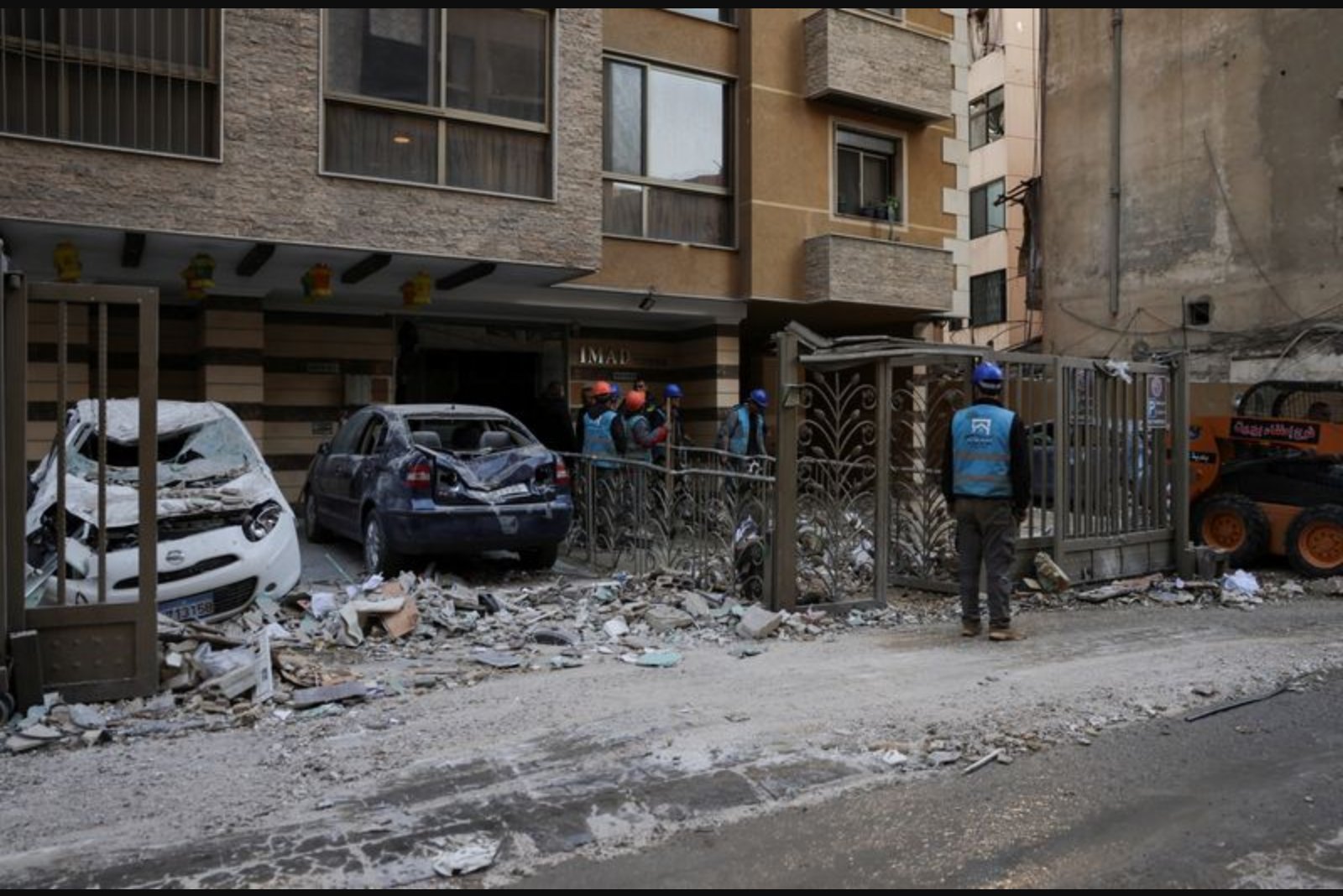
On March 11 an Israeli strike struck an apartment building in central Beirut's Aicha Bakkar neighbourhood, state media reported, causing visible damage and smoke but with no immediate confirmation of casualties. The strike is the second in the heart of the capital within four days as heavy bombardment continues in the Hezbollah-controlled southern suburbs and large-scale displacement spreads across Lebanon.

Key Points

  • An Israeli strike struck an apartment block in central Beirut's Aicha Bakkar neighbourhood on March 11, with footage showing heavy damage to two floors and smoke rising from the building.
  • This would be the second strike in central Beirut in four days after a Sunday strike hit a seafront Raouche hotel; Israeli forces said that attack targeted five senior members of Iran's Revolutionary Guards Quds Force.
  • Heavy strikes continued overnight on the southern suburbs of Beirut (Dahiyeh) while evacuation orders were issued for Dahiyeh and parts of southern and eastern Lebanon; the United Nations reports roughly 700,000 people displaced, and Lebanese authorities report nearly 570 killed by Israeli strikes since March 2.

On March 11, an Israeli strike hit an apartment block in central Beirut's Aicha Bakkar neighbourhood, Lebanon's state news agency reported, widening the scope of attacks in the capital beyond the predominantly Hezbollah-controlled southern suburbs.

Video and photographic footage circulating after the strike showed two floors of the apartment building extensively damaged, with smoke rising from the structure. There was no immediate statement from the Israeli military, and Lebanese authorities reported no immediate casualty figures following the strike.

This incident would be the second recorded strike in central Beirut in a four-day span. On the previous Sunday, a strike hit a seafront hotel in the Raouche neighbourhood. The Israeli military said that earlier strike targeted five senior members of Iran's Revolutionary Guards Quds Force.

Lebanese officials say that nearly 570 people have been killed by Israeli strikes since Iran-backed Hezbollah opened fire on March 2 to avenge the killing of Supreme Leader Ayatollah Ali Khamenei at the start of the U.S.-Israeli war on Iran.

Meanwhile, Israeli forces continued heavy strikes overnight on the southern suburbs of Beirut, known locally as Dahiyeh. The Israeli military has issued evacuation orders for residents of the predominantly Shi'ite Dahiyeh, in addition to residents across a swathe of southern Lebanon and parts of the east.

The United Nations has reported that some 700,000 people have been displaced in Lebanon, a figure representing more than a tenth of the country's population. The mass displacements and the widening geography of strikes signal a deepening humanitarian and security emergency within Lebanon.


Context and immediate developments

The strike in Aicha Bakkar appears to expand the locations within Beirut that have been directly affected by the conflict. While the Israeli military did not immediately comment on the March 11 attack, footage from the neighbourhood showed substantial structural damage and smoke.

Authorities continue to report casualty and displacement figures as active operations persist across multiple areas of Lebanon, with heavy bombardment concentrated on southern suburbs overnight.


Looking ahead

Officials and international agencies are tracking evacuation orders and displacement figures as the situation evolves. The reported death toll of nearly 570 and the displacement of roughly 700,000 people underscore the scale of the crisis on the ground.

Risks

  • Escalation of strikes into central Beirut increases risk to civilian infrastructure and residential property - impacting real estate and local services in affected neighbourhoods.
  • Large-scale displacement of some 700,000 people poses humanitarian and logistical strains, with implications for relief agencies, public services, and short-term economic activity in Lebanon.
  • Continued heavy bombardment and evacuation orders in southern suburbs and other regions create uncertainty for domestic markets and cross-border trade, affecting banking, insurance, and sectors reliant on a stable security environment.

More from World

Trump Order Seeks to Preserve Exclusive TV Slot for Army-Navy Game Mar 21, 2026 Family Clings to Hope After Butcher Vanishes Following Strike on Commercial Complex Mar 21, 2026 Three Weeks In, Iran Conflict Tests U.S. Control and Strains Global Energy and Alliances Mar 21, 2026 Trump peace board delivers written disarmament plan to Hamas amid stalled talks Mar 21, 2026 U.S. Deploys MQ-9 Drones and 200 Troops to Nigeria for Intelligence and Training Support Mar 21, 2026